Is La Paz Nicer Than Cabo?
A decision guide to choosing between La Paz and Cabo for a whale shark trip: travel times, tour formats, costs and what to verify before booking.
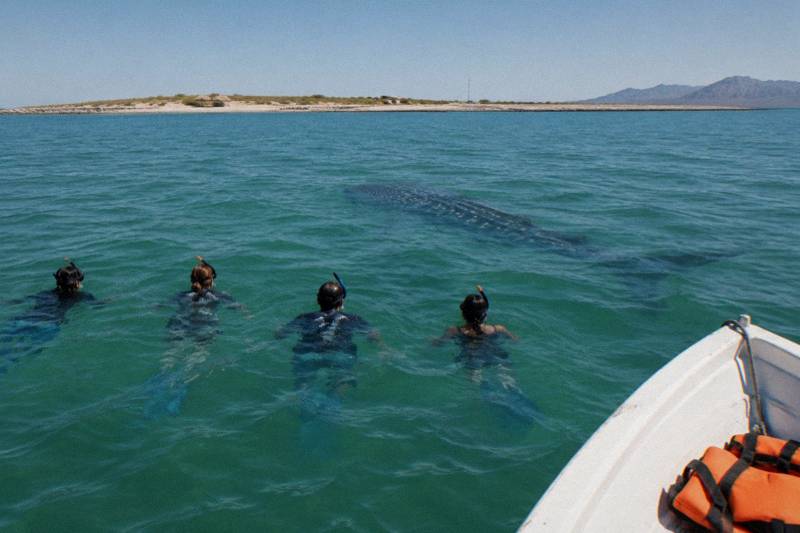
Whether La Paz is "nicer" depends on what the trip is for: the whale shark swim takes place in La Paz Bay under federal rules, so a stay in La Paz means a 3 hour outing while a stay in Cabo means a 9 to 10 hour day trip each time you swim. Cabo offers resorts, nightlife and a bigger flight network, and this site does not score it. The honest comparison is logistics plus pace, not a verdict. If Loreto is also on your shortlist as a Sea of Cortez base, the Loreto versus La Paz comparison covers what this site can verify and what you should check yourself before booking either town.
That framing matters more than it might seem. Most "which town is better" articles drift into taste, and taste cannot be researched. What can be researched is the shape of the trip itself, and the two towns produce genuinely different trips. From a Malecon hotel in La Paz, the featured marine-biologist small group swim is a 3 hour commitment from $178 per person, meeting at the MeXplore office on Topete 125 or the nearby marina docks. From a resort in Cabo, the same animal, the same bay and the same federal rules sit at the end of a drive of about 160 km, roughly 2 to 2.5 hours each way, which is why every Los Cabos whale shark listing on this site's roster is a full day: 10 hours for the Cabo Adventures trip from $259 per person, 9 hours for Cabo Trek from $399, and 7 hours for the BallardTours day trip from $353.
So the real question is not aesthetic. It is whether you want the swim to be the spine of your trip or one item on a resort agenda. A reader weighing the two bases is really deciding whether the swim tips them to La Paz, and the rest of this guide gives a decision rule for exactly that. If you plan to swim more than once, photograph the animals calmly, or pair the swim with Balandra and Espiritu Santo, the answer is La Paz. If the swim is a single checkbox beside golf, marlin fishing and spa days, Cabo works, at the cost of long days on the highway.
For a fuller town-versus-town treatment, including atmosphere and accommodation areas, the La Paz vs Cabo comparison guide walks the trade-offs in detail.
What Does A Whale Shark Trip Need From Your Base?
A base needs three things: proximity to the departure piers, schedule flexibility for the daily shift system, and slack for the minimum-shark rule that can pause operations on short notice. La Paz satisfies all three with a walk or a short taxi; Cabo satisfies none of them without a 2 to 2.5 hour transfer each way. That is the practical core of the comparison, before any question of charm enters it.
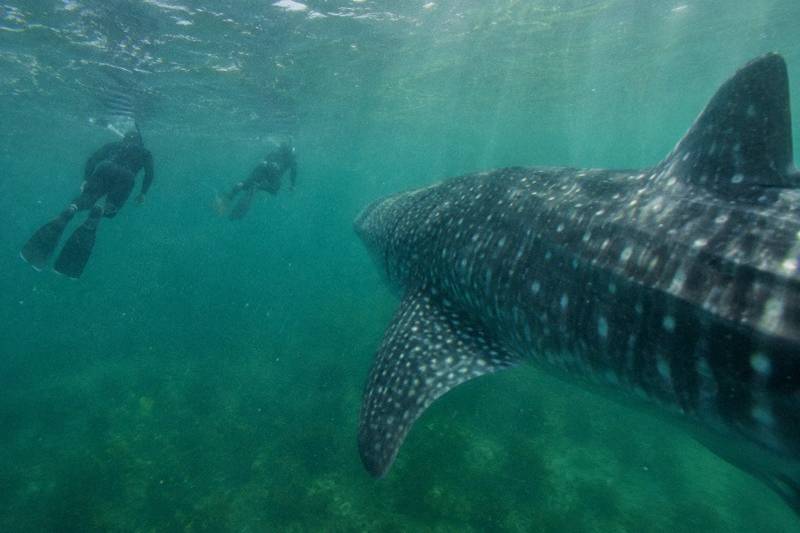
3 Hours, Marine Biologist Guide
La Paz Whale Shark Swims · 3 hours
★ 4.9 · 649 reviews · From $178
Check availability →Start with the shift system, because it is the fact most Cabo-based itineraries quietly absorb. The 2026-27 season runs 1 October 2026 to 30 April 2027 under a SEMARNAT aviso implementing NOM-171, with four boat shifts per day and 112 authorizations issued for the bay, each covering one holder, one boat and one pennant. Operators report common departure windows in the morning and around midday, with slots assigned daily and confirmed the evening before. A swimmer staying in La Paz can take an early shift, be back on the Malecon by lunch, and still reach Playa Balandra or the Espiritu Santo boats in the afternoon. A swimmer based in Cabo has already spent the morning on Highway 19 before the boat leaves the dock.
Then there is the biological brake. Activity in the swim zone requires at least 6 whale sharks present in Zone I; with 5 or fewer, trips do not operate. When counts dip, the schedule flexes, and the closer you are to the pier, the cheaper that flexibility is. In the 2025-26 season, 56 individual sharks were identified and 950 sightings logged by the close on 30 April, but earlier seasons saw suspensions when counts fell, so any itinerary built around the swim benefits from buffer days. A La Paz base turns a rescheduled shift into a walk along the Malecon. A Cabo base turns it into a day trip that may not run at all, and no operator can promise a rebooking slot that fits a fixed resort week.
None of this makes Cabo a bad place to sleep. It makes Cabo a bad place to sleep if the swim is the reason for the ticket, which is the decision rule in one line.
How Long Is The Journey From Each Base?
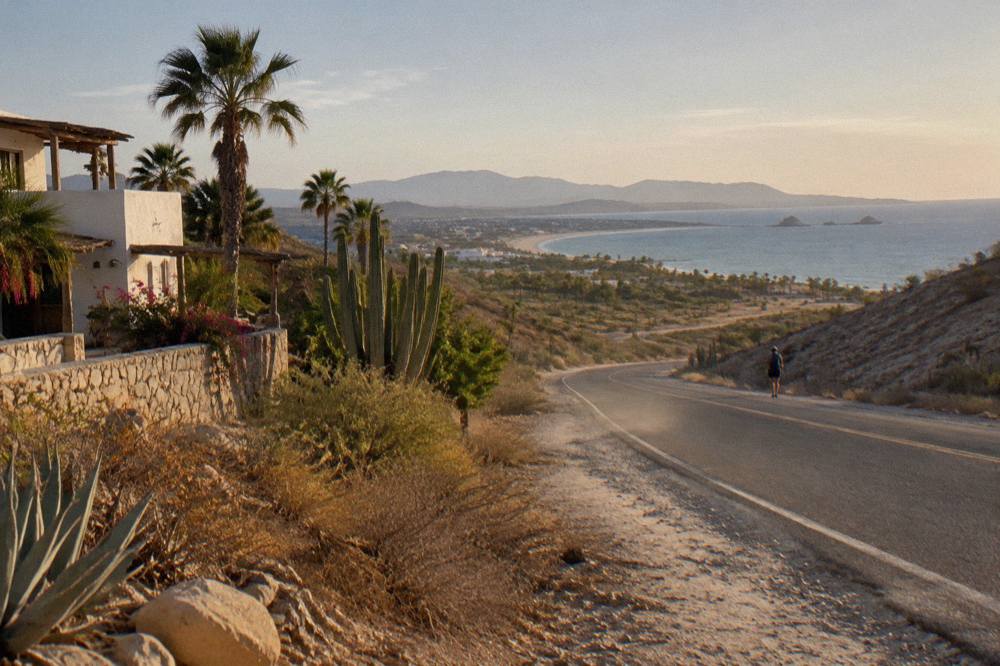
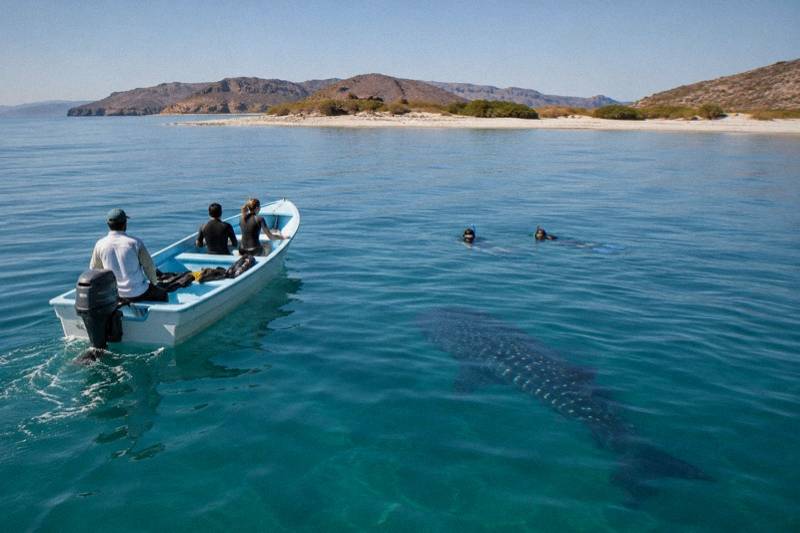
Cabo San Lucas sits about 160 km from La Paz, a drive of roughly 2 to 2.5 hours, and the airport at San Jose del Cabo about 214 km, or 2.5 to 3 hours. The result is structural: every rostered whale shark day trip from Los Cabos runs 7 to 10 hours door to door, while local La Paz swims run 2 to 4 hours on the water plus a 20 to 40 minute boat ride out.
The drive itself is not unpleasant. Highway 19 is the coastal route through Todos Santos, generally the preferred road, with Highway 1 as the inland alternative. Buses on the Aguila and ABC networks cover Cabo to La Paz in roughly 2.5 to 3.5 hours at fares that recently ran about MXN 395 to 454, and private transfers from the Cabo airport or Cabo San Lucas run roughly $230 to $340 per vehicle one way in recent quotes. Fly into La Paz directly and the comparison collapses entirely: Alaska flies nonstop from Los Angeles in about 2.5 hours, and domestic carriers serve the city from Mexico City and Tijuana in under 2.5 hours.
| Route | Distance | Typical time | Notes |
|---|---|---|---|
| Cabo San Lucas to La Paz | about 160 km | 2 to 2.5 hours | Highway 19 via Todos Santos, the preferred route |
| San Jose del Cabo airport to La Paz | about 214 km | 2.5 to 3 hours | Adds airport transfer time at each end |
| Aguila or ABC bus, Cabo to La Paz | same road | 2.5 to 3.5 hours | Recent fares about MXN 395 to 454 |
| Private transfer from Cabo | per vehicle | 2.5 to 3 hours | Recent quotes roughly $230 to $340 one way |
| LAP airport to the Malecon | short hop | minutes by taxi | Direct flights from Los Angeles, Mexico City, Tijuana |
For the day trip format, the roster tells the story plainly. The Cabo Adventures tour from $259 per person, rating 4.9 from 1141 reviews, the most reviewed product on this site's roster, runs 10 hours with hotel pickup and drop-off, lunch and wetsuits included. The Cabo Trek excursion from $399 runs 9 hours with a marine biologist guide and transport from its Cabo San Lucas office, though not hotel pickup. The BallardTours day trip from $353 runs 7 hours and folds in a La Paz city visit with an option for Todos Santos on the way back, with round trip transport, a sandwich, water and a towel listed as included. These are well-run products, and guests report good days on them; they are simply long days, with the whale shark portion a fraction of the total.
The counter-argument for the day trip deserves a fair hearing, too. If your week is anchored in Cabo for reasons that have nothing to do with whale sharks, a wedding, a timeshare, a fishing charter, then the day trip buys the swim without moving hotels, and the Cabo to La Paz day trip guide compares those three listings in full.
What Does Each Town Offer Around The Swim?
La Paz wraps the swim in a quiet, walkable waterfront and two of Baja's best beaches within boat or bus range; Cabo wraps its day trips in a resort strip with a much larger nightlife and dining scene. Neither package is objectively nicer, but only one of them puts you back on the water the same afternoon, and only one puts Balandra, Espiritu Santo and the sea lion colony within a combo tour's reach.
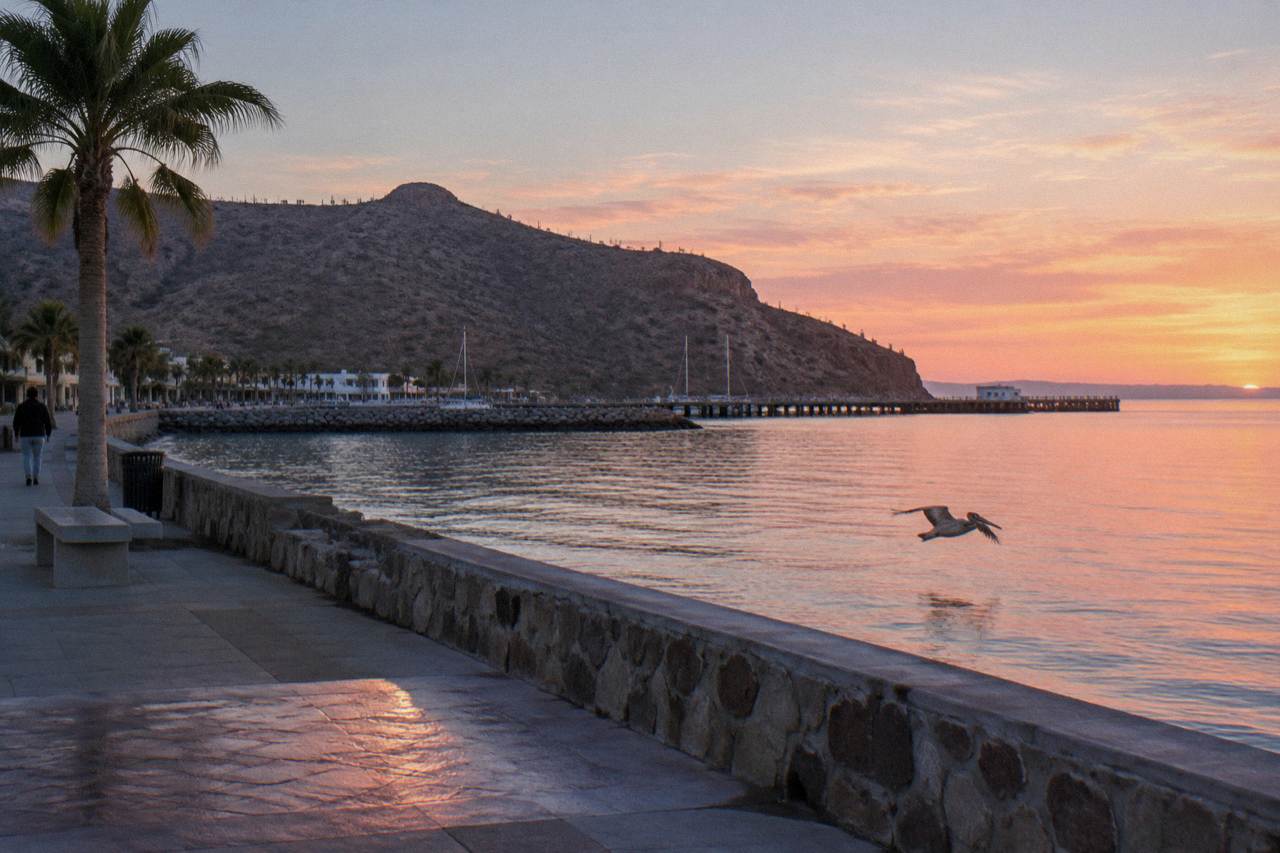
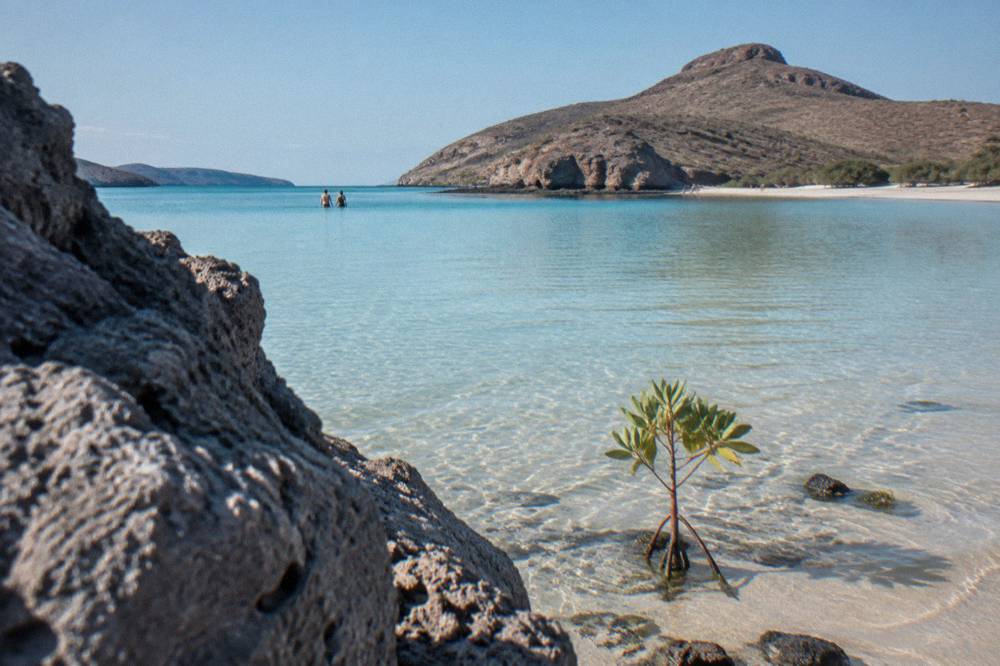
Take La Paz first, since the swim lives here. The Malecon, the long boardwalk along Paseo Alvaro Obregon, is the city's free centerpiece and the meeting area for many boats: the Muelle Fiscal pier, where Alonso Tours, Punta Baja Tours, Mexico Travel Adventure and others depart, sits right on it. Playa Balandra, the shallow turquoise inlet, operates controlled access in two daily turns, 08:00 to 12:00 and 13:00 to 17:00, capped at 450 visitors per turn with a reported MXN 120 per person fee, confirm on the day, per the La Paz municipal tourism page. Playa Tecolote sits at the end of the same road. If your dates land right, Carnaval is scheduled for 4 to 9 February 2027 on the Malecon.
The deeper draw is the water. The Bahia de La Paz refuge, decreed on 29 November 2018 across 22,749 hectares, exists specifically to protect the whale shark, per the official decree in the federal gazette, and Espiritu Santo Island and its Los Islotes sea lion colony sit a boat ride away. The sea lion swim zone is capped at 180 people at once and closes to swimmers from 1 June to 31 August for the reproductive season, opening roughly 1 September to 31 May, which covers the whole whale shark season. That overlap is why combo tours exist and why a La Paz base multiplies what one hotel booking can do. If you're weighing La Paz against the Caribbean options, the comparison of Mexico's whale shark swim destinations shows what each spot offers and what to verify before booking.
Cabo's counterweight is real. The marina corridor, the arch at Land's End, the sportfishing fleet and a dense strip of restaurants and clubs are a bigger, louder holiday, and this site does not score that against La Paz; it simply notes that none of it is on the water where the swim happens. A reader who wants both can split the stay: Cabo first, then two or three nights in La Paz, which is the pattern that makes the premium reduced-group encounter and the island combos practical.
Which Tour Format Fits Each Base?
Shared swims from La Paz run from $110 to $295 per person for 2 to 4 hours, island combos run from $234 to $345, and the Los Cabos day trips run from $259 to $399 for 7 to 10 hours. The format you can actually use depends on where you sleep, so pick the base and the tour together rather than treating them as separate decisions.
| Format | Price range | Duration | Typical inclusions | Best base |
|---|---|---|---|---|
| Shared swim, La Paz | from $110 to $295 per person | 2 to 4 hours | Gear, wetsuit, permits, snacks (varies by listing) | La Paz |
| Island combo, whale sharks plus sea lions and Balandra | from $234 to $345 per person | 6 to 9 hours | Lunch, gear, permits, photos on some listings | La Paz |
| Los Cabos day trip | from $259 to $399 per person | 7 to 10 hours | Transport or pickup, lunch, gear | Cabo |
| Private charter, La Paz | from $1,168 per group | 3 hours | Entrance fee, gear, snacks, drinks | Either |
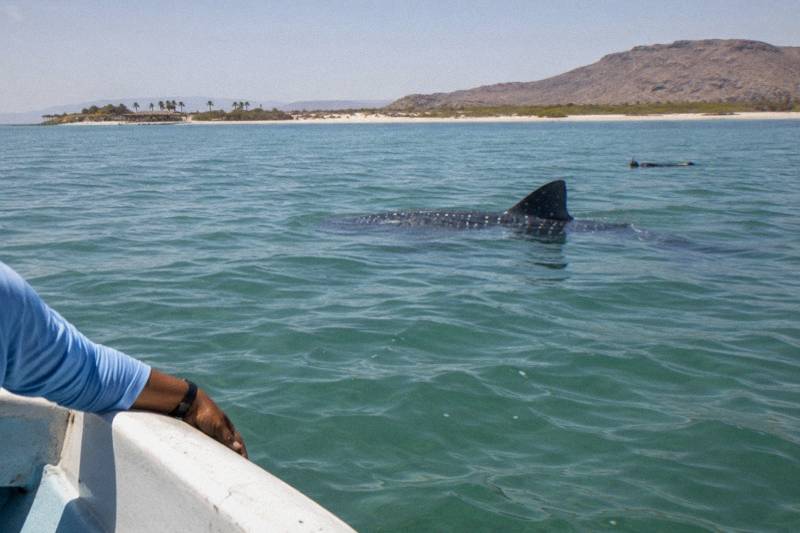
On the La Paz side, the spread is wide enough to matter. At the value end, Sunrider Tours runs from $110 per person for 2.5 hours, rating 4.4 from 155 reviews, with snacks, water, gear, a guide and passenger insurance listed, though the dock fee and conservation fee sit in the exclusions, so read the listing. The MeXplore small group with a marine biologist, from $178, rating 4.9 from 649 reviews, folds in permits, the conservation donation, traveler's insurance and GoPro photos. At the premium end, the intimate eco-friendly encounter from La Paz Whale Sharks VIP Tours runs from $295 per person, rating 5.0 from 422 reviews, with biodegradable SPF 50 sunscreen included, a small touch that signals the format. Orza Tours also lists a private charter at from $1,168 per group if a family wants the boat to itself.
The combo tier is where La Paz pulls clearly ahead of any Cabo week. The Tuna Tuna whale shark, sea lion and Balandra tour runs from $234 per person for 6 hours, rating 5.0 from 113 reviews, with lunch, wetsuits, beer and soft drinks and underwater pictures listed as included. The MeXplore equivalent from $234, rating 4.9 from 73 reviews, covers a complete food service, permits, the conservation donation and insurance. Longer still, the Baja Sur Tours picnic at Espiritu Santo runs from $278 for 9 hours, rating 4.8 from 30 reviews. None of these products departs from Cabo, because the islands and the swim zone are La Paz waters.
Tuna Tuna Tours, 3-Hour Small Group
La Paz Whale Shark Swims · 3 hours
★ 5.0 · 454 reviews · From $178
Check availability →For the marine-biologist format specifically, the featured small group swim with a marine biologist is worth a look alongside its sibling listings.
What Should You Verify Before Choosing?
Verify four things before booking either base: that the operator holds one of the 112 season authorizations, that your dates account for the hurricane window, which runs to 30 November, that your itinerary has a buffer day in case counts pause the activity, and that age, health and cancellation terms on the live listing match your group. None of these favors either town, but only La Paz makes the buffer day cheap.
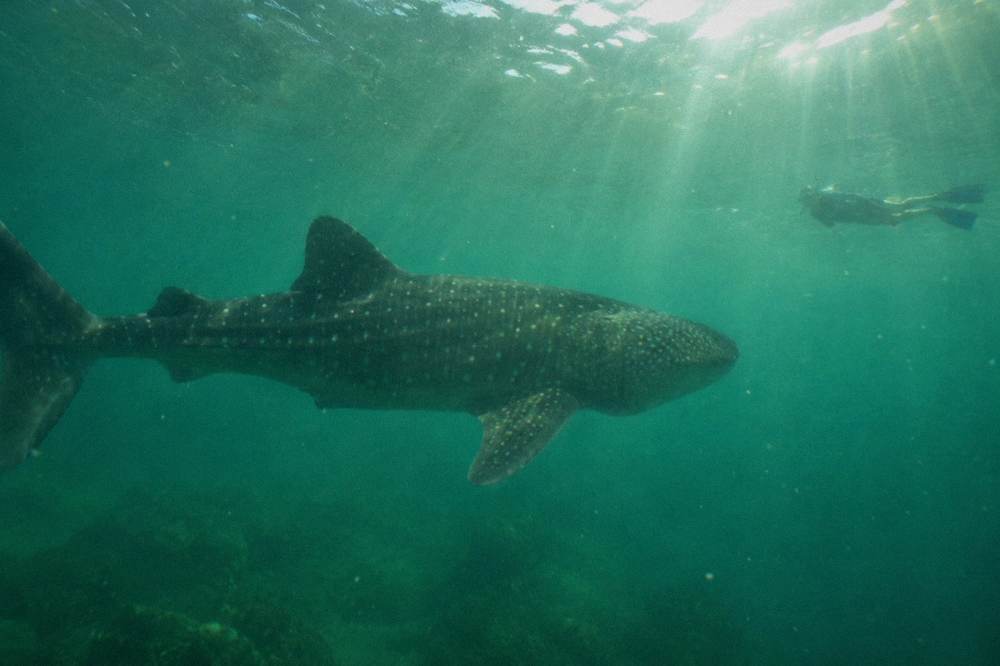
The authorization check takes a minute at the dock. Authorized boats are no longer than 11 m, display a SEMARNAT pennant, and carry the authorization on board; if a boat lacks the pennant, walk away. No public list of the 112 holders was found in researching this site, so the pennant and the onboard document are the practical verification. Enforcement belongs to PROFEPA with CONANP, and the rules they enforce, 5 swimmers per guide, 2 m from the head and sides, 3 m from the tail, a 30 minute ceiling per boat per shark, are the reason the swim stays safe for the animals. If you're weighing the trip as a whole, our Is La Paz safe right now guide covers the wider picture, from advisories to hurricane season and a booking safety checklist.
Weather and calendar come next. The eastern Pacific hurricane season runs 15 May to 30 November with peak risk August to October, so early season trips in the first half of October carry more weather exposure than a February departure. On the calendar, December, January and February are the months most often reported as the strongest for whale shark presence, and sea temperatures in those months average about 20 C against nearly 29 C in October, which is why listings include wetsuits; operators advise 3 mm shorty to 5 mm full suits in season, and a wetsuit or life vest is mandatory in the water regardless.
Finally, the fine print. Group sizes appear on only some roster lines, up to 6 for the Eco Migrations swim, up to 9 and 10 on two combos, and hotel pickup is listed on the Cabo Adventures and BallardTours day trips; for everything else, transport to the departure point is on you. Free cancellation is listed on 22 of the 27 tours, so confirm the terms on the operator's live listing before paying, and check the same listing for age and health rules, since only three listings here state a minimum age. For broader travel guidance, check the official State Department page before booking rather than relying on forum summaries.
Common Questions About La Paz Vs Cabo
Can You Swim With Whale Sharks While Staying In Cabo?
Yes, through day trip listings that drive you to La Paz. Three operate on this site's roster: a 10 hour tour from $259, a 9 hour excursion from $399 and a 7 hour trip from $353, each with transport or pickup as stated on the listing. Expect about 2 to 2.5 hours of driving each way on top of the boat time.
Is It Cheaper To Stay In La Paz Or Cabo?
Hotel prices are outside this site's verified facts, so compare them yourself. On tour costs, the arithmetic is clear: shared La Paz swims start at from $110 per person, while the Cabo day trips start at from $259 per person.
How Far Is Cabo From La Paz?
Cabo San Lucas is about 160 km from La Paz, a drive of roughly 2 to 2.5 hours on Highway 19. The San Jose del Cabo airport is about 214 km away, or 2.5 to 3 hours. Buses take 2.5 to 3.5 hours at recent fares of about MXN 395 to 454.
Which Months Work From Either Base?
The season runs 1 October 2026 to 30 April 2027, the same dates regardless of where you sleep. December, January and February are most often reported as the strongest months. Early October carries the tail of hurricane season, which peaks in risk from August to October, so buffer days matter most then.