Is It Safe To Travel To La Paz Right Now?
A practical, fact-checked answer for travelers asking whether La Paz is safe right now: advisory checks, whale shark boat rules, hurricane season timing, and a booking safety checklist.
No honest publisher can hand you a one-word verdict, because safety is not a single fact: it is an advisory level that changes, a boat operation governed by federal rules, and a calendar with a hurricane window from 15 May to 30 November. What can be said firmly is that the whale shark activity itself is one of the most tightly regulated wildlife swims in Mexico, run under NOM-171-SEMARNAT-2018.
That distinction matters, and it is the backbone of this article. A traveler asking the question is usually standing at a decision point: flights look reasonable, a swim with whale sharks is on the list, and the news cycle about Mexico is loud and mostly about places far from this peninsula. The productive move is not to absorb another opinion. It is to run three specific checks and then decide.
Here is what this article does instead of a verdict. It walks through what the official advisory pages are for and how to read them, it lays out the federal rules that govern every authorized whale shark boat in the bay, it explains the weather calendar including the hurricane season and which months carry the most risk, and it gives you a practical checklist to run before you pay for anything. Along the way it names the specific checks an authorized operator passes, because on the day, the boat you choose matters more than the headline you read. For a wider look at how all of this fits together on the ground, the visitor's guide to safety in La Paz covers the on-water rules, Malecon logistics, storm season timing, and the official advisory pages themselves.
For context on the regulated side: the 2026 to 2027 season runs 1 October 2026 to 30 April 2027 under a SEMARNAT aviso that caps operations at 112 authorized boats and requires at least six whale sharks present in the swim zone before any trips go out. That is a conservation measure, but it is also a safety and quality control: a bay with too few animals simply does not run trips. If you want the full picture of timing, the month by month whale shark season guide breaks down every month in the window.
What Does The Official Travel Advisory Actually Tell You?
Government advisory pages assign a level per state, and those levels change, so the only reliable move is to read the official page yourself before booking and again before you fly. This site deliberately does not print a level or a crime statistic, because a number copied into an article goes stale the week it is published and the official page never does. Treat the advisory as one input, not the whole answer.
The advisory system exists so travelers can see, in the government's own words, what concerns are noted for a given state and what, if anything, is restricted for government personnel. Read it directly rather than through a summary. The United States Department of State maintains the Mexico page at its official travel advisory site, and travelers from other countries should check their own foreign ministry's equivalent before booking.
What an advisory will not tell you is anything about the thing you are actually coming for. Nothing on an advisory page covers whether a whale shark boat carries a SEMARNAT pennant, whether your guide is certified, or whether the operator's listing includes traveler's insurance. Those are regulated separately and, frankly, regulated well: the swim activity sits inside the Area de Refugio Bahia de La Paz, a 22,749 hectare marine refuge decreed in November 2018, and it is inspected by PROFEPA in coordination with CONANP. Those same rules follow you into the water, so before you book, read up on what the law says about touching a whale shark so you know exactly how close you are allowed to get.
A useful mental model: separate the city question from the water question. Day to day in La Paz, the considerations are ordinary travel ones, the same ones covered in detail in the is La Paz safe guide. On the water, the considerations are federal rules, weather, and operator choice. The rest of this article is about the water, because that is where this site's research is deepest.
One more framing point. The whale shark encounter economy here is local and licensed; when the 112 pennants for the 2026-27 season were delivered in October 2026, the state government described the permits as going to local service providers. Operators like MeXplore, whose small group swim with a marine biologist carries a 4.9 rating from 649 reviews, are named, inspectable businesses with departure offices you can walk to, not anonymous intermediaries. That traceability is itself a safety feature.
Still weighing whether a guided swim is the right call for your comfort level?
How Safe Are The Whale Shark Boats Themselves?
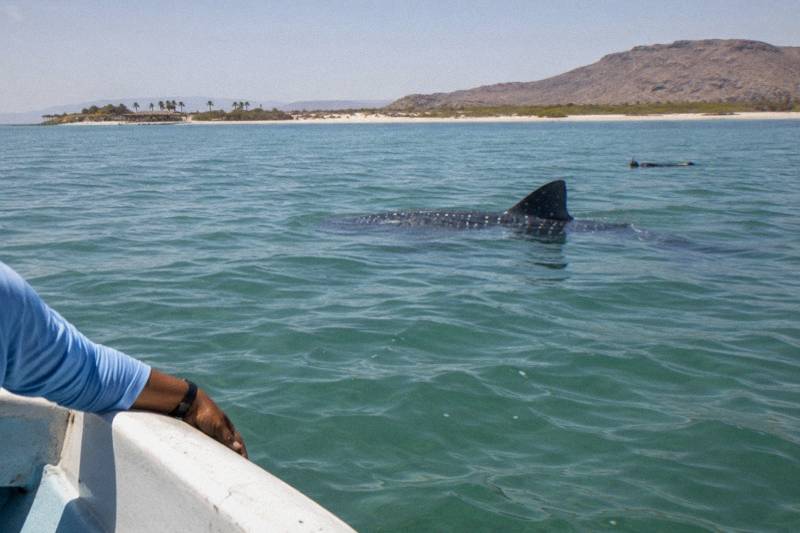
Every authorized whale shark boat in the bay works under NOM-171-SEMARNAT-2018: boats no longer than 11 meters, four daily shifts, one boat per shark for 30 minutes maximum, five swimmers per specialized guide, swimmers in a life vest or wetsuit, and a hard stop if a shark shows evasive behavior. Enforcement falls to PROFEPA with CONANP.
This is where La Paz genuinely stands out, and it is worth understanding why the rules are this detailed. Whale shark swimming here is not a free-for-all where any skiff can load passengers and motor out. The norm, published in the Official Gazette and in force since 2020, sets out approach geometry (from behind and parallel, no closer than 5 meters), swim distances (2 meters from head and sides, 3 meters from the tail), speed limits (7 knots maximum, 3 knots in aggregation zones), and a rule that other boats wait 50 meters away while one boat works a shark. The full text lives on the official gazette page for NOM-171.
The season aviso adds a layer that directly protects the experience you would be paying for. Boats per shift scale with the counted shark population: six sharks present means six boats per shift, and the count only rises to a hard cap of fourteen boats at once when fourteen or more sharks are in the zone. If counts fall to five or fewer, trips stop entirely. The count basis is the average of the two most recent official counts, rounded up. So the water is never crowded relative to what the bay can support, by design.
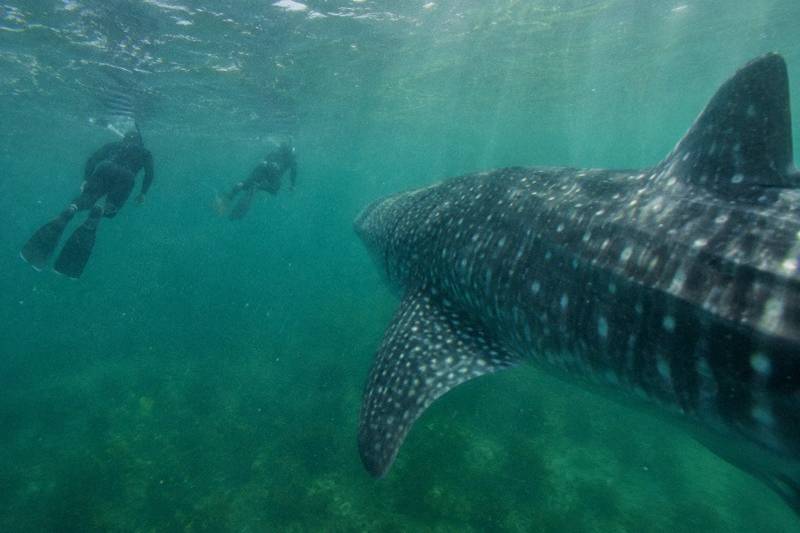
What does this mean for you as a swimmer? Practically, it means the risk profile of the activity is closer to a guided snorkel trip than to anything adventurous. Whale sharks are filter feeders; the species has no record of attacking a person, and the swim is conducted at the surface beside an animal that is feeding. The rules exist to protect the shark as much as the swimmer: no touching, no riding, no selfie sticks, no flash, no motorized propulsion devices, biodegradable sunscreen only. A guide controls a group of five and keeps it together.
Operator listings add their own safety layer on top of the federal one. Several roster listings state included traveler's insurance, certified guides and captains, and included wetsuits or life jackets. The table below compares what a few of the roster's swim listings actually state on that front, using only what each listing says.
| Listing (operator) | Price basis | Guide setup stated | Safety-relevant inclusions stated |
|---|---|---|---|
| Small Group Whale Shark Snorkeling Tour with Marine Biologist (MeXplore) | from $178 per person, 3 hours | Certified guide and captain, marine biologist format | Traveler's insurance; snorkel gear and wetsuits; federal permits and conservation donation |
| Whale Shark Adventure with a Marine Biologist (Baja Wild Adventures) | from $159 per person, 3.5 hours | Marine biologist format | Snorkel equipment; wetsuits; snacks and drinks |
| Whale Shark Swim Adventure (Sunrider Tours) | from $110 per person, 2.5 hours | Professional guide | Passenger insurance; all necessary equipment; snacks and water |
| Intimate Eco-Friendly Whale Shark Encounter (La Paz Whale Sharks VIP Tours) | from $295 per person, 3 hours | Premium reduced-group format | Fees and taxes included; snorkel gear; biodegradable sunscreen SPF 50 |
Read the inclusions column carefully and you will notice the pattern: insurance, certification, and gear appear repeatedly because the federal framework pushes operators toward them. What listings do not uniformly state is pickup, so if you are staying outside the center, check the meeting point before booking. Several depart from Muelle Fiscal on the malecon or Marina de La Paz, both easy to reach on foot from central hotels.
When Is Weather A Real Concern: Hurricane Season And Sea Conditions
The eastern Pacific hurricane season runs 15 May to 30 November, with peak risk from August through October, so early season departures carry the most weather uncertainty. Sea temperatures in the bay range from roughly 19 to 21 degrees Celsius in the coolest swim months to nearly 30 in late summer, which is why operators put swimmers in wetsuits or vests year round.
This is the part of the safety question with a real calendar attached, and it deserves honesty rather than reassurance. October is both the first month of the whale shark season and the tail of peak hurricane risk. That does not mean October trips do not run; the season opened 1 October 2026 by design, and the article on seeing whale sharks in October in La Paz covers that specific month in depth. It means an October traveler should build schedule slack into a trip and understand that a rough sea day can shift a departure.
By December, January, and February, the picture changes completely. Those are the months multiple sources describe as the strongest for whale shark presence, with cooler, stable conditions and sea temperatures around 19 to 21 degrees Celsius per satellite averages for the bay. Cool water is a comfort issue, not a safety one, and it is solved by the wetsuit most listings include. Operators generally advise a 3 mm shorty to a 5 mm full suit for water in the 20 to 24 degree range, and the federal rule requires a wetsuit or life vest regardless.
The table below puts the whale shark season months side by side on the numbers that matter for planning, drawn from the official 1991 to 2020 climate normals and satellite sea surface averages for La Paz.
| Month | Mean daily air temperature | Mean sea surface temperature | Typical rainfall | Weather planning note |
|---|---|---|---|---|
| October | 27.6 C | 28.9 C | 16.7 mm | Season opening month; tail of peak hurricane risk, keep a spare morning |
| November | 23.5 C | 25.5 C | 6.0 mm | Risk easing; shoulder month with good availability |
| December | 19.7 C | 21.7 C | 6.9 mm | Reported strong month; cool water, wetsuit weather |
| January | 18.8 C | 20.1 C | 9.3 mm | Reported strong month; coolest water of the season |
| February | 19.7 C | 19.1 C | 5.5 mm | Reported strong month; Carnaval scheduled 4 to 9 February 2027 |
| March | 21.5 C | 20.0 C | 0.8 mm | Dry and stable; sea starting to warm |
| April | 23.7 C | 21.3 C | 0.2 mm | Final month of the season; driest of the window |
A few practical implications fall out of the calendar:
- Book early season with flexibility, and keep at least one spare morning in La Paz in case your slot shifts.
- Read the cancellation terms on the listing before paying; free cancellation is not uniformly stated across the roster, so check rather than assume.
- Keep an eye on official weather sources in the days before your trip, especially in August through October.
- Remember the minimum-six rule: with five or fewer sharks counted, no boats go out at all, which is a built-in brake when shark numbers fall.
Rain itself is rarely the issue here. The climate record for La Paz shows most months of the whale shark season are bone dry: September is the wettest month on the 1991 to 2020 normals at just over 80 mm, while December through April averages a few millimeters. Wind and swell are what operators actually watch. For a fuller monthly breakdown including air temperatures, see the La Paz weather by month guide.
How To Verify You Are Booking An Authorized Operator
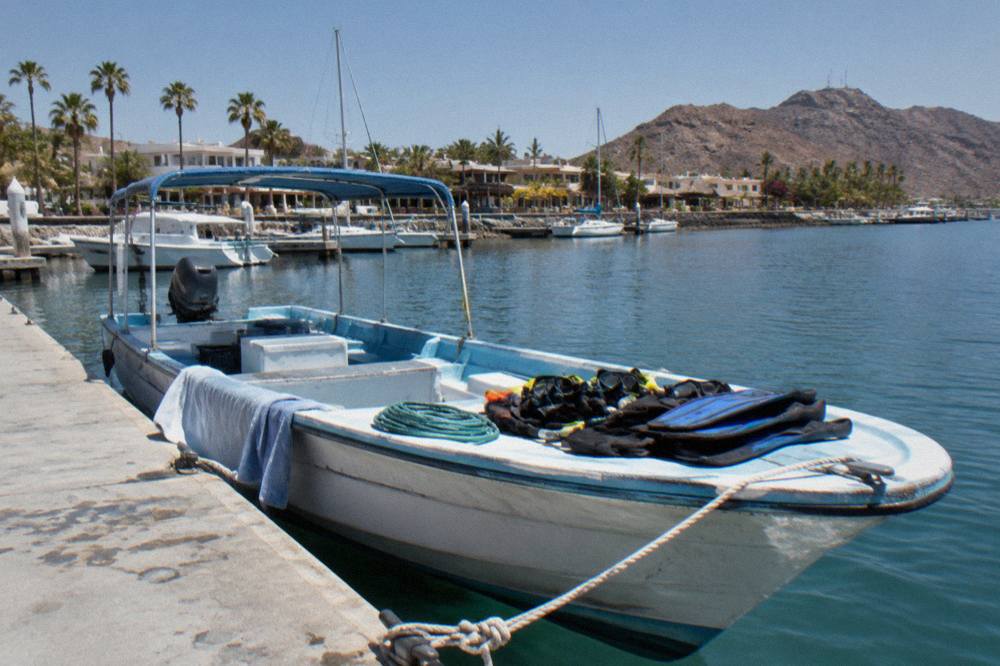
An authorized whale shark boat for 2026-27 carries three things you can check: a displayed SEMARNAT pennant (one of 112 issued), an original or certified copy of the authorization on board, and a boat no longer than 11 meters. No public online list of the 112 holders was found in our research, so the check happens at the dock and in the listing details.
This check takes about a minute and is the single most concrete thing you can do on the day. The pennant, called a banderola, is the visible identifier; the authorization document is the paperwork behind it. Boats longer than 11 meters are not part of this activity at all, per the norm's vessel limit.
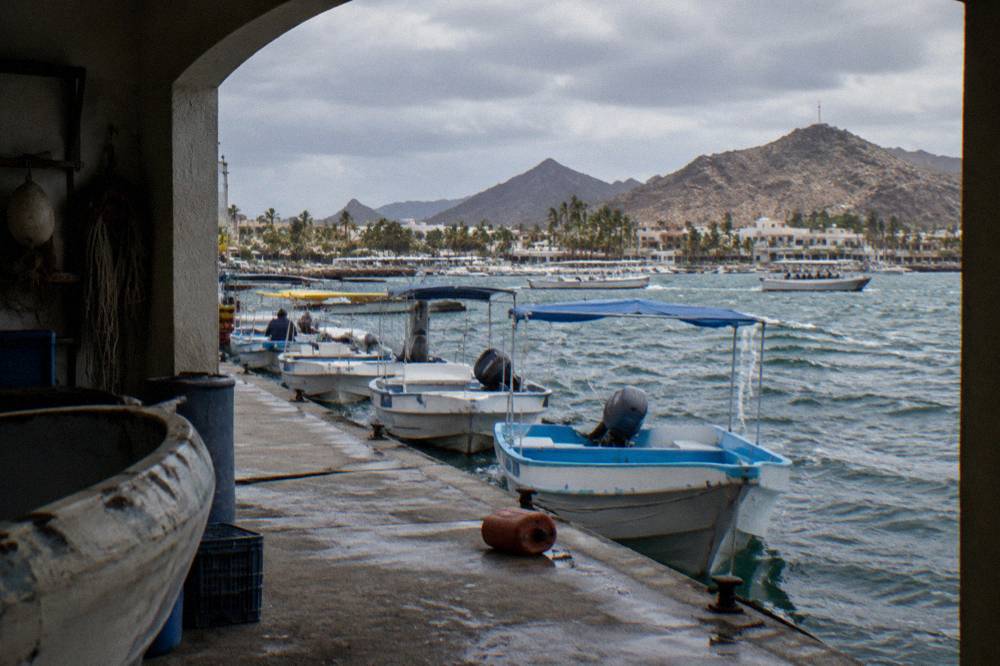
Listing details do part of this work before you ever reach a dock. Several roster listings explicitly state included federal permits and conservation fees, which is a strong signal the operator is operating inside the framework rather than around it. The MeXplore small group listing states federal permits and a whale shark conservation donation among its inclusions; the Next Experience Travel combo states "whale shark area entrance permits and bracelets" and "certified whale shark captains and guides, officially authorized to operate in the whale shark area" in its own words. If you're still deciding which town to launch your trip from, our La Paz versus Cabo whale shark comparison weighs travel logistics, tour formats, and costs side by side.
A reasonable pre-booking checklist looks like this:
- The listing names the operator and a physical departure point.
- Permits, conservation fees, or bracelets appear in the stated inclusions.
- Guides are described as certified, and insurance is stated where the listing shows it.
- The meeting instructions are specific enough that you know where to be and when.
- The listing's stated rules match the federal ones: no touching, guide-controlled groups, vest or wetsuit.
If a price looks too far below the roster's range, which runs from $110 to $295 per person for shared swims, ask what is missing rather than assuming it is a bargain. The budget end of the roster is legitimate, but every listing on it still names permits, gear, or fees in its inclusions.
For readers who want the complete picture of how to choose among swim options, the how to choose a whale shark swim guide walks through format, group size, and price trade-offs in detail.
The premium end of the market makes this verification easier rather than harder. Here is the reduced-group option that markets itself on exactly this discipline:
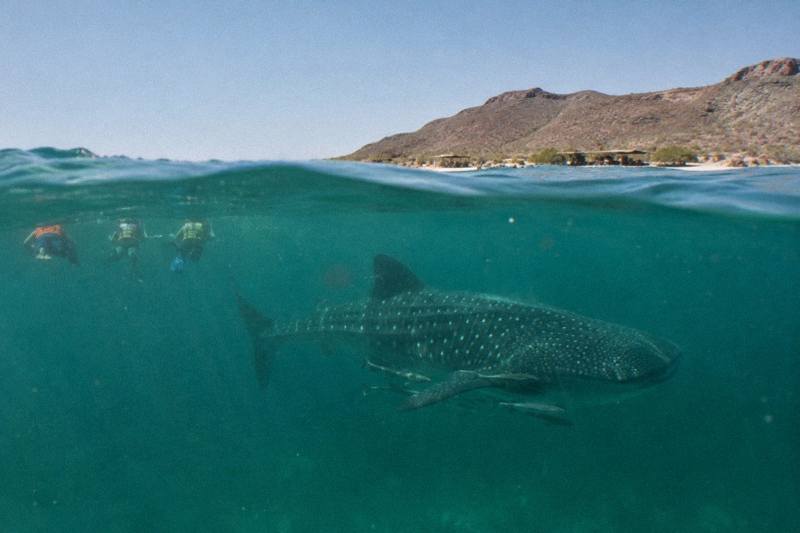
Premium Reduced-Group Encounter
La Paz Whale Shark Swims · 3 hours
★ 5.0 · 422 reviews · From $295
Check availability →Is The Wildlife Encounter Itself Safe?
Whale sharks are filter feeders with no recorded attack on a person, and the swim is a surface snorkel beside a feeding animal under a guide's control, with 2 meters of required distance from head and sides. The rules ban touching, riding, flash, and selfie sticks, and the encounter with any given shark ends immediately if it shows evasive or defensive behavior.
The species question and the activity question get conflated, so separate them. On the species: Rhincodon typus eats plankton and small fish, filters enormous volumes of water, and has no history of the behaviors people fear in sharks. On the activity: you float at the surface while a guide positions your group of up to five alongside the animal's path. The main physical demands are being comfortable in open water with a mask and snorkel, which is a swimmer question more than a shark question, and tolerating cool water in a wetsuit.
The ethical and welfare framework backs the safety framework. The species is listed as threatened under Mexican norms, the refuge exists specifically for its protection, and the rules that keep swimmers at distance and groups small are the same rules that keep the animal from being harassed. If that dimension matters to you, an article on the ethics of swimming with whale sharks covers the question in full, and the contact issue has a separate write-up in an article on whether it is legal to touch a whale shark.
Practical points that catch first-time swimmers off guard:
- You do not need to be a fast swimmer; the norm's group control means the encounter comes to a managed pace, and the strong swimmer question is covered separately.
- Gear is nearly always included; check your listing's line rather than packing your own.
- Sea motion affects some swimmers more than the shark does; eat light beforehand.
- Follow the guide's positioning instructions exactly; the distances are rules, not suggestions.
The four shifts per day structure also works in your favor. Operators report roughly 20 to 40 minutes of boat time from the dock to the swim zone, so a full outing commonly runs 3 to 5 hours on the water. The what to expect on a swim guide walks through the whole sequence from briefing to boat.
A Practical Safety Checklist For Your Whole Trip
Run five checks in order: read your government's official advisory page, confirm your dates avoid or account for peak hurricane risk, book only listings that name permits and certified guides, verify the pennant and authorization at the dock, and reconfirm your departure time the evening before. None of these takes more than a few minutes, and together they cover nearly everything a careful traveler can control.
The evening-before reconfirmation deserves emphasis because departure slots in the whale shark area are assigned in daily windows by the authorities, and operators commonly confirm exact meeting times via message the prior evening. This is not a loophole or a red flag; it is how a four-shift, permit-capped system works. Build a phone number and a bit of patience into your plan.
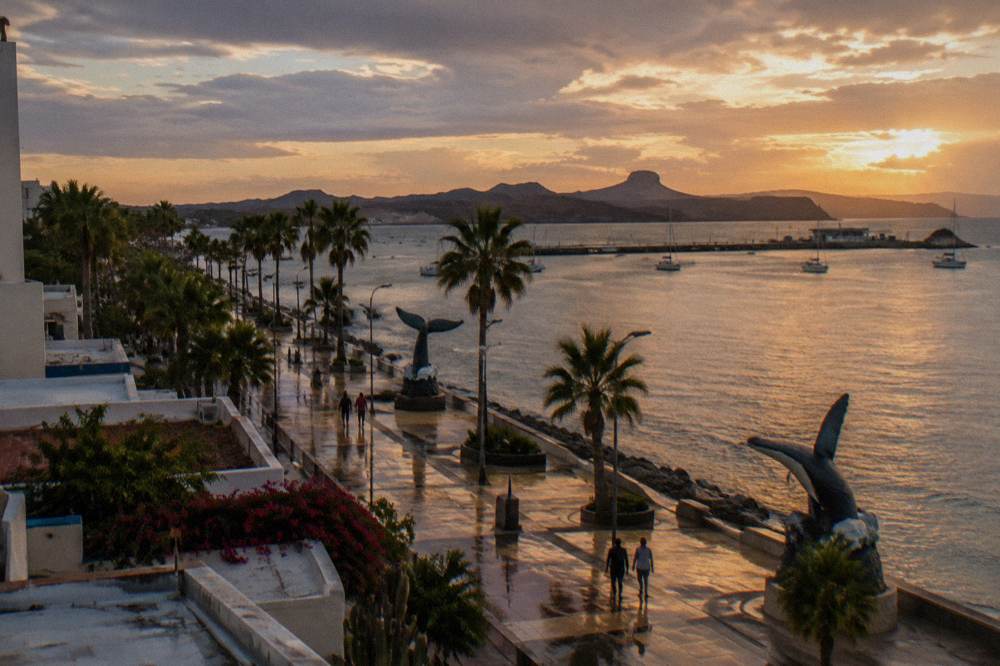
Around the swim itself, La Paz rewards the ordinary habits of any seaside trip. The malecon is a walkable waterfront where several departure points sit minutes from central hotels. If you pair the swim with a beach day, note that Playa Balandra operates controlled access in two daily turns, 08:00 to 12:00 and 13:00 to 17:00, capped at 450 visitors per turn with a reported access fee of MXN 120 per person, per the municipal tourism page for Playa Balandra; confirm current terms on the day. The Playa Balandra access guide has the details.
For travelers arriving from Los Cabos rather than flying into La Paz directly, the drive is about 160 kilometers from Cabo San Lucas, roughly 2 to 2.5 hours, and there are roster day trips that handle the whole thing. The Cabo to La Paz day trip guide compares them, including the most-reviewed option on the roster, Cabo Adventures at 4.9 from 1,141 reviews, from $259 per person with hotel pickup stated.
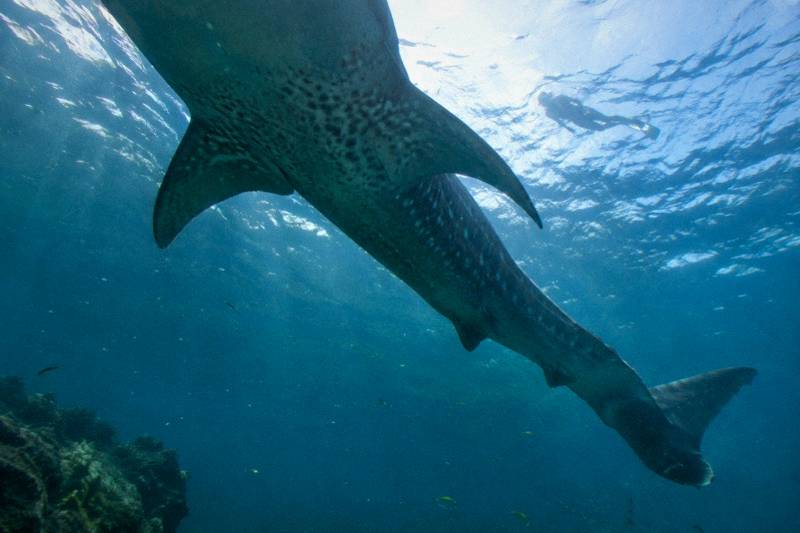
Here is the budget-friendly roster swim for readers who want the regulated experience at the lowest firm price on the list:
Finally, a word on what this site is and is not doing. This article comes from La Paz Whale Shark Tours, a site whose entire research base is this one bay and this one activity, and it deliberately refuses to hand down a verdict on the advisory question because that verdict is not ours to freeze in text. What we can own is the regulatory picture, the roster facts, and the calendar, all checked against official and published sources.
Should You Book Now Or Wait?
If your dates fall in the strongest months and you have run the advisory and operator checks, there is little reason to wait: the season cap of 112 boats and the four-shift system limit daily capacity. Waiting mainly trades schedule choice for a marginal sense of certainty you can get faster by reading two official pages.
Booking earlier also gives you more slack to absorb a weather shift, which is the one variable nobody controls. Pick a listing that names its permits and its departure point, keep a spare morning, and you have handled the realistic risks.
Whatever you decide, decide it from the primary sources: your government's advisory page, the operator's own listing, and the federal rules that govern the water. The rest, including this article, is context.
Common Questions About Travel Safety In La Paz
Do I need a wetsuit or life vest to swim with whale sharks?
Yes, one or the other is required by the federal rules. Most listings on the roster include a wetsuit or snorkel gear in the stated inclusions, but check your specific listing's line, because inclusions are printed only where each listing states them.
What happens if there are not enough whale sharks in the bay?
The season aviso requires at least six whale sharks in Zone I before trips operate; with five or fewer, swimming is suspended entirely. There are no 2026-27 shark counts published yet, so nobody can tell you today how the count is running. Build flexibility into early-season dates.
Is October a risky month to visit?
October carries the tail end of peak hurricane-season risk, which runs 15 May to 30 November with the highest risk from August through October. It is also the official opening month of the whale shark season. Smart October travelers keep a spare morning in case conditions shift a departure.
How can I tell if a whale shark operator is legal?
Look for a displayed SEMARNAT pennant, an original or certified copy of the authorization on board, and a boat no longer than 11 meters. Before booking, favor listings that name permits, conservation fees, or bracelets among the inclusions and that give a physical departure address.
Are the whale shark boats crowded?
Crowding is capped by rule, not by operator courtesy. Boat numbers per shift scale with the counted shark population, from six boats at six sharks up to a maximum of fourteen at once, and swimmers enter the water in guide-controlled groups of up to five.