Whale Shark Season In La Paz: Which Months To Swim
The official whale shark season in La Paz runs from 1 October to 30 April, but the calendar alone does not tell you when trips actually run. A federal minimum-shark rule, monthly count fluctuations and sea temperatures all shape which weeks are worth booking.
Short answer
The announced 2026-27 season runs 1 October 2026 to 30 April 2027, with 112 authorized boats and four daily shifts. Trips only operate when at least six sharks are counted in the swim zone. December, January and February are the best-reported months, with some years showing a December and March pattern.
The whale shark season in La Paz is not a weather pattern or a tourist convention, it is a federal decision announced each year by SEMARNAT. For 2026-27 the announced window runs from 1 October 2026 to 30 April 2027 under an aviso issued under numeral 4.1.3 of the swimming norm, with 112 authorizations handed to local operators, one boat and one pennant each. Within that window, whether any given trip leaves the dock depends on a shark-count rule that most visitors have never heard of, and that rule is the single most useful thing to understand before you pick your dates. Readers comparing travel weeks are, at that exact moment, choosing which departure to book, whether that is the marine-biologist small group, the premium reduced-group encounter or a budget shared swim, so this guide works through the season month by month with the booking question in mind. And since the season rules only matter if a shark actually shows up on your day, our look at the real odds of seeing a whale shark in La Paz covers the official counts, why some weeks get suspended, and which timing tilts the odds your way.
When Is Whale Shark Season In La Paz?
The announced 2026-27 season runs from 1 October 2026 to 30 April 2027, a seven-month federal window under the swimming norm NOM-171. SEMARNAT issued 112 authorizations for the season, each covering one holder, one boat and one pennant, and four swimming shifts run per day. Outside this window no authorized swim activity with the species takes place in the bay.
That is the official answer, and it is fixed on the calendar. The practical answer is softer, because the season does not switch on like a light. In 2025-26 the official window was 1 October 2025 to 30 April 2026, yet the season opened in November and closed 30 April, as sources agree on those endpoints even where they disagree on the finer dates. In 2022-23 the permits arrived about six weeks late and swimming effectively began 27 November. The lesson repeats most years: October is the legal start, not the reliable start.
The season's shape is also a conservation instrument. The 2018 refuge decree created the Area de Refugio Bahia de La Paz, 22,749 hectares split into three zones, and the whale shark is listed as threatened under NOM-059-SEMARNAT-2010. PROFEPA and CONANP inspect the authorized boats. So when the calendar says 1 October, what it means is that the federal machinery for a tightly limited activity has restarted, not that sharks have RSVP'd. For a deeper look at the rules themselves, see the guide to the NOM-171 swim rules in La Paz.
What Does The Minimum-Six-Sharks Rule Mean For Your Trip?
Trips in the swim zone only operate when the two most recent official CONANP counts average at least six whale sharks in Zone I; with five or fewer, no boats go out at all. The same counts set the fleet ceiling for the day, from six boats per shift at six sharks up to a hard cap of fourteen boats per shift at fourteen or more sharks.
This is the rule that turns the season calendar into a living thing. Counts are taken regularly, the two most recent are averaged and rounded up, and the resulting number opens or closes the water. It has real teeth: in the winter of the 2024-25 season, after official counts fell to 9, 5 and then 1 shark, SEMARNAT suspended swimming and watching entirely, and kept the suspension into March. A similar low-count suspension happened in early 2023.
| Sharks counted (average, rounded up) | Boats per shift | Boats per day |
|---|---|---|
| 0 to 5 | 0, no trips | 0 |
| 6 | 6 | 24 |
| 7 to 9 | 7 | 28 |
| 10 | 8 | 32 |
| 11 | 9 | 36 |
| 12 | 10 | 40 |
| 13 | 11 | 44 |
| 14 or more | 14, the cap | 56 |
Four shifts a day means that even at moderate counts, dozens of departures happen daily across the fleet, which is why the roster of shared swims on La Paz Whale Shark Tours is built almost entirely around three-to-five-hour outings rather than full days. It also means the rule is invisible on a good day and total on a bad one. No operator can promise a shark, and no honest one tries; what an authorized operator can promise is a permitted boat, a trained guide and a refund or rebooking policy you should read before paying. If a suspension is in force when you travel, the money question is the one that matters, and the guide on whale shark swim suspensions in La Paz covers how they work.
For most of the season the rule is quiet background. It has bitten mid-winter before, as in January 2025, and its timing is least predictable in early October, when few sharks have arrived. Plan for it rather than against it: build a spare day into any early or late-season trip, and book a tour whose cancellation terms you have actually read.
Which Months Are Best For Whale Sharks In La Paz?
December, January and February are the best-reported months, the period when local reporting consistently describes the strongest and most stable presence of sharks in the bay. Some years show a December and March pattern instead, so March can hold its own. No month comes with a sighting promise, and no honest operator makes one.
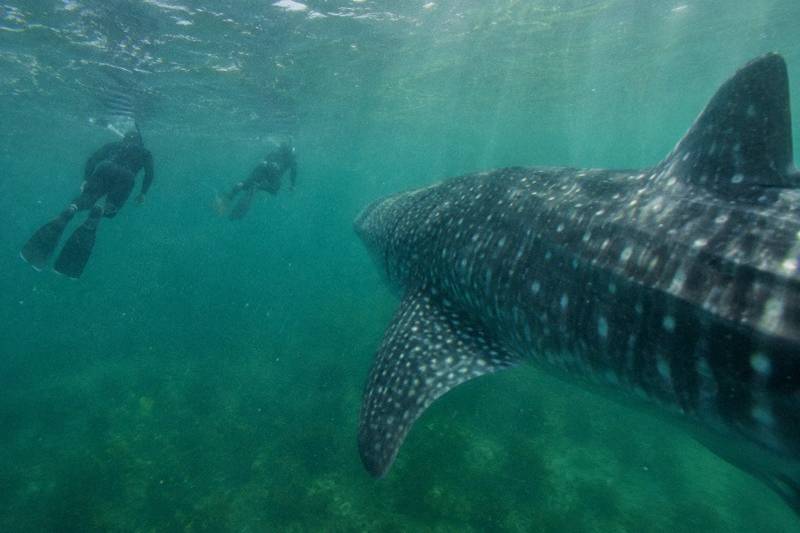
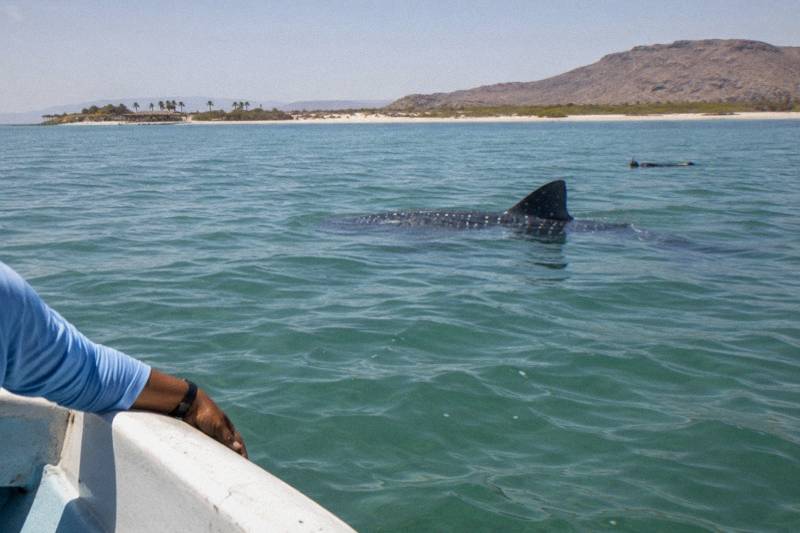
Peak season in La Paz is a winter phenomenon, which surprises visitors who associate whale sharks with tropical summer. The sharks gather in the bay to feed on plankton through the cooler months, and by December the aggregation is usually established, which is why the marine-biologist small group, the most-reviewed La Paz-based swim with 649 reviews behind a 4.9 rating, runs its steady schedule of three-hour shared departures through that stretch. February adds a scheduling bonus for trip planning: Carnaval La Paz is scheduled for 4 to 9 February 2027 on the Malecon, a lively week that can coincide with good swimming but also fills hotels.
Peak season also concentrates demand. December to February is when the 14-boat cap actually matters, because most of the 112 authorized operators want their shifts in those weeks. Booking ahead is less about scarcity of seats and more about getting the departure time and operator you prefer.
Is October Too Early For A La Paz Whale Shark Swim?
October is the legal opening of the season but the least predictable month to book. No CONANP counts had been published for 2026-27 as of late October, and the minimum-six rule means early-season trips depend entirely on when the sharks actually arrive, which has historically been mid-October to November.
There is no diplomatic way around it: October is a gamble. The 1 October start date is administrative. The 112 pennants for 2026-27 were delivered to local operators on or around 20 October, which tells you the fleet was still completing its paperwork weeks into the season. Past seasons show the same lag, with effective openings in November in 2025-26 and late November in 2022-23. Anyone booking a swim for the first half of October should treat it as a bonus if counts allow and a pleasant beach trip if they do not.
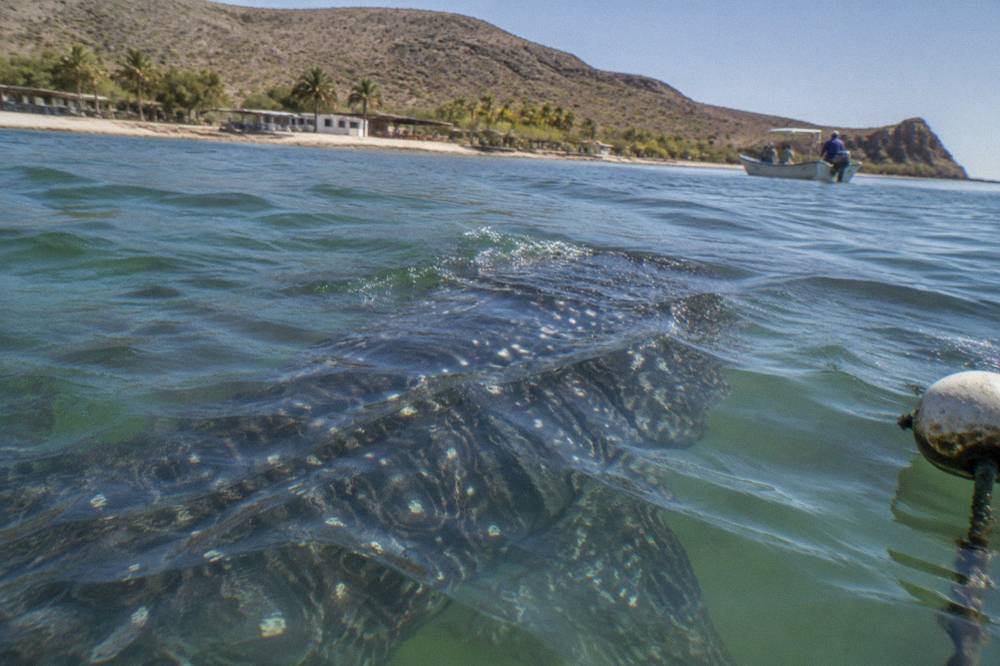
October also carries weather risk independent of sharks. The eastern Pacific hurricane season runs 15 May to 30 November, with peak risk from August to October, so an early-October trip sits inside the tail of that window. Sea temperatures are still warm, averaging about 28.9 C in October per satellite averages, and the water cools steadily from there, which is part of what draws the plankton and the sharks in.
The offsetting advantages are real: quieter hotels, emptier boats when trips do run, and the chance to combine a swim attempt with other early-season plans. Espiritu Santo island tours and the Los Islotes sea lion colony are open in October, since the sea lion swim closure runs 1 June to 31 August. The Los Cabos day trip, a 10-hour outing from $259 per person with 1141 reviews, runs through this period for visitors based in Cabo who want a single long day in La Paz.
What Are November And December Like In La Paz?
November is when the season has typically gathered momentum, with the 2025-26 season having opened that month, and December is the first of the three best-reported months. By December the aggregation is usually established, sea temperature has dropped to about 21.7 C, and trip schedules run at full strength across the fleet.
November is the month the early gamble starts paying off. It is still shoulder, still quieter than the peak, but historically the counts climb past the six-shark threshold around now, and operators settle into their routine of four shifts a day. The water is cooling through the mid-20s Celsius, moving toward the range that supports the plankton blooms the sharks feed on. For a traveler who wants good odds without peak-season crowds, late November is arguably the sweet spot the calendar offers.
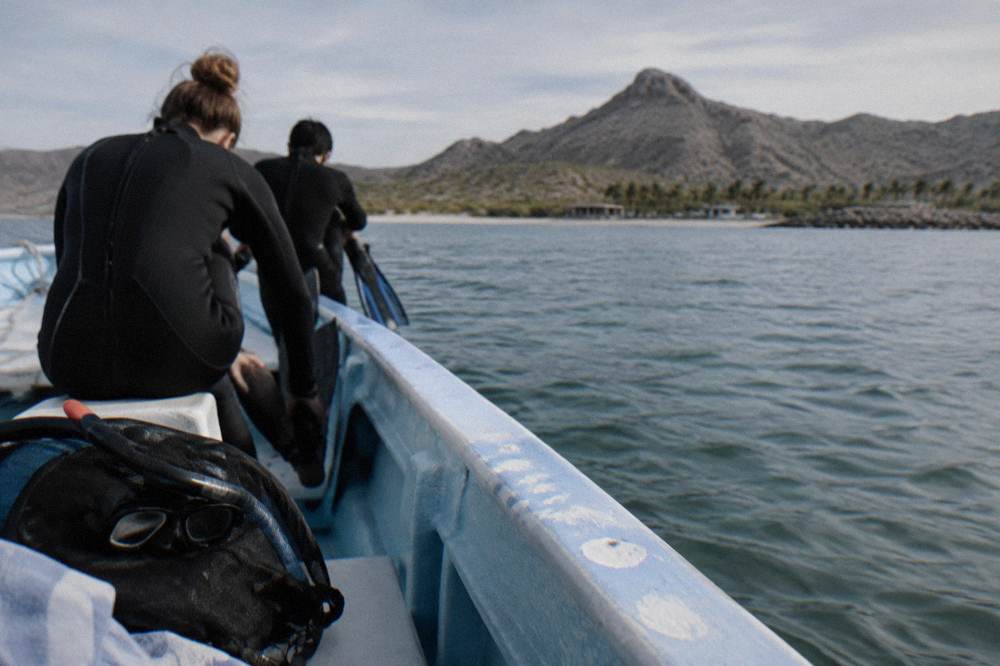
December changes the character of the town as well as the bay. It is the first month where both the sheltered swim zone and the wider Sea of Cortez feel fully in season, and where combining a whale shark morning with an afternoon at Playa Balandra becomes a realistic daily rhythm rather than an ambitious one. Balandra runs two daily turns, 08:00 to 12:00 and 13:00 to 17:00, capped at 450 visitors per turn, so a morning swim shift and an afternoon beach turn dovetail neatly; the guide to Balandra access, hours and the fee has the details.
For planning, December means booking with intent. The shared swims cluster in the $122 to $194 per person range on the roster, from the two-hour Punta Baja Tours outing at from $122 to the small six-person Eco Migrations trip at from $194, and December is when the better-reviewed listings, the Tuna Tuna small group at 5.0 from 454 reviews among them, fill their preferred shift times first.
| Listing | Duration | Price from | Rating and reviews |
|---|---|---|---|
| Snorkel Tour with Whale Shark (Alonso Tours) | 2 to 4 hours | $122 per person | 4.9 from 77 reviews |
| Whale Shark Adventure with a Marine Biologist (Baja Wild Adventures) | 3 hours 30 minutes | $159 per person | 4.9 from 109 reviews |
| Small Group Whale Shark Snorkeling Tour with Marine Biologist (MeXplore) | 3 hours | $178 per person | 4.9 from 649 reviews |
| Small Group Whale Shark Snorkeling in La Paz (Tuna Tuna Tours) | 3 hours | $178 per person | 5.0 from 454 reviews |
| Whale Shark Swimming Adventure (Eco Migrations, up to 8) | 4 hours | $194 per person | 4.8 from 56 reviews |
Any of these fits a December-to-February morning; the differences that matter at booking time are group feel, departure dock and what the listing includes, from snacks and wetsuits to photos.
What Are January And February Like On The Sea Of Cortez?
January and February complete the best-reported trio of months, with the aggregation typically at its most stable and the sea at its coolest, averaging about 20.1 C in January and 19.1 C in February. They are also the months where the suspension rule has historically bitten, as the mid-winter low-count closure of the 2024-25 season shows, so a spare day remains smart insurance.
These are the months the season was built around. Cool, plankton-rich water holds the sharks in the bay, and the four-shift rhythm runs at capacity. The caveat is the one from the verified history: after official counts fell from 9 sharks to 5 and then to 1, SEMARNAT suspended the activity and kept the suspension into March. That was not a freak event, a similar low-count suspension occurred in early 2023. The aggregations move, and nobody controls them.
The practical response is not to avoid January and February, which remain the best-reported months, but to travel with slack. Two or three usable mornings instead of one, a booking whose cancellation terms are clear, and a backup plan that includes the things La Paz does well when the water is closed. The 3 mm shorty wetsuit most operators include is the standard answer to 19 to 20 C water, and the rules require either a wetsuit or a life vest in the water regardless.
February also brings Carnaval, scheduled 4 to 9 February 2027 on the Malecon. It is one of the region's biggest events, it makes the Malecon loud and festive, and it competes with your early-morning departure for road space and parking. Some travelers will want exactly that combination of swim and street party; others should check the dates and plan around them. The trade-offs are covered in the guide to the best time to visit La Paz.
How Does The Season Wind Down In March And April?
March is a strong month in some years, with a December-and-March pattern appearing in the historical record, while April thins out toward the 30 April close. The 2025-26 season ended with 56 individual sharks identified, 950 sightings recorded, and 11 sharks still present at the close, showing the aggregation fades rather than vanishes.
March deserves better press than it gets as a "shoulder" month. Some years show a December and March pattern of whale shark peaks in the Bay of La Paz. The sea sits near 20 C, still among the cooler water of the season and only beginning to warm, while air temperatures climb through the high 20s Celsius. Crowds thin after the February Carnaval wave moves on, and the Espiritu Santo combos, the whale shark plus sea lion plus Balandra day trips that make up the $234 to $345 island-combo band on the roster, run at their best as sea conditions settle.
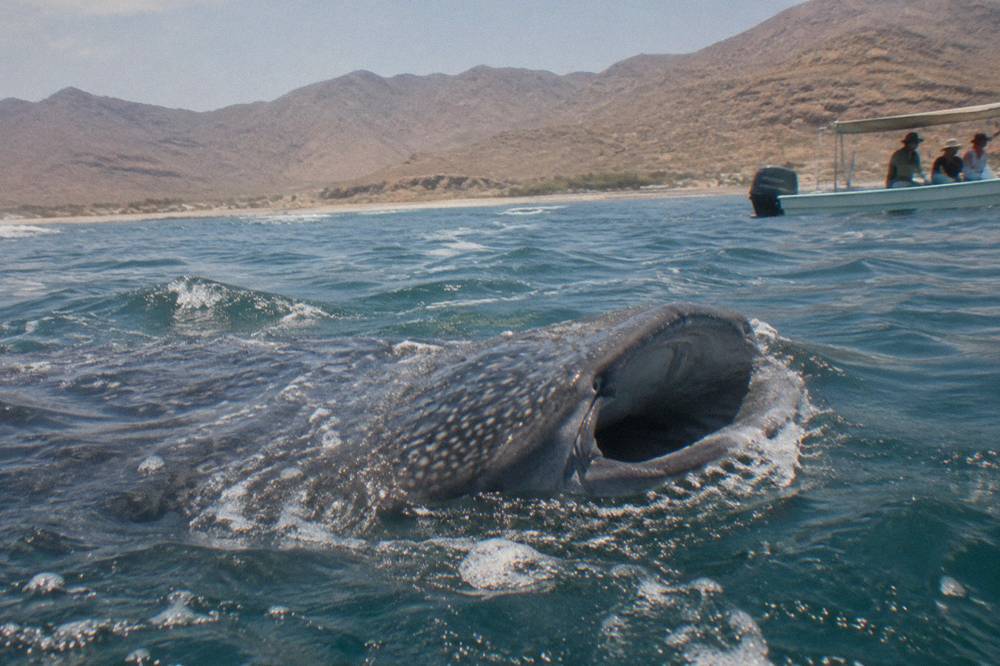
April is the long goodbye. The window closes 30 April by federal rule, and the last weeks blend late-season sharks with the first heat of the Baja spring, mean daily maxima pushing toward 32 C. Trips still run while counts hold above the threshold, and the 2025-26 close with 11 sharks still in the bay suggests April trips are far from empty. But each week raises the odds that counts slip toward the six-shark floor, and with it the odds of a last-minute suspension. Book April with the same flexibility you would book October.
After 30 April the swim season is over, full stop. The sharks do not take bookings, and no summer swim exists in the bay. May visitors can still swim with the sea lions at Los Islotes before the 1 June to 31 August reproductive closure. Summer visitors turn to Espiritu Santo above water and to the beaches. The park wristband for Espiritu Santo, reported at MXN 225 per person per day, and Balandra's reported MXN 120 entry, are separate from any whale shark tour price; confirm both on the day. If your trip is based in Cabo, the month-by-month guide to whale sharks near Cabo explains how day trips reach the La Paz season.

How Do Sea Temperature And Weather Track Month By Month?
Sea temperature in La Paz falls from about 25.5 C in November to a February trough of 19.1 C, then climbs to 21.3 C by April. Air temperatures span mean maxima of 25.4 C in January to 34.0 C in October, with the official CONAGUA normals putting the whole season in pleasant, dry territory.
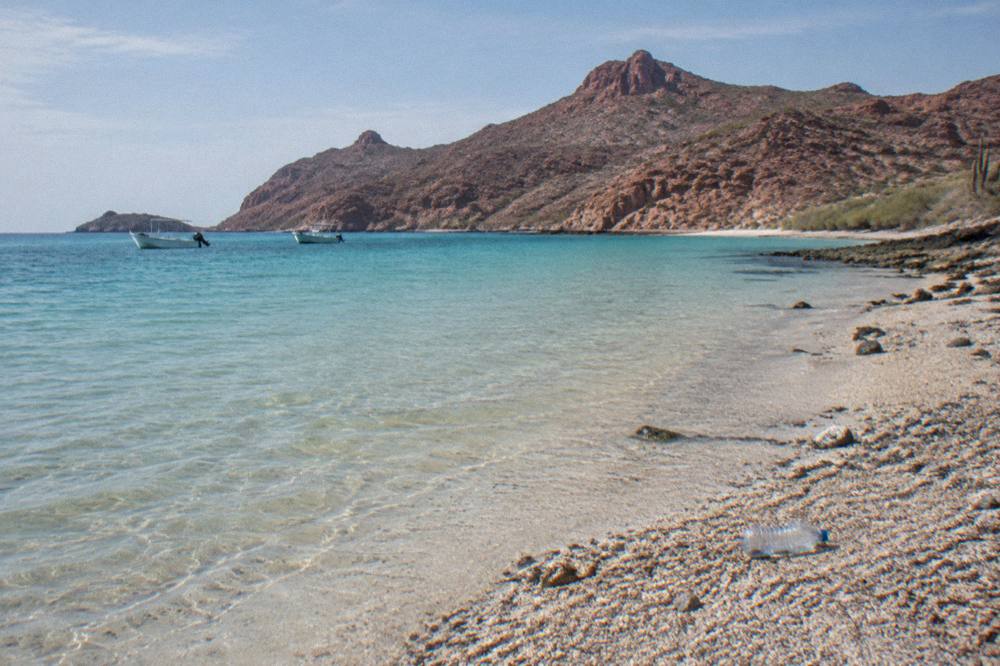
The numbers below come from CONAGUA's 1991-2020 climate normals for the La Paz station and satellite sea surface averages for La Paz. They are planning figures, not promises: individual weeks vary, and operators report the water on the swim side of the bay sits broadly in the 20 to 24 C range through the season, which is why the 3 mm shorty is standard issue.
| Month | Mean daily max air (C) | Avg sea temp (C) | Season character |
|---|---|---|---|
| October | 34.0 | 28.9 | Legal opening, counts pending, hurricane-tail risk |
| November | 29.8 | 25.5 | Season typically gathering, quieter town |
| December | 25.5 | 21.7 | Best-reported month, full schedules |
| January | 25.4 | 20.1 | Best-reported month, suspension history noted |
| February | 26.5 | 19.1 | Best-reported month, Carnaval week |
| March | 29.3 | 20.0 | Strong in some years, calmer crowds |
| April | 32.2 | 21.3 | Thinning aggregation, 30 April close |
Rain is a minor character in this story, the normals show the season months as near-dry, with September's 81.4 mm monthly average belonging to the closed summer. What matters more is wind, which operators watch daily, and which reshapes visibility and sea state on the water regardless of the month on your ticket. For gear guidance tied to these temperatures, see what to bring for a La Paz whale shark swim. For the bigger picture of how air, sea and rain shift through the calendar, the month-by-month La Paz weather guide shows what each stretch of the year means for time on the water.
Should You Combine Whale Shark Weeks With Espiritu Santo Or Los Cabos Plans?
Yes, and the season calendar makes certain combinations natural: whale shark plus sea lion plus Balandra combos run from $234 to $345 per person as six-to-nine-hour days, while visitors based in Los Cabos can reach the La Paz season through day trips of 7 to 10 hours priced from $259 to $399 per person, always traveling to La Paz rather than swimming locally in Cabo.
The combo logic is calendar logic. The whale shark window, October to April, sits inside the sea lion open season at Los Islotes, roughly 1 September to 31 May, so a single day can legitimately cover both. The Tuna Tuna combo, 5.0 from 113 reviews at from $234 for six hours, and the MeXplore version, 4.9 from 73 reviews at the same price point, are the two most-reviewed ways to do it. The Balandra leg inside those days is subject to the beach's own turn system and capacity, so the beach stop is a scheduled feature, not a guarantee of a full afternoon on the sand.
For Los Cabos based travelers the season is reachable but expensive in time. The Cabo Adventures day trip runs 10 hours from $259 per person with hotel pickup, the Cabo Trek version 9 hours from $399 with a marine-biologist guide, and the BallardTours option 7 hours from $353 including a Todos Santos stop. None of these swims in Cabo; all of them drive to La Paz, because the authorized swim zone is the bay here. The trade-offs have their own treatment in the guide to the Cabo to La Paz whale shark day trip.
Booking strategy across all of this comes down to one habit: choose the month first, the tour second, and read the cancellation terms before paying. The listings on this site carry their own policies, and several, including the featured marine-biologist small group at from $178 per person, print them on the operator's page. A date strategy that survives a count dip is worth more than any single departure.
Common Questions About Whale Shark Season In La Paz
When is whale shark season in La Paz?
The announced 2026-27 season runs from 1 October 2026 to 30 April 2027, with 112 authorized boats and four swimming shifts per day. Swimming only operates while at least six sharks are counted in the bay's Zone I, so the effective start often lands in November rather than on the legal opening date.
What is the best month to swim with whale sharks in La Paz?
December, January and February are the best-reported months, when the aggregation is typically strongest and most stable. Some years show a December and March pattern instead. No month carries a sighting guarantee, and no honest operator offers one.
Can you swim with whale sharks in La Paz in October?
October is legal but unpredictable. No CONANP counts had been published for the 2026-27 season as of late October, and past seasons have effectively started in November. October also sits in the tail of the Pacific hurricane season, which runs to 30 November.
Why do La Paz whale shark trips get suspended?
Trips stop when the average of the two most recent official counts falls to five or fewer sharks in the swim zone. That rule has closed the water in recent seasons, including the 2024-25 mid-winter suspension and another in early 2023. Suspensions lift when counts recover, which is why a spare day in your itinerary is good insurance.
Is April too late for whale sharks in La Paz?
Not necessarily. The season closes 30 April, and the 2025-26 season ended with 11 sharks still present in the bay. April trips do run, but the aggregation thins as the month goes on, so the odds of a low-count suspension rise toward the close.
How cold is the water during whale shark season?
Sea temperature averages about 19.1 C at the February trough and around 21.3 C by April. Operators generally provide wetsuits, a 3 mm shorty being standard, and the rules require either a wetsuit or a life vest in the water.