What Month Are Whale Sharks In Cabo? Really La Paz, Oct To Apr
Cabo has no whale shark swim of its own. The sharks gather in La Paz bay from October to April, and Cabo visitors reach them on guided day trips. Here is the month-by-month answer.
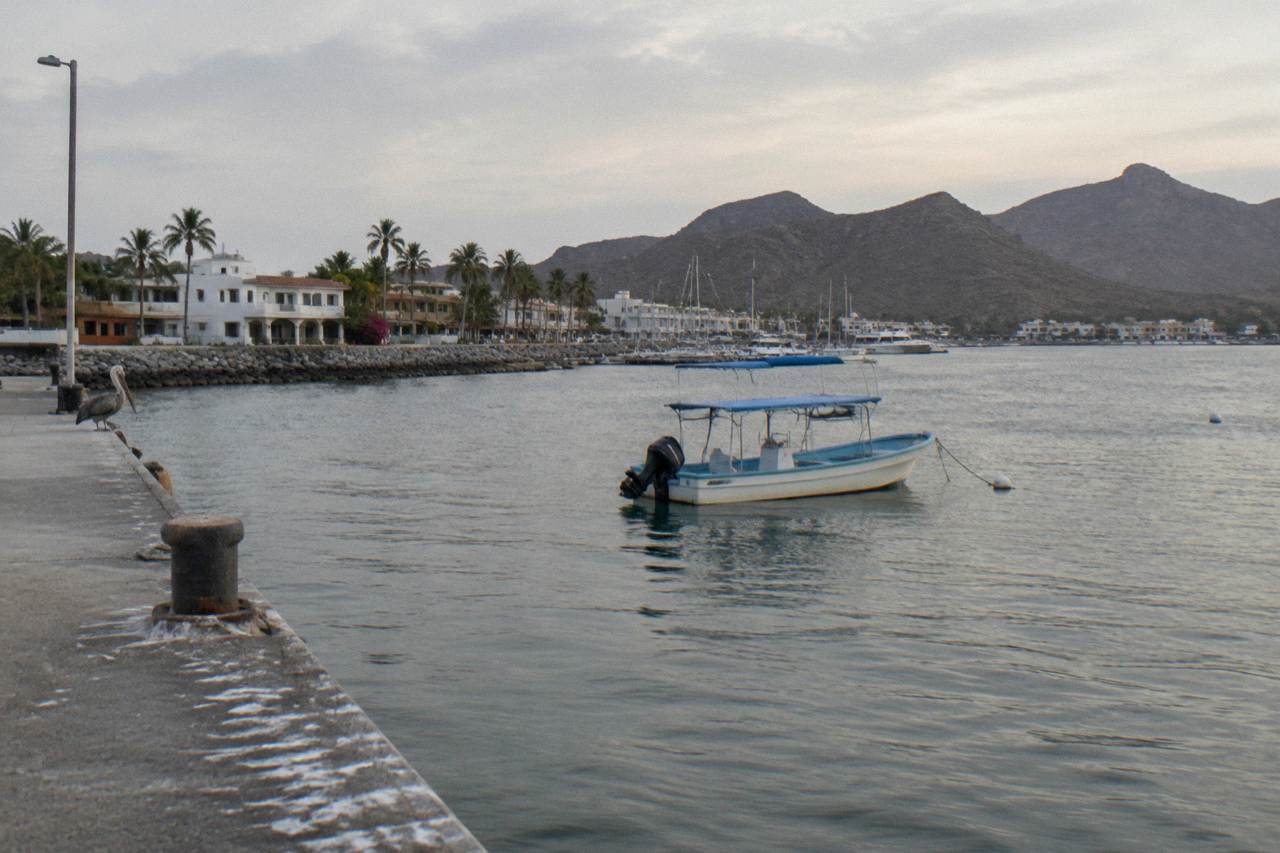
The search that brings most people here contains a small misunderstanding worth fixing before anything else. There is no local whale shark swim based in Cabo San Lucas, and no verified Cabo shark season on file anywhere in the official record. The animals gather in the bay fronting La Paz, roughly 160 km and a two to two-and-a-half-hour drive north, and that is where every authorized swim on this site operates. The Cabo listings in our roster, including the Cabo Adventures whale shark tour and lunch from Los Cabos and the Cabo Trek excursion with a marine biologist guide, are day trips that put you on a boat in La Paz. If that long ride up from Cabo gives you pause, our guide to reaching La Paz by plane, ferry, or shuttle from Los Cabos lays out the alternatives.
So the month question still has a real answer. It is just a La Paz answer, and it is a good one. The calendar is set by the federal government rather than by tour companies, which means the window is published in advance, enforced on the water, and knowable before you book a single night of accommodation. That is rare in wildlife travel, and it makes planning around the season genuinely practical instead of a guessing game.
One more framing note before the details. Nothing in this article promises you a shark. Whale sharks are wild animals, their numbers in the bay fluctuate week to week, and the same regulation that opens the season also closes it when counts fall. What the season dates give you is the window in which trips are legally allowed to run and historically have run at their best. Any page that converts a season window into a sighting guarantee is selling you something the regulators themselves do not promise.
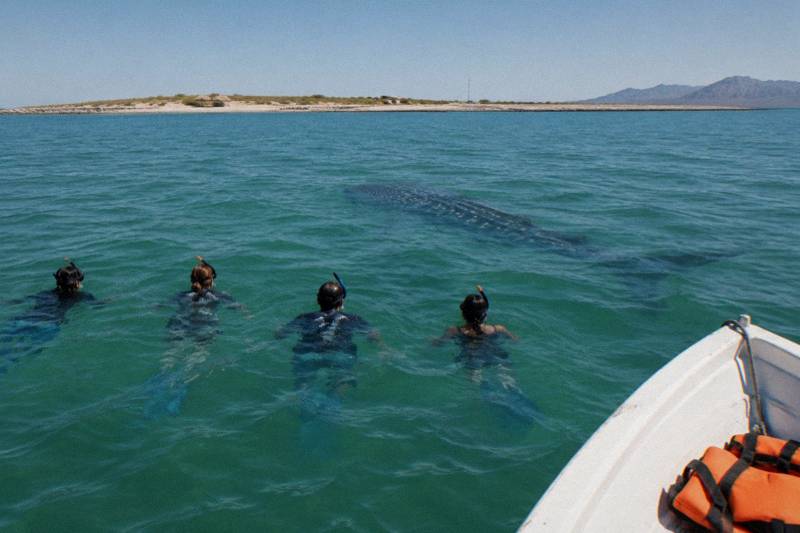
The swim season in La Paz bay is announced for 1 October 2026 to 30 April 2027, under a SEMARNAT aviso tied to the federal whale shark norm. Reported best months are December, January and February, when local coverage historically describes the highest concentrations of plankton and the most stable conditions. Cabo visitors reach the sharks on day trips of 7 to 10 hours. If you're weighing La Paz against other swim spots around the country, our guide to the best place in Mexico to see whale sharks makes the full case.
Why does the season work this way? Whale sharks are filter feeders that follow plankton, and the cooler months in the Gulf of California concentrate that food in the shallow, protected bay off La Paz. The water cools from its summer peak near 30 C down through the low twenties by midwinter, and that cooling, driven by seasonal currents and upwelling, is what stacks the plankton into the bay. The federal government treats the bay as a refuge, decreed on 29 November 2018, covering 22,749 hectares split into three zones; only Zone I permits swimming and watching. Zone II is set aside purely for conservation, with no activity allowed, and Zone III is a transit corridor with a 7-knot speed limit. That structure, not local preference, is why the activity has a fixed calendar and a fixed address. The refuge decree is published on the official federal gazette page.
A note on what the dates do not promise. The season window is a legal frame, not a sighting forecast, and no rule guarantees animals on any given morning. In fact the 2026-27 season is only announced: no shark counts have been published for it yet, and there is no first-sighting date on record. If a page tells you sharks "always" show up in October, that page is guessing. The honest version is that October is when trips may legally begin, November is when swimming started in 2022-23 and 2025-26, and the winter months are when the aggregation has historically been strongest.
The announced season also comes with a specific administrative structure worth knowing, because it shapes your booking. There are 112 authorizations for 2026-27, issued on a strict basis of one authorization per holder, per boat, per pennant, the distinctive flag an authorized vessel flies. Those pennants were physically handed to local operators in late October 2026 in a ceremony witnessed by the state government, which local reporting notes framed permits as going exclusively to local service providers.
Why The Search Says Cabo But The Swim Says La Paz
Cabo San Lucas sits on the open Pacific side of the Baja peninsula, while the whale shark gathering happens in the Gulf of California bay fronting La Paz. No authorized swim product on this roster departs from Cabo as a local activity; the three Cabo listings are 7, 9 and 10-hour day trips that drive to La Paz and board boats there. If you're still deciding which town to base yourself in, the La Paz or Cabo for swimming with whale sharks lays out what each choice means for cost, drive time and season.
The drive itself is straightforward. Cabo San Lucas to La Paz is about 160 km, roughly 2 to 2.5 hours; from the San Jose del Cabo airport it is about 214 km and 2.5 to 3 hours, most of it on Highway 19, the coastal road through Todos Santos that most drivers prefer to the inland Highway 1 alternative. Cabo Adventures and BallardTours collect guests from Cabo hotels in the early morning; Cabo Trek starts at its office and running the transfer as part of the package. The Cabo Adventures listing states hotel pickup and drop-off, lunch, beverages, wetsuits and snorkel gear from $259 per person across a 10-hour day; it rates 4.9 from 1141 reviews, the most reviewed product on the whole roster. Cabo Trek's version runs from $399 per person over 9 hours with a marine biologist guide, lunch and transport from its Cabo office, rating 4.9 from 62 reviews.
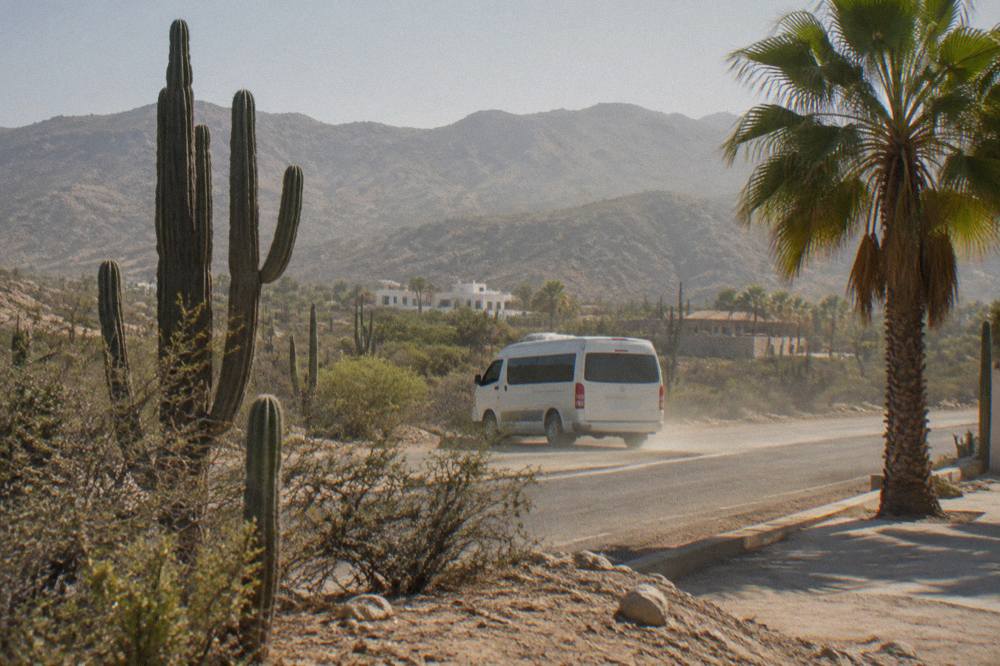
The third option takes a different shape. The BallardTours whale shark swim, La Paz and Todos Santos day trip runs from $353 per person over about 7 hours for up to 10 guests, with the boat guide, a sandwich and water included, plus time on the La Paz boardwalk and the option of visiting Todos Santos on the way back. That listing has no reviews yet, so there is no rating to report, only the itinerary as written. A no-review listing is not a bad listing; it is simply an unproven one, and we would rather tell you that than pad it with adjectives.
For a fuller comparison of the two bases, our guide on choosing between La Paz and Cabo covers the trade-offs from a traveler's-eye view, and the Cabo to La Paz day trip guide walks through transfer times, departure logistics and what each of the three day-trip products includes.
What The Season Rules Mean For Your Chosen Month
The 2026-27 aviso allows trips only when at least 6 whale sharks are counted in the swim zone, with 5 or fewer triggering a full stop, and it caps boats at 14 at once even in the best case. Trips run in 4 daily shifts. The cap table limits boats per shift, so December to February dates deserve early booking.
The scaling rules are the part most travelers never hear about. Counts drive boat numbers directly: 6 sharks allow 6 boats per shift, 10 sharks allow 8, and 14 or more allow the maximum of 14 boats per shift and 56 per day. The count comes from averaging the two most recent official counts, rounded up, so a single strong survey does not flood the zone with boats and a single weak one does not empty it. There are 112 authorizations for the season in total, which is far more than can ever be on the water simultaneously; the caps decide who sails, not the permit count.
| Sharks counted in Zone I | Boats per shift | Boats per day |
|---|---|---|
| 0 to 5 | 0, no trips | 0 |
| 6 | 6 | 24 |
| 7 to 9 | 7 | 28 |
| 10 | 8 | 32 |
| 11 | 9 | 36 |
| 12 | 10 | 40 |
| 13 | 11 | 44 |
| 14 or more | 14 | 56 |
This is why the minimum-six rule matters historically, not just on paper. In late January 2025, counts of 9, then 5, then 1 sharks led SEMARNAT to suspend all swimming and watching in the bay, and the suspension held into March. Something similar happened in early 2023, when low counts paused the season as well. None of this predicts 2027, but it explains why a February booking can occasionally be reshuffled, and why a good operator will tell you plainly what happens if trips stop. We never promise sightings, and neither should anyone selling you a ticket. Ask the question directly before you pay: what is the rebooking or refund arrangement if the zone closes?
The last full season offers better news as context: 56 individual sharks were identified, including 20 new juvenile records, and 950 sightings were logged by the 30 April close, with 11 animals still present in the bay on the final day. Those numbers come from monitoring work associated with the national park commission and were reported at the season's close. A juvenile-heavy population is also a signature of this bay specifically; La Paz is known as a nursery ground, which is part of why the rules around swimmers are as strict as they are.
The Month-By-Month Picture In La Paz Bay
October opens the legal season with the warmest water of the window, roughly 28 to 29 C on average, and the most weather risk, since the eastern Pacific hurricane season runs to 30 November. November cools toward the mid-20s and marks the point when trips reliably ramp up. December, January and February are the reported peak months.
October deserves a candid paragraph. The season is announced from 1 October, but in 2025-26 the practical start came in November, and in 2022-23 permits arrived so late that trips began 27 November. October also carries peak storm-risk months in the official hurricane window of 15 May to 30 November, with the historical peak of risk landing in August through October. Some October departures run beautifully; others get weathered out or wait on shark counts. Our October post goes deeper on that trade-off.
From December the picture steadies. Water temperatures average near 20 to 21 C in January and February, which sounds cold until you remember many rostered trips include a wetsuit, and most include the full snorkel kit as well. March remains solid, and some years show a secondary March peak alongside the December one. April thins out; the 2025-26 season closed 30 April with animals still in the bay, but booking late April means accepting a quieter zone and a season winding down.
| Month | Reported status in La Paz bay | Sea temp average | Notes for Cabo day-trippers |
|---|---|---|---|
| October | Season open, ramp-up, weather risk | about 28-29 C | Hurricane window to 30 Nov |
| November | Trips reliably running | about 25-26 C | Practical start in 2022-23 and 2025-26 |
| December | Reported peak | about 21-22 C | Book early, boats cap at 14 |
| January | Reported peak, coolest water | about 20 C | Wetsuit season, calm mornings common |
| February | Reported peak | about 19-20 C | Carnaval falls 4 to 9 Feb 2027 |
| March | Strong, some years a second peak | about 20 C | Good availability balance |
| April | Season closes on the 30th | about 21 C | Thinning crowds, fewer boats needed |
Sea surface figures are satellite-derived monthly averages, secondary data, and no visibility figure is on file, because visibility varies trip to trip and nobody honest publishes one. The air side of the calendar is more reliable and better documented: official 30-year climate normals put La Paz average afternoon highs at 25.4 C in January rising to 26.5 C in February, with cool nights near 12 to 13 C. Mornings on the boat, especially the fast ride out, feel colder than the daytime numbers suggest, which is why layers and a towel matter more than most packing lists admit.
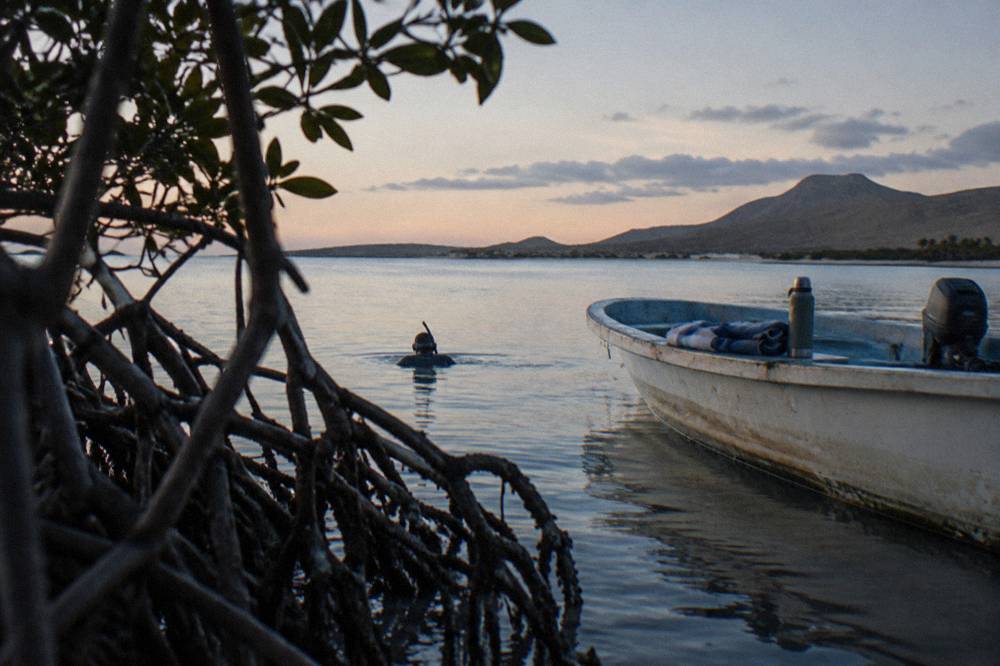
For a deeper dive into how each month behaves, including the years when the pattern broke, our month-by-month season guide carries the full calendar with the suspensions and slow starts marked honestly.
What The Cabo Day Trips Actually Look Like
All three Cabo options are full-day commitments: 10 hours for the Cabo Adventures tour from $259 per person, 9 hours for Cabo Trek from $399, and about 7 hours for the BallardTours trip from $353. Each includes round-trip transport in some form and lunch or snacks; gear lines differ, so check each listing. The swim itself happens in La Paz bay under federal rules.
The day follows a rhythm you can plan around. Hotel collection in the Los Cabos area comes in the early morning, the drive north takes two to three hours depending on your starting point, and the boat ride out to the swim zone takes what local operators report as 20 to 40 minutes from the dock. Time on the water runs 3 to 5 hours for local tours, though the day-trip wrappers stretch the total much longer. Departure slots are assigned in daily shifts by the authorities, commonly in windows around 7 to 8am, mid-morning, noon and the afternoon, and operators typically confirm your exact slot the evening before. On the water, the federal norm governs everything: 5 swimmers per specialized guide, 2 m of clearance beside the shark's head and sides, 3 m from the tail, one boat per shark for a maximum of 30 minutes, and an absolute ban on touching, riding or flash photography. Our rules guide covers the full list.
The swim itself is quieter than most people imagine. You enter the water from a position ahead of the animal with the engine in neutral, and your guide sets the pace. The interaction ends the moment a shark shows evasive behavior, defensive tail movement or a sudden dive, which is the norm's way of letting the animal end the encounter on its own terms. Boats approach from behind and parallel, never closer than 5 m, and travel no faster than 7 knots, dropping to 3 knots where sharks gather. None of this slows the day down much; it is simply the framework that has kept this fishery running.
Sizing up the three products side by side, the differences are mostly about style and inclusions. Cabo Adventures is the most reviewed and the most conventional resort-style day, with hotel pickup stated and lunch included. Cabo Trek sells the small-group, marine-biologist-led version at the highest price, aimed at travelers who want interpretation rather than just transport. BallardTours adds the Todos Santos and La Paz Malecon sightseeing angle at a middle price, with a listed group cap of 10. If you would rather sleep in, the alternative we cover in our how-to-choose guide is booking a La Paz-based swim and staying a night or two in the city instead of commuting, which also puts you closer to the first shift of the day, typically the calmest on the water.
The La Paz tours themselves are a different market entirely, running from $110 to $295 per person for shared boats against the $259 to $399 day-trip band, a spread our cost guide breaks down line by line. What the premium buys on the day trips is the transfer, the coordination and, on Cabo Trek, a guide with formal marine biology training. Whether that is worth roughly double the local price is a question only your itinerary can answer.
How To Pick Your Month Without Overthinking It
If your dates are flexible, target December through February for the reported peak and book the first shift of the day, when winds are calmest. If they are fixed to an October or April shoulder, book anyway but choose a listing whose cancellation terms you have read, and keep a backup plan for the day. March is the quiet compromise that keeps strong odds and better availability.
A few practical points sharpen the choice. Carnaval La Paz is scheduled for 4 to 9 February 2027 on the Malecon, which makes that week lively for lodging and traffic even if boats run normally. If your February trip overlaps the festival, book rooms well ahead and expect the seafront to be busy in the evenings, which many travelers treat as a bonus rather than a problem. December through February is also the coolest, clearest-air stretch of the Baja year, with average afternoon highs in La Paz around 25 to 27 C, per the official 30-year climate normals published by the national weather service, readable at the CONAGUA normals station record. Packing layers for the fast boat ride out is standard advice; several rostered tours list towels as an exclusion, so bring your own.
One more decision that matters more than the month: booking an authorized operator. Look for a boat of no more than 11 m, a displayed SEMARNAT pennant, and a copy of the authorization on board. No public list of the 112 holders has been published in a form we could verify, so the pennant and the paperwork on the boat remain the practical checks.
For travelers already committed to Cabo lodging, the calculus is simply about hours. You will spend roughly four to five of your day on the road, so the marine-biologist version above earns its price by making the boat hours count, and the lunch-included version at $259 keeps the day moving without a mid-trip scramble. Either way, the month you pick matters more than the operator you pick within this roster: a January seat on any authorized boat beats an October gamble on the fanciest one.
Common Questions About Whale Shark Months And Cabo
Can you swim with whale sharks without leaving Cabo?
Not on any listing in our roster. The three Cabo products are day trips: Cabo Adventures from $259 per person over 10 hours with hotel pickup, Cabo Trek from $399 over 9 hours, and the BallardTours trip from $353 over about 7 hours. All board boats in La Paz.
Is October too early in the season?
October is legal but unsettled. The 2025-26 season effectively opened in November, and October still sits inside the hurricane window that ends 30 November. Book it, but read the cancellation terms and keep a flexible backup day.
What happens if the shark count drops after I book?
Trips stop when 5 or fewer sharks are counted in the swim zone, and boats scale down at lower counts before that. This happened in January 2025 and the pause ran into March. Operators handle rebooking differently, so check the listing's policy before paying.
Is February a good month despite Carnaval?
February sits inside the reported December-to-February peak. Carnaval La Paz is scheduled 4 to 9 February 2027 on the Malecon, which mainly affects hotel availability and traffic rather than boat operations, so book lodging early that week.
How cold is the water in peak season?
Monthly sea averages near La Paz run about 19 to 22 C from December through April. About half the rostered tours list a wetsuit in the inclusions, and the rules require either a wetsuit or a life vest in the water.