Getting To La Paz: Flights, La Paz Airport And Transfers From Cabo
La Paz has its own airport, a two-and-a-half-hour road link from Los Cabos, and an overnight ferry from the mainland. Here is how each option works, what it costs, and how it lines up with the piers where the whale shark boats leave.
Short answer
Fly into La Paz airport (LAP) direct from Los Angeles on Alaska, or from Mexico City and Tijuana on domestic carriers. Otherwise fly to Los Cabos (SJD) and cover the 214 km by bus or private transfer, roughly 2.5 to 3 hours. Boats depart from central La Paz, so an overnight stay before your swim is the safe plan.
La Paz sits on a bay in the southern half of the Baja peninsula, and almost every traveller who comes here for the whale sharks arrives through one of three doors. The city's own airport, LAP, takes a single direct route from the United States plus a handful of domestic hops. Los Cabos airport, two hundred and fourteen kilometres away by road, takes everything else and feeds La Paz by bus, shuttle or rental car. The third door is wet: an overnight ferry from Topolobampo or Mazatlan that docks at Pichilingue, a short drive north of the malecon. However you arrive, the swim itself happens in La Paz Bay, so our guide to choosing between La Paz and Cabo for whale sharks is worth reading before you book anything.
Which door you pick matters less than when you arrive. Whale shark boats leave from central La Paz on shifts assigned by the authorities, commonly in morning windows, and operators report 20 to 40 minutes of boat time just to reach the swim zone. A same-day dash off a midday flight is a bad bet. The rest of this guide walks through each route in turn, with the distances, times and rough costs, and then maps the departure points so you can see where you need to be, and when. If you are still weighing the city against Cabo generally, the La Paz Whale Shark Tours homepage comparison lays out the swim-side differences.
Where Is La Paz Airport And Which Airlines Fly There?
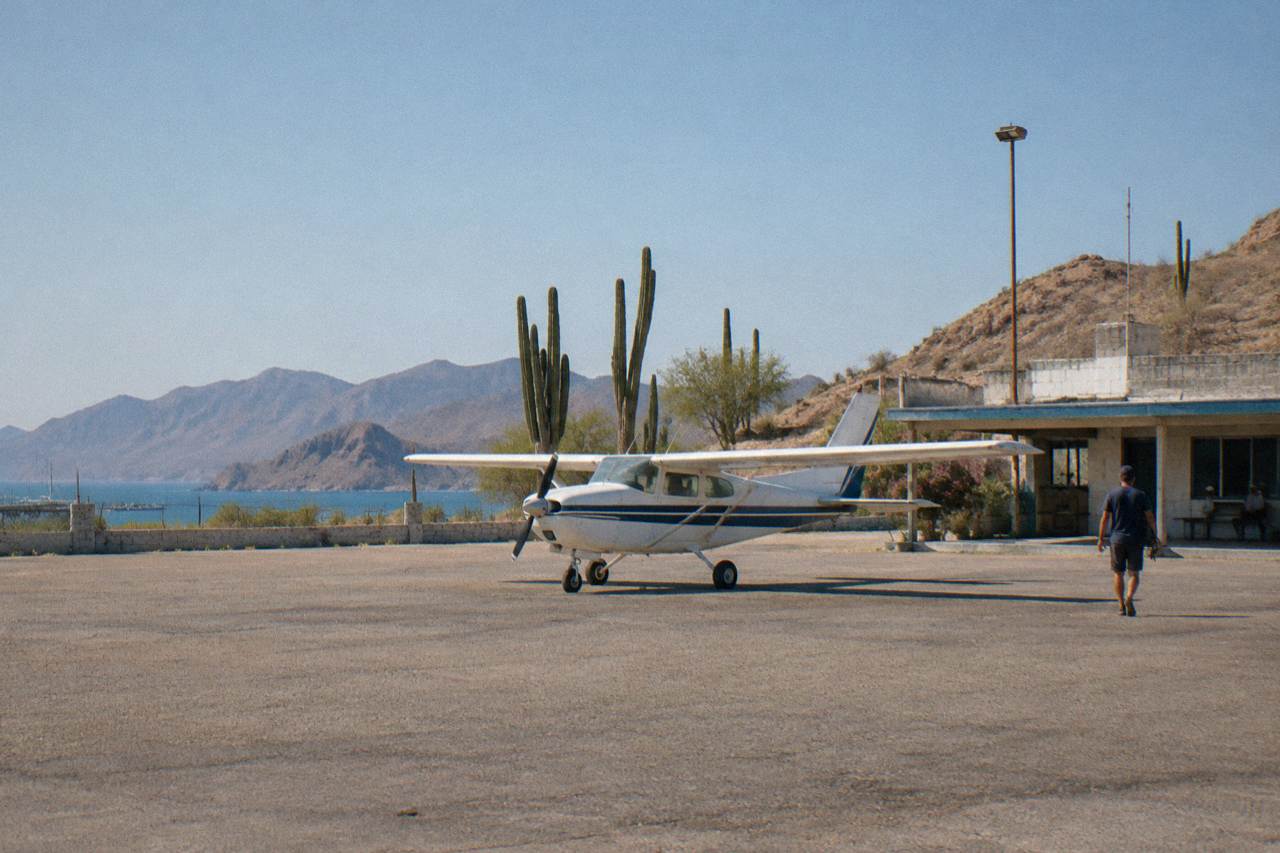
La Paz international airport, LAP, is served by one direct US route plus domestic flights from Mexico City and Tijuana. Alaska Airlines flies Los Angeles to La Paz in about 2 hours 26 to 2 hours 35 minutes. Volaris, VivaAerobus, Aeromexico and TAR connect the city domestically. No other US city has a confirmed nonstop.
That single Alaska route from Los Angeles is the whole reason LAP works for American visitors. Flight times from Mexico City run 2 hours 13 to 2 hours 36 minutes nonstop, and from Tijuana just under two hours, which makes a Tijuana connection a genuine option for anyone already in northern Mexico or crossing the land border. Everything else from the United States routes through Los Cabos airport, SJD, which has far more service and is the practical entry point for most travellers.
The airport itself is small, which cuts both ways. Immigration and baggage claim are quick by Mexican airport standards, and the run into town is short. The trade-off is frequency: with a thin schedule, one cancellation can cost you a day, and a lost day is exactly what you cannot afford if you booked a swim for the morning after arrival. Anyone flying LAP for a specific swim date should build in a buffer day or accept that rebooking may mean rebooking the swim too.
| Route | Airlines | Nonstop time | Notes |
|---|---|---|---|
| Los Angeles (LAX) to La Paz (LAP) | Alaska Airlines | about 2h26 to 2h35 | the only confirmed direct US route |
| Mexico City (MEX/NLU) to La Paz | Aeromexico, Volaris | about 2h13 to 2h36 | domestic hop |
| Tijuana (TIJ) to La Paz | Volaris, VivaAerobus | about 1h53 to 1h58 | useful for border crossers |
| Other US cities | none direct | varies | connect via LAX, or fly into SJD |
From LAP it is a short taxi or rideshare run into the centre, and the malecon hotels put you within walking distance of the Muelle Fiscal pier, where several whale shark operators meet. If you are choosing a base before you book, the where-to-stay rundown for whale shark trips names the three Malecon and Centro addresses that sit closest to the departure points, and explains why that walkability matters on a 7am check-in.
How Do You Get From Los Cabos Airport To La Paz?
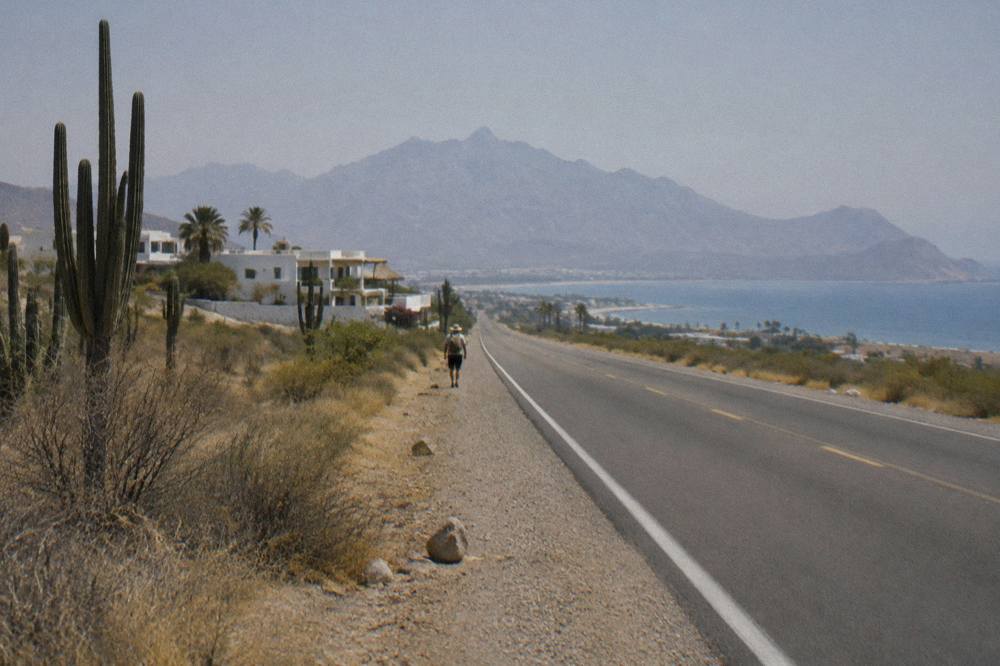
Los Cabos airport to La Paz is about 214 km, driven in 2.5 to 3 hours on Highway 19. Buses from Cabo San Lucas to the La Paz malecon take roughly 2.5 to 3.5 hours and cost about US$15 to 37. A private transfer runs roughly US$230 to 340 per vehicle one way. From Cabo San Lucas itself the drive is about 160 km, 2 to 2.5 hours.
Highway 19 is the preferred road: it runs coastally through Todos Santos, is wider and generally considered the better drive, and passes through a genuinely pretty stretch of desert and farmland. Highway 1 is the inland alternative and saves nothing worth having for this trip. If you rent a car at SJD, note that the last stretch into La Paz drops you onto the malecon, and from there every whale shark departure point in this guide is minutes away.
The bus is the budget answer. Aguila and ABC run the corridor, with fares in recent examples at roughly MXN 395 to 454, and the run from the Cabo San Lucas terminal to La Paz takes 2.5 to 3.5 hours depending on stops. The catch is scheduling: buses are not frequent enough to gamble on a same-day connection from a midday international arrival plus a swim the next dawn. Take the first bus you can, overnight in La Paz, and swim fresh the following morning.
Private transfers and shuttles are where most visiting families land. At roughly US$230 to 340 per vehicle one way across various van sizes, beats a one-way rental drop fee, and the driver meets you in arrivals. Split four ways it is comparable to a mid-range tour ticket. Book ahead rather than at the terminal, and give the operator your flight number so a delay does not strand the plan.
| Option | Distance / route | Time | Rough cost |
|---|---|---|---|
| Rental car | SJD via Highway 19 | 2.5 to 3 h | varies by season |
| Aguila / ABC bus | Cabo San Lucas terminal to La Paz malecon | 2.5 to 3.5 h | about US$15 to 37 |
| Private transfer | SJD or Cabo to La Paz door | 2 to 3 h | roughly US$230 to 340 per vehicle one way |
| Day-trip tour bus | hotel pickup in Los Cabos | about 10 h total | from $259 per person |
There is a fourth option that removes the driving question entirely: the organized day trip. The Los Cabos whale shark day trip run by Cabo Adventures is the most reviewed product of its kind on this site, 4.9 from 1141 reviews, from $259 per person for 10 hours with hotel pickup and drop-off, wetsuits, lunch and a professional guide included. It costs more than the bus and books your swim into a fixed package, but it collapses flights, road and boat into one transaction.
For readers who would rather base themselves in the city and swim on a smaller boat, the comparison is worth making consciously. The Cabo day trip buys convenience and a long day on a bigger shared schedule; a La Paz-based swim buys a 2 to 4 hour commitment and a walkable departure. The choosing guide on this site breaks the same trade-off down by group size and budget.

Where Do Whale Shark Boats Depart From In La Paz?
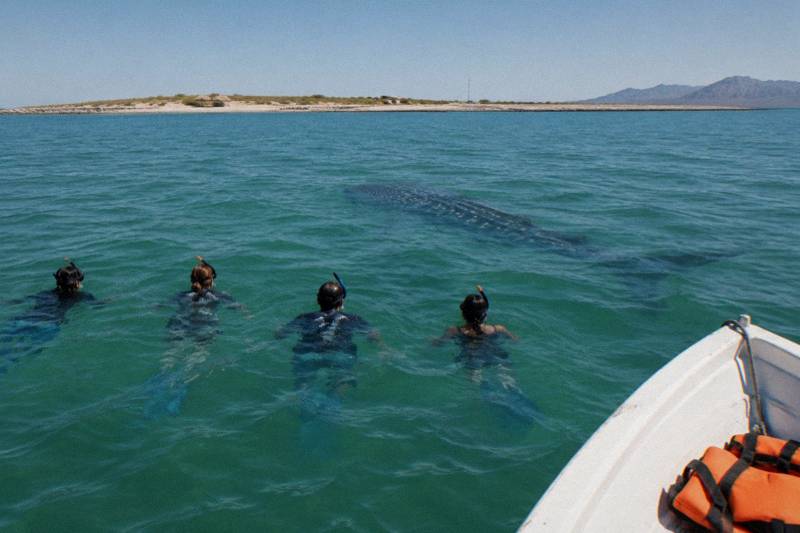
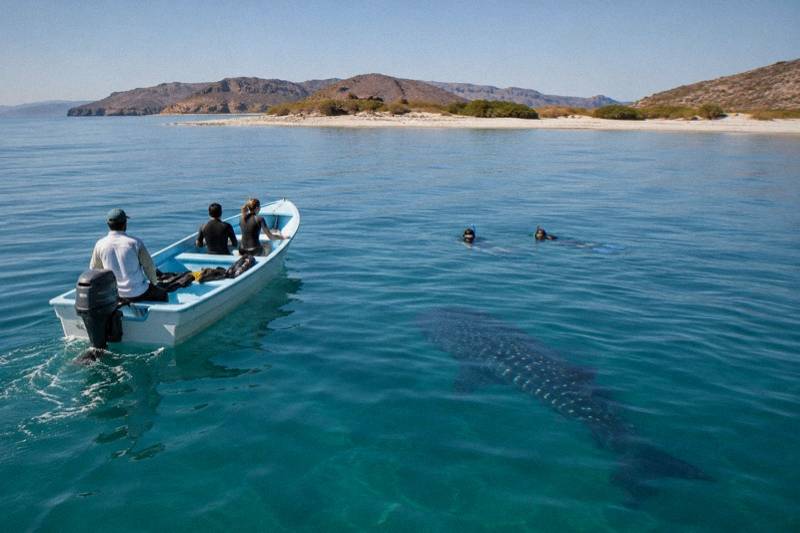
Whale shark boats in La Paz meet at a handful of central points: Muelle Fiscal on the malecon, Marina de La Paz at Calle Topete, Marina ASIPONA, and operator offices on Topete and Mutualismo. All sit within a few minutes of the malecon. Operators report 20 to 40 minutes of boat time from dock to swim zone, and 3 to 5 hours on the water overall.
Muelle Fiscal, on Paseo Alvaro Obregon 220, is the busiest single meeting point: Alonso Tours, Punta Baja Tours, Mexico Travel Adventure, Desértica Baja Sur, La Paz Explorer and others all list it. Marina de La Paz at Calle Topete 3040 y Legaspy is the second hub, used by Tuna Tuna Tours and Orza Tours. MeXplore meets at its own address on Topete 125, Eco Migrations on Mutualismo 342, Baja Wild Adventures at Playa SN-C on the malecon, and the premium reduced-group encounter run by La Paz Whale Sharks VIP Tours meets at The Dock Cafe on Miguel L. de Legaspy.
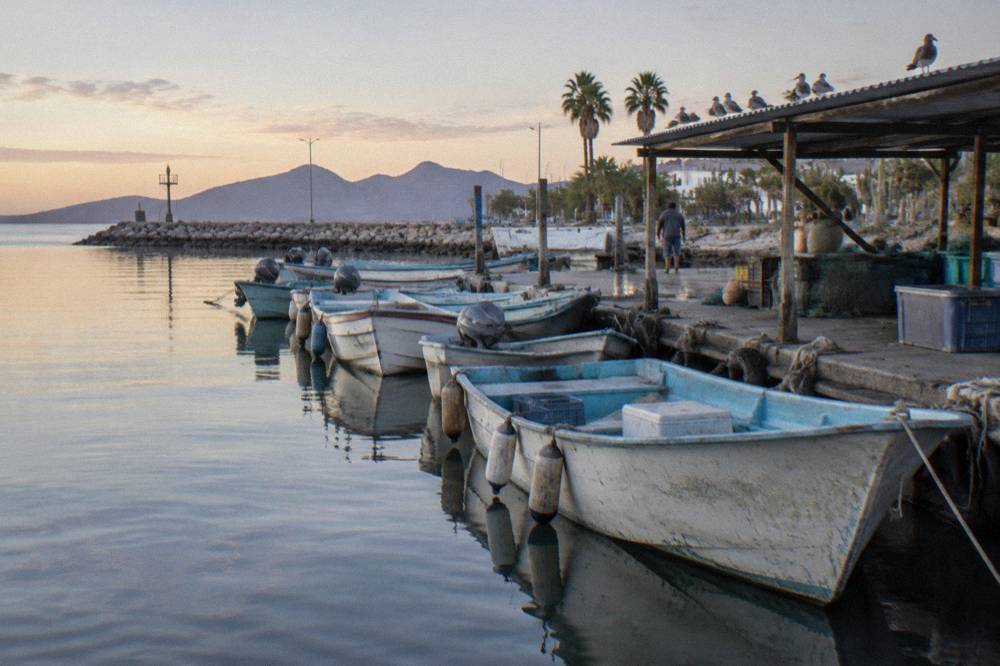
The practical point for an arriving traveller is that none of these require a car. They string along the malecon and the streets immediately behind it, which is why a Centro or malecon hotel is the standard advice. Shift times are assigned by the authorities rather than chosen by the operator, with commonly cited windows in the early morning, mid-morning and around noon, and operators typically confirm the exact slot the evening before. Plan to be reachable and awake.
| Departure point | Operators listing it | Notes |
|---|---|---|
| Muelle Fiscal, malecon | Alonso Tours, Punta Baja Tours, Mexico Travel Adventure, Desértica Baja Sur, La Paz Explorer | walkable from any malecon hotel |
| Marina de La Paz, Calle Topete | Tuna Tuna Tours, Orza Tours | short taxi from the malecon |
| MeXplore, Topete 125 | MeXplore | operator office meeting point |
| Eco Migrations, Mutualismo 342 | Eco Migrations | residential street, brief taxi |
| Marina ASIPONA | Sunrider Tours | inside the port recinto |
| Los Cabos hotels | Cabo Adventures day trip | pickup listed on that tour |
Not a single roster swim departs from Cabo as a local outing: the three Los Cabos listings are day trips that drive to La Paz, at 10, 9 and 7 hours door to door. So the geography is simple. Your flight gets you to a city; the drive gets you to La Paz; and from the malecon onward everything is on foot or a five-minute cab. For what those first minutes in the water actually feel like, the expectations walkthrough covers the swim sequence itself.
Is The Ferry From Topolobampo Or Mazatlan A Sensible Way In?
Baja Ferries runs Topolobampo to Pichilingue, near La Paz, in about 10 hours, departing late evening and arriving next morning, daily except Saturday. Mazatlan to Pichilingue takes about 12 hours and sails three times weekly. Recent adult fares run about MXN 2,000 from Topolobampo and MXN 2,150 from Mazatlan, with a car up to 6 m about MXN 5,950 to 6,850.
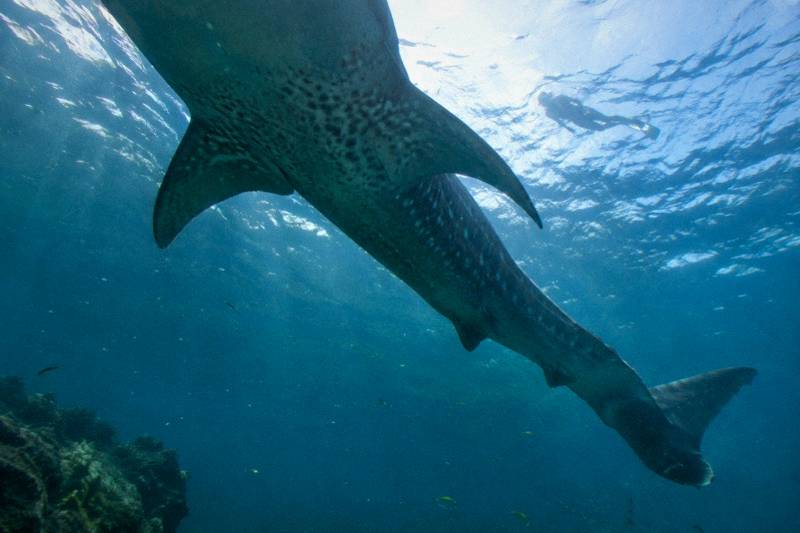
The ferry is the answer to a specific question: how do you bring a vehicle, or yourself, from mainland Mexico without a thousand-kilometre drive up and around the Gulf of California. Topolobampo, the port for Los Mochis and the Copper Canyon rail line, is the shorter crossing. Cabins and reclining seats decide whether you sleep; the crossing is an overnight either way, so it is a tactic for overlanders and slow travellers, not for anyone with a swim booked the next day.
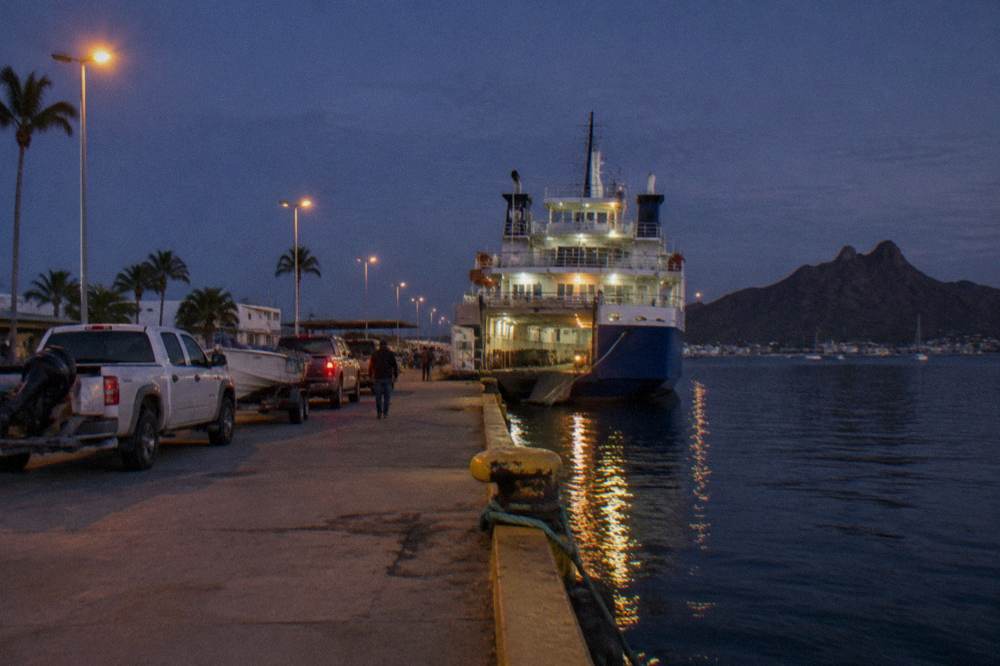
Pichilingue, where the ferry lands, is roughly a 20-minute drive north of the malecon. If you arrive by sea, your whale shark departure point is still downtown: the refuge's swim zone sits in the bay in front of the city, and boats leave from the piers listed above, not from Pichilingue. Allow a morning for the drive in and check in with your operator from the road.
| Ferry route | Operator | Crossing time | Frequency | Recent adult fare |
|---|---|---|---|---|
| Topolobampo to Pichilingue | Baja Ferries | about 10 h | daily except Saturday | about MXN 2,000 |
| Mazatlan to Pichilingue | Baja Ferries | about 12 h | about 3x weekly | about MXN 2,150 |
| Vehicle, up to 6 m | either route | as above | as above | about MXN 5,950 to 6,850 |
For a one-week trip built around the water, pairing the whale shark swim with an Espiritu Santo day is the classic combination, and several roster combos do both in one 6 to 9 hour outing. The Espiritu Santo island guide covers the longer boats, the sea lion colony at Los Islotes and the park wristband, reported at MXN 225 per person per day, confirm on the day. If the thought of sharing the water with a shark gives you pause, this look at what the La Paz swim rules actually protect against should set your mind at ease.
Should You Stay In La Paz Or Commute From Los Cabos For The Swim?
Stay in La Paz if the swim is the point of the trip: shared swims run from $110 to $295 per person and last 2 to 4 hours, and meeting an early shift from a Cabo base means a pre-dawn drive. Commute from Los Cabos only via the organized day trips, from $259 to $399 per person for 7 to 10 hours with transport handled, which suits a Cabo-centred holiday.
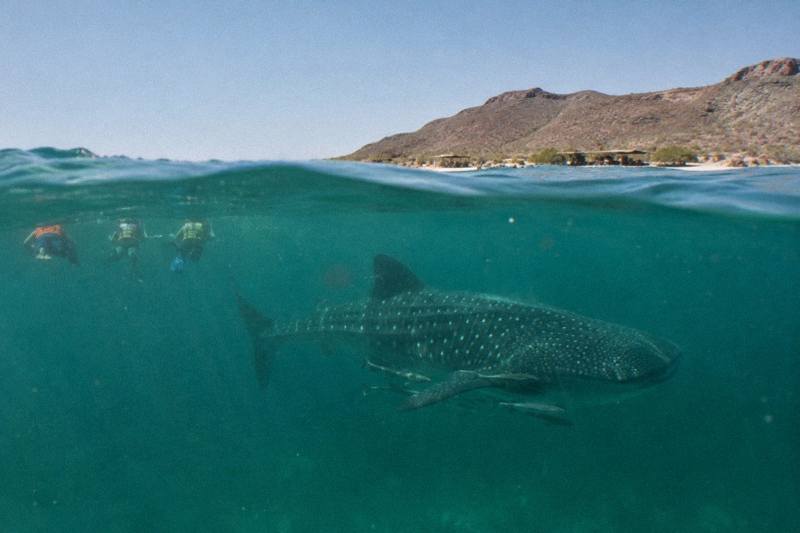
Premium Reduced-Group Encounter
La Paz Whale Shark Swims · 3 hours
★ 5.0 · 422 reviews · From $295
Check availability →The arithmetic is not close. A Cabo base plus a self-drive to a La Paz swim means two-plus hours each way, parking near the malecon, and a long day anchored to a shift time you do not choose. The day trips solve that with hotel pickup, at the price of a bigger group and a fixed itinerary. And the premium option, the reduced-group encounter run by La Paz Whale Sharks VIP Tours, 5.0 from 422 reviews from $295 per person, only makes sense from a La Paz base where you control the morning.
Budget travellers and city-break visitors should simply sleep in La Paz. The cheapest firm-priced shared swim on this roster is the Sunrider Tours outing at from $110 per person, 2 hours 30 minutes, 4.4 from 155 reviews, while the marine-biologist small group run by MeXplore, 4.9 from 649 reviews at from $178 per person, is the most reviewed La Paz-departure swim. Both meet within a short walk or cab of the malecon hotels. What matters is the buffer: arrive the day before, confirm your shift by message in the evening, and swim the next morning with margin to spare.
Timing the whole trip is its own question, and the season runs longer than many visitors expect: the official window is 1 October to 30 April, with December, January and February reported as the strongest months, and a minimum of six sharks in the bay before any trips operate at all. The month-by-month season guide goes into that machinery, and the best-time overview adds the weather side, drawn from official CONAGUA normals for the city. If you're basing yourself in Cabo rather than La Paz, the month-by-month answer for whale sharks near Cabo explains how the guided day trips across the bay actually work.
What Else Should You Plan Around Once You Are In La Paz?
Plan around two access rules and one calendar: Playa Balandra admits 450 visitors per turn in two daily sessions, 08:00 to 12:00 and 13:00 to 17:00, with a reported MXN 120 per person fee, and Carnaval runs 4 to 9 February 2027 on the malecon, which will crowd the very streets your boat leaves from.
Balandra is the famous shallow beach north of town, and its controlled access is set out on the municipal tourism page: two turns a day, 450 people each, bookable in advance. Several roster combos pair the whale shark swim with a Balandra stop, which sidesteps the access juggling entirely, since the operator handles the landing. If you go independently, note the turns and go early.
Carnaval in early February 2027 is scheduled for the malecon itself, the same waterfront where Muelle Fiscal sits. Festivals and swim logistics share pavement, so expect road closures, busy hotels and a good-humoured crush if your dates overlap. Some travellers will want exactly that; others should slide a week. The climate side of planning is calmer: season water temperatures in the bay average around 20 to 24 C, which is why operators hand out wetsuits, and the official CONAGUA climate normals for La Paz give the month-by-month air figures if you like planning with data.
One last safety note that belongs in a logistics guide rather than a scare story: the eastern Pacific hurricane season runs 15 May to 30 November, with peak risk August to October, so very early-season trips carry a small weather tail. And before booking anything international, check the official State Department page for the current Mexico advisory. Neither of those changes the plan; both just belong in it.
The through-line of all of this is that La Paz rewards arriving early. Fly into LAP if the schedule fits, come over the mountain from SJD if it does not, take the ferry if the car demands it, and in every case land the night before your swim. From a malecon hotel the whole operation, pier, wetsuit, briefing, boat, is a short walk and a few hours, and the rest of your day is your own.
Common Questions About Getting To La Paz
Where Is La Paz Airport And Which Airlines Fly There?
La Paz airport is LAP. Alaska Airlines flies it nonstop from Los Angeles in about 2h26 to 2h35; Volaris, VivaAerobus, Aeromexico and TAR serve Mexico City and Tijuana. No other US city has a confirmed nonstop.
How Do You Get From Los Cabos Airport To La Paz?
It is about 214 km, 2.5 to 3 hours on Highway 19. Buses from Cabo San Lucas to the La Paz malecon run about 2.5 to 3.5 hours at roughly US$15 to 37; private transfers run roughly US$230 to 340 per vehicle one way.
Where Do Whale Shark Boats Depart From In La Paz?
From central points: Muelle Fiscal on the malecon, Marina de La Paz at Calle Topete, Marina ASIPONA, and operator offices on Topete and Mutualismo. All are minutes from malecon hotels, and operators report 20 to 40 minutes of boat time to the swim zone.
Is The Ferry From Topolobampo Or Mazatlan A Sensible Way In?
For overlanders, yes. Baja Ferries runs Topolobampo to Pichilingue in about 10 hours daily except Saturday, and Mazatlan in about 12 hours three times weekly. Recent adult fares run about MXN 2,000 and MXN 2,150 respectively.
Should You Stay In La Paz Or Commute From Los Cabos For The Swim?
Stay in La Paz if the swim is the trip's purpose: shared swims cost from $110 to $295 per person and meet centrally. The organized day trips from Los Cabos, from $259 to $399 per person for 7 to 10 hours with transport to La Paz, suit a Cabo-centred holiday.
What Else Should You Plan Around Once You Are In La Paz?
Balandra's controlled access, two daily turns of 450 visitors with a reported MXN 120 fee, and Carnaval from 4 to 9 February 2027 on the malecon. Both touch the same waterfront your boat leaves from, so book rooms and tour slots with them in mind.