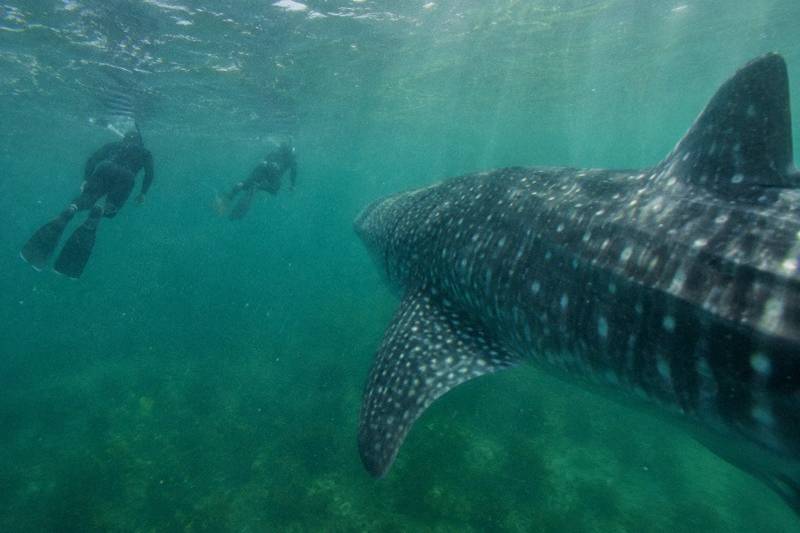
Has A Whale Shark Ever Attacked A Person?
No documented attack by a whale shark on a person appears in the sources on file. Here is what the La Paz swim rules actually protect against, and how the tours are run.
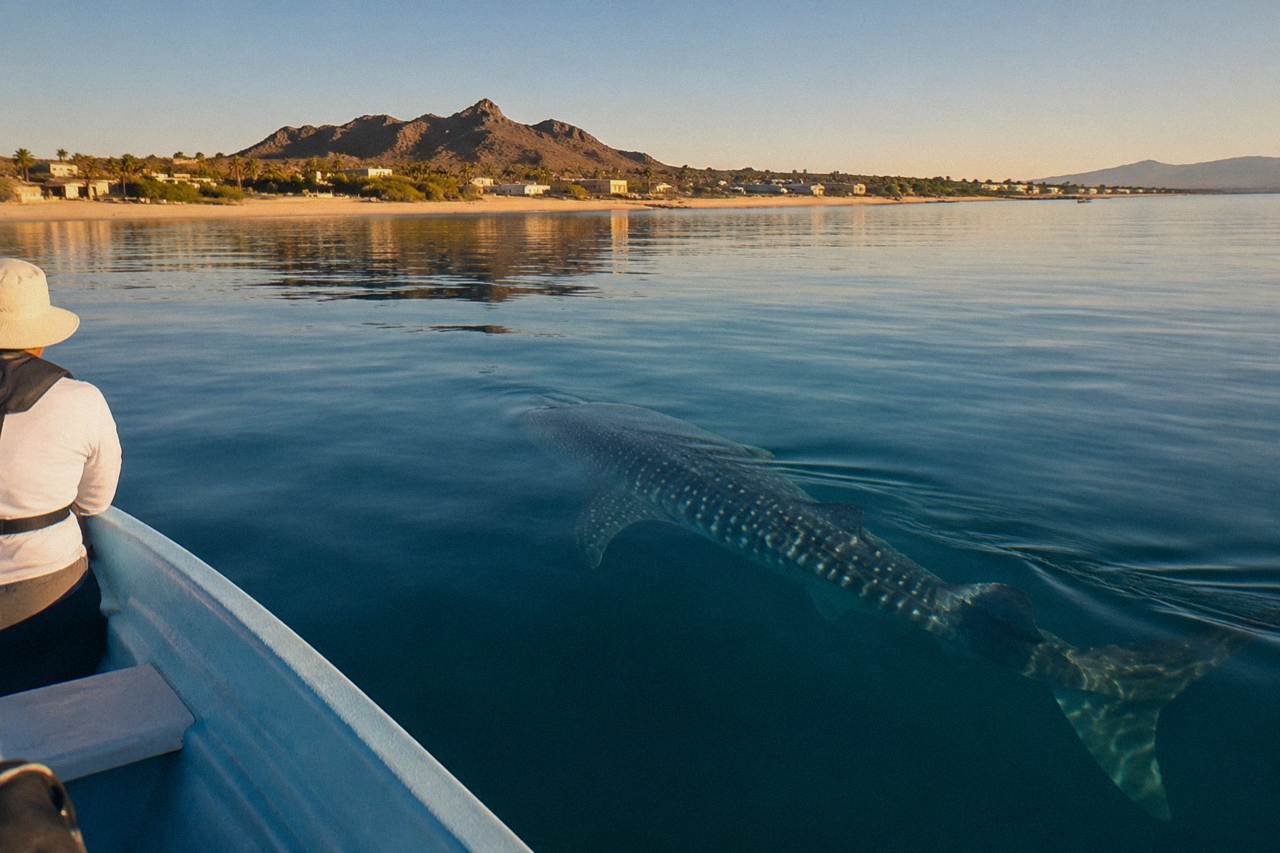
No. The sources on file, including the Mexican federal norm that regulates swimming with whale sharks, the official record of the La Paz refuge and the season documentation for 2026-27, record no attack by a whale shark on a person anywhere. That absence is why the activity is regulated around crowding and boat conduct rather than around aggression. The rules exist to stop people from bothering the animal, and to stop boats from interfering with each other, not to contain a dangerous one.
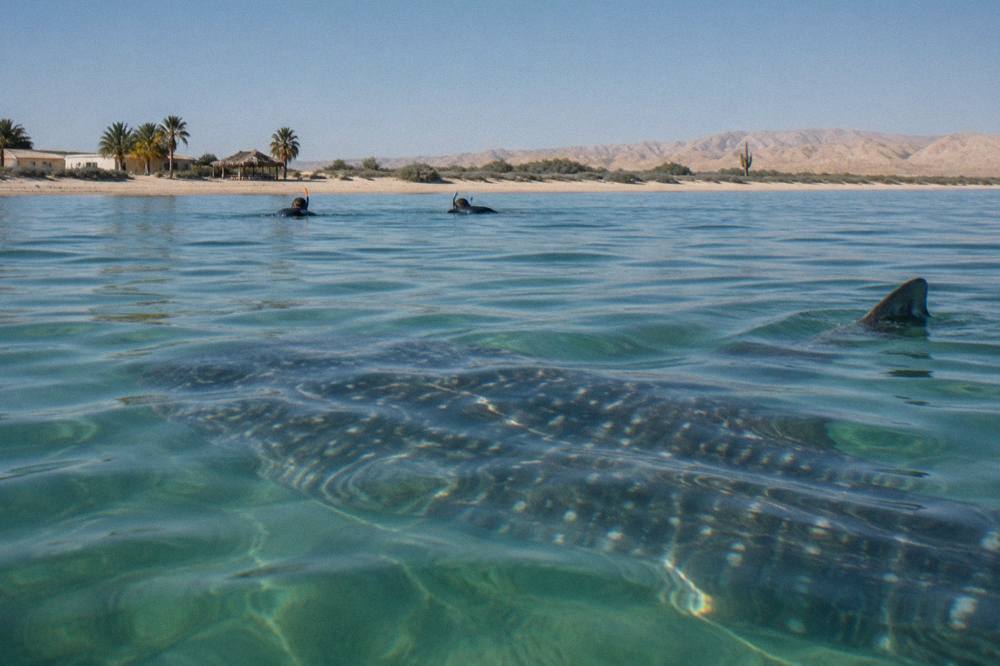
This question deserves a careful answer rather than a breezy one, because the honest version has limits. The research behind this site covers the La Paz fishery, the NOM-171-SEMARNAT-2018 norm, the refuge decree and the local season record. Within all of that, no incident of a whale shark attacking a person is recorded anywhere. What the record does show is a regulatory system built on a different theory of risk: that a large, slow animal sharing a bay with swimmers and boats can be hurt, startled or crowded, and that managing the humans manages the danger for everyone. That same logic extends to physical contact, and our companion guide on why touching a whale shark is against the law spells out exactly what swimmers may and may not do around the animals.
The distinction matters for anyone weighing a first swim. The marine-biologist small group run with MeXplore, one of the most reviewed swims on the roster at 4.9 from 649 reviews, is built entirely around controlled entries and group management, not around defending guests. The premium reduced-group encounter from La Paz Whale Sharks VIP Tours, 5.0 from 422 reviews, sells intimacy rather than protection. Nobody in this market is selling a cage or a barrier, because none is needed under the rules in force. If the same question comes up for younger swimmers, our guide to kids swimming with whale sharks in La Paz covers the age rules and what family tour listings actually offer.
If you are afraid of sharks generally, the fear is rational and the reassurance is structural. This article walks through what the federal norm actually says, why the distances and group sizes exist, what a defensive tail strike looks like and why the activity with a shark ends the moment one happens. It also covers how to recognize an authorized boat, and what nervous swimmers can reasonably expect from a La Paz tour. For the wider season picture, see the month-by-month season guide.
What Do The La Paz Swim Rules Actually Protect Against?
The Mexican norm NOM-171-SEMARNAT-2018 addresses crowding, boat approach, speed and swimmer conduct: five swimmers per specialized guide kept together, 2 m from the head and sides, 3 m from the tail, one boat per shark for 30 minutes maximum, and 7 knots with 3 knots inside aggregation zones. Not one of those numbers exists to fence off an aggressive animal. Every one exists to keep a wild animal calm and unharmed while people are near it.
The norm is published in the Official Gazette and can be read directly, a point worth making because most safety claims about this activity circulate as folklore. The text is on the federal norm page in the DOF. Read it and you find a document preoccupied with the conduct of operators and guests: approach from behind and parallel, drop swimmers 15 m ahead of the animal with the engine in neutral, wait 50 m away if another boat is with a shark. The animal's behavior gets one clause, the stop rule, which we come to below.
| Rule | What it says | Who it protects |
|---|---|---|
| Swimmers per guide | 5, kept together as one group | The shark, from being surrounded |
| Distance from the shark | 2 m beside head and sides, 3 m from the tail | The swimmer, from the tail |
| Time with one shark | One boat per shark or group, 30 minutes maximum | The shark, from exhaustion |
| Boat speed | 7 knots maximum, 3 knots in aggregation zones | Everyone in the water |
| Sunscreen and gear | Life vest or wetsuit, biodegradable sunscreen only | The bay's water quality |
| Prohibited acts | No touching, riding, selfie sticks, flash or motorized devices | The animal, without exception |
The pattern in that table is hard to miss. The rules treat the swimmer as the hazard and the shark as the party being protected. A touch, a chase or a camera thrust into the animal's face is banned outright, and the listing for a tour such as Eco Migrations' small-group swim with a marine biologist, from $194 per person, states its inclusions plainly: snorkeling equipment and a 2 to 3 mm full wetsuit. The full details of what a trip on the water feels like are in the what to expect guide.
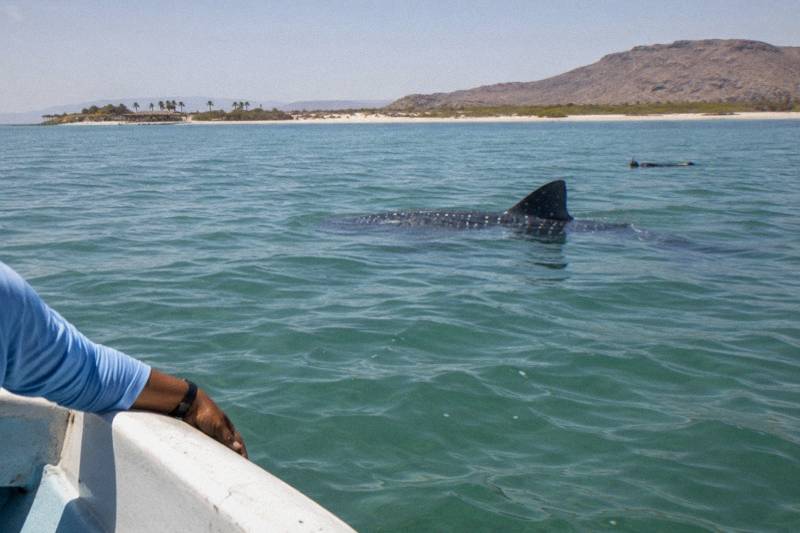
Why Do The Distances And Group Sizes Exist?
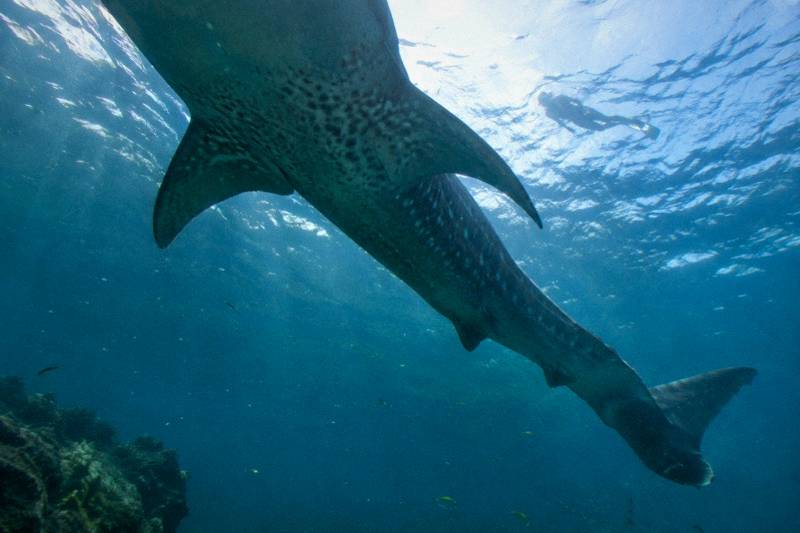
The 2 m and 3 m distances and the five-swimmer group exist because the one part of a whale shark that can hurt a person is its tail, and the tail sweeps a wide arc when the animal turns or dives. A swimmer hovering at the fluke, or a group fanned out across the animal's path, converts a routine turn into a collision. The rules remove that geometry rather than trusting anyone's reactions.
This is also why the stop rule reads the way it does. Under the norm, the activity with a shark ends the moment it shows evasive swimming, defensive tail strikes, a sudden change of direction or a prolonged dive. Those are stress behaviors, not aggression, and the rule treats them as a signal that the encounter is over. Guides on the rostered tours brief this before the water. The MeXplore small-group tour includes a certified guide and captain, federal permits and a conservation donation in its listed price, from $178 per person, and its model is exactly this: one controlled group, one drop, one calm animal.
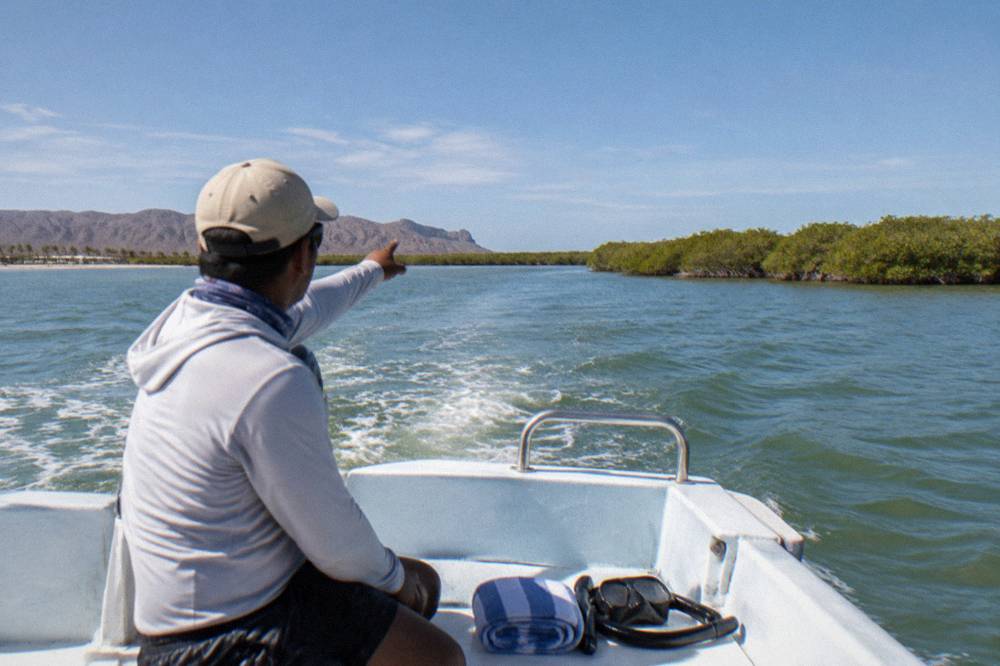
Crowding is managed upstream of the water too. The 2026-27 season notice caps boats in the swim zone by shark count, rising from 6 boats per shift with 6 sharks present to a hard ceiling of 14 boats at 14 or more sharks, across 4 shifts a day, and suspends all trips if 5 or fewer sharks are in Zone I. That is a throughput limit on humans per animal, and it is the quiet backbone of every safety story on this bay. The suspension guide explains how those counts have halted seasons before, which tells you the limits are enforced rather than decorative.
Baja Wild Adventures runs a similar format, a whale shark adventure with a marine biologist at 4.9 from 109 reviews and from $159 per person, while Tuna Tuna Tours' small-group swim, 5.0 from 454 reviews, lists snacks, wetsuits and underwater photos among its inclusions. None of them is marketed on any promise of protection, because protection is the baseline the permit system provides, not a feature any single operator adds.
What Is A Defensive Tail Strike?
A defensive tail strike is a sharp lateral sweep of the tail fluke, one of the specific behaviors listed in NOM-171 that immediately ends the activity with that shark. In plain terms, it is a clear defensive signal from the animal, and the rules treat it as a full stop for the interaction. It is the animal creating distance, the way a horse swishes hard at a fly. The 3 m rule from the tail exists precisely so that a swimmer is never inside the arc of that sweep when it happens.
No incident data beyond the rule's existence is on file, and this site does not invent any. What can be said plainly is that the norm's drafters considered tail strikes significant enough to name them individually as a stop condition, alongside evasive swimming and sudden dives. That is the entire documented reality: the behavior is anticipated, watched for, and answered by withdrawal, not by intervention.
For a nervous swimmer the practical translation is simple. Stay beside the front third of the animal, never behind it, and follow the guide. If the shark dips or turns away, let it. Every authorized boat in the bay runs this way because it operates under the same norm. Questions about fitness and water confidence are handled separately in the strong swimmer guide, which is worth reading if the open water is the intimidating part rather than the animal.
Worth adding, because the comparison helps nervous readers: the same stop rule applies on every permitted boat in the bay, regardless of what a listing costs or how many reviews it carries. A from $110 shared trip and a from $295 premium encounter share one identical obligation, which is to leave the animal alone the instant it signals discomfort. That symmetry is unusual in tourism, where price usually buys latitude, and it is the strongest single reassurance this site can offer an anxious first-timer weighing the water.
How Do You Know A Boat Is Authorized?
An authorized whale shark boat in La Paz carries a SEMARNAT pennant displayed on the vessel, keeps a copy of its authorization on board, measures no more than 11 m, and belongs to one of the 112 permit holders for the 2026-27 season. Checking those things before boarding is the single most useful safety action a visitor can take, because the entire rulebook applies only to boats inside the permitted system.
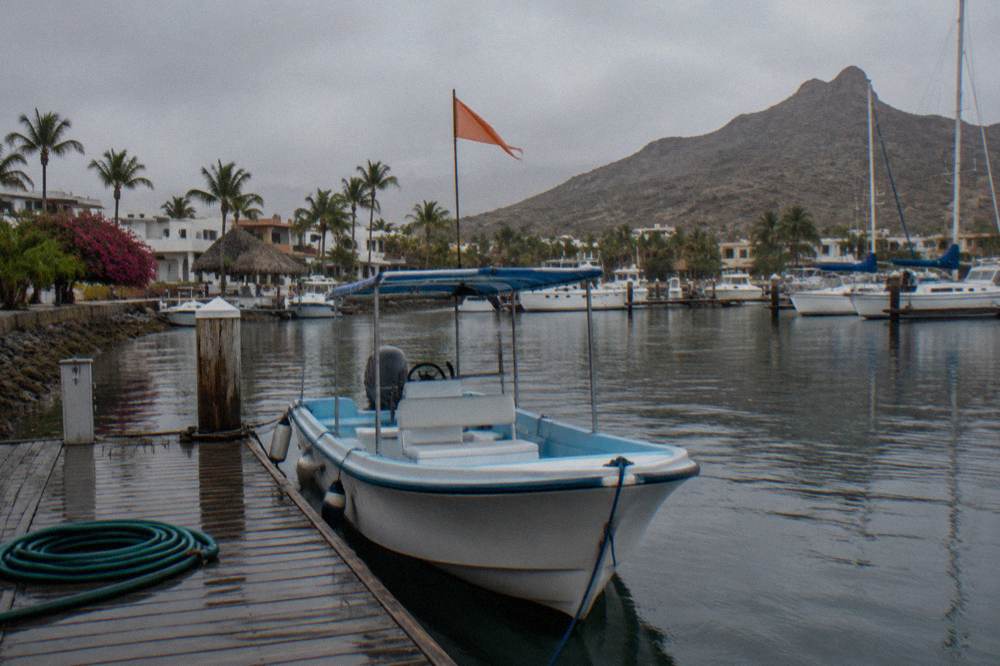
The refuge itself is what makes the permits necessary. The Area de Refugio Bahia de La Paz was decreed on 29 November 2018 over 22,749 hectares, divided into Zone I for swimming and watching, Zone II for conservation with no activity, and Zone III for transit at 7 knots. The decree in the Official Gazette is the primary text. Enforcement sits with PROFEPA together with CONANP, which inspect authorizations on the water. No public list of the 112 current holders was found in research for this site, so the pennant and the paperwork on the boat are what you can verify yourself.
| Check | What to look for | Why it matters |
|---|---|---|
| Pennant | SEMARNAT banderola flying on the boat | Identifies one of the 112 authorized vessels |
| Paperwork | Authorization copy on board | Inspectors ask for it; honest operators show it |
| Boat size | Not over 11 m | Norm requirement for the swim zone |
| Guide ratio | 5 swimmers per specialized guide | The in-water control rule |
| Gear | Life vest or wetsuit provided or required | Mandatory under the norm |
Booking through a listing rather than from a beach vendor is the easiest way to land inside this system. Every product on this site's roster, from Sunrider Tours' whale shark swim adventure at from $110 per person, the cheapest firm-priced shared swim on file at 4.4 from 155 reviews, to the private charter from Orza Tours at from $1,168 per group, is sold as a La Paz departure; check the pennant on the boat. The private charter is the format to consider if your anxiety is about strangers in the water rather than the shark itself.
Is Snorkeling With Whale Sharks Safe For Nervous Swimmers?
The documented risk profile is about water confidence and cold, not the animal: the sea runs about 19 to 22 C in the peak months, a wetsuit or life vest is mandatory, and operators report 3 to 5 hours on the water with 20 to 40 minutes of boat time to the zone. Nervous swimmers who can float and snorkel calmly have the physical side covered. The mental side is usually about what a whale shark might do, and the honest answer is that nothing on file suggests it will do anything but feed and swim.
Choose the format that fits. The Sunrider adventure is a 2 hour 30 minute shared trip, short enough to commit to without dread. The Hook Experiences' swim, from $200 per person, includes wetsuits and an English and Spanish guide among its listed inclusions. At the calm end, La Paz Whale Sharks VIP Tours' intimate eco-friendly encounter, from $295 per person, is built as a premium small-scale service with all fees and biodegradable SPF 50 sunscreen included. There is a comparison of all the formats in the how to choose guide.
A reassurance worth stating twice: you share the water with the animal on its terms, in a bay where the state counts the sharks before it allows a single trip. When 5 or fewer are present, no boats go out at all. That threshold is the clearest possible statement of how this fishery ranks the animal's wellbeing against ticket sales, and it is the context behind every one of the La Paz Whale Shark Tours listings this site covers.
Two smaller listings also worth comparing: Mexico Travel Adventure's snorkel trip at 5.0 from 57 reviews and from $127 per person, and Desértica Baja Sur's swim, 5.0 from 22 reviews, from $139 per person. Small review pools deserve their counts printed, and both carry them here. None of these operators sells safety as a feature, and that uniformity is itself the point: the safety layer is regulatory, and the operator choice is about comfort, group size and price.
What Should You Do If A Shark Swims Toward You?
Hold your position or drift calmly back, keep the guide's line, and never reach out: touching is banned under NOM-171, and the 2 m distance to the head and sides stays in force regardless of what the animal does. A whale shark that changes course toward a swimmer is generally following food in the water column, and the trained response is stillness, not evasion. The animal's path bends around obstacles that do not chase it.
The gear rules reinforce the calm. No motorized propulsion devices, no selfie sticks, no flash or artificial light, because each one either startles the animal or tempts a swimmer to close distance. Photos are allowed, which is why several roster listings, including Tuna Tuna Tours' small-group swim and the MeXplore biologist tour, include photos and videos among stated inclusions. The camera stays with a controlled swimmer, or with the crew.
One caution belongs here because it is the honest edge of the topic. An absence of documented attacks is not a promise about any individual animal on any individual day, and no tour on this roster, and nothing in the regulations, guarantees a sighting or a particular behavior. Conditions, visibility and sea state vary. What the system offers instead is a set of rules that assume nothing about the animal's temperament and everything about the value of distance, and guides who end encounters early rather than pushing them. The swim rules guide carries the full norm in plain language.
Common Questions About Whale Shark Attacks
Can A Whale Shark Hurt You Accidentally?
The one documented mechanism the rules address is the tail: a defensive tail strike or a turn can sweep a wide arc, which is why swimmers keep 3 m from the tail and 2 m from the head and sides, and why the activity ends if the animal shows stress behaviors.
Why Are Swimmers Kept In Groups Of Five?
NOM-171 sets five swimmers per specialized guide, kept together, so the animal is never surrounded and the guide can end the encounter instantly. It is a control measure for crowding, not a defense against aggression.
Is It Safe To Touch A Whale Shark?
Touching is prohibited, full stop. Riding, chasing and feeding are banned too, and the same norm bans selfie sticks, flash and motorized devices. No tour on the roster permits contact. The legality and ethics are covered in the [guide on touching](/blog/is-it-legal-to-touch-a-whale-shark/).
Do Whale Shark Tours In La Paz Ever Stop For Safety?
Yes. With 5 or fewer sharks in Zone I, no trips operate at all, and the season notice scales boats per shift by shark count. Trips also end immediately with any shark if it shows evasive or defensive behavior.
Should Nervous Swimmers Still Go?
If you can float and snorkel calmly, the physical demands are manageable: a wetsuit or life vest is mandatory, and operators report 20 to 40 minutes of boat time to the swim zone. Short shared tours from $110 per person and private charters from $1,168 per group both exist on the roster.