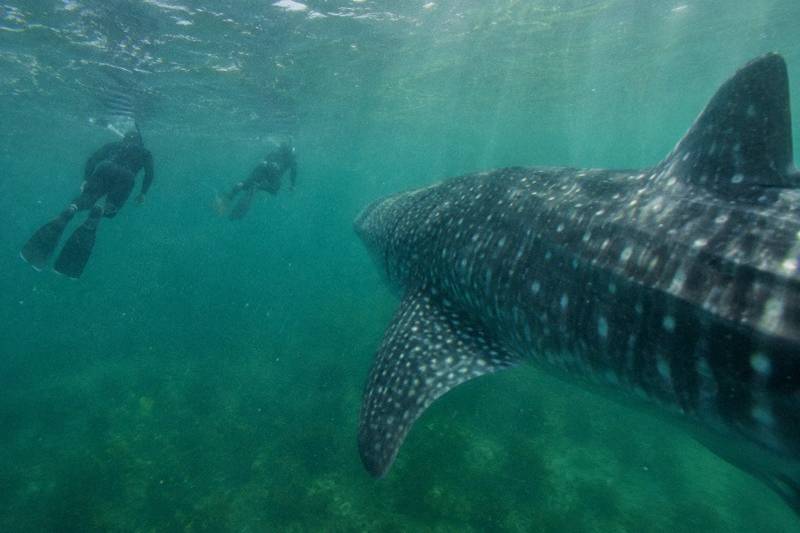
Do You Need To Be A Strong Swimmer To Snorkel With Whale Sharks In La Paz?
No, you do not need to be a strong swimmer to snorkel with whale sharks in La Paz. Mexican rules require a life vest or wetsuit, a specialised guide per five swimmers, and no propulsion devices, which is why cautious swimmers book this trip.
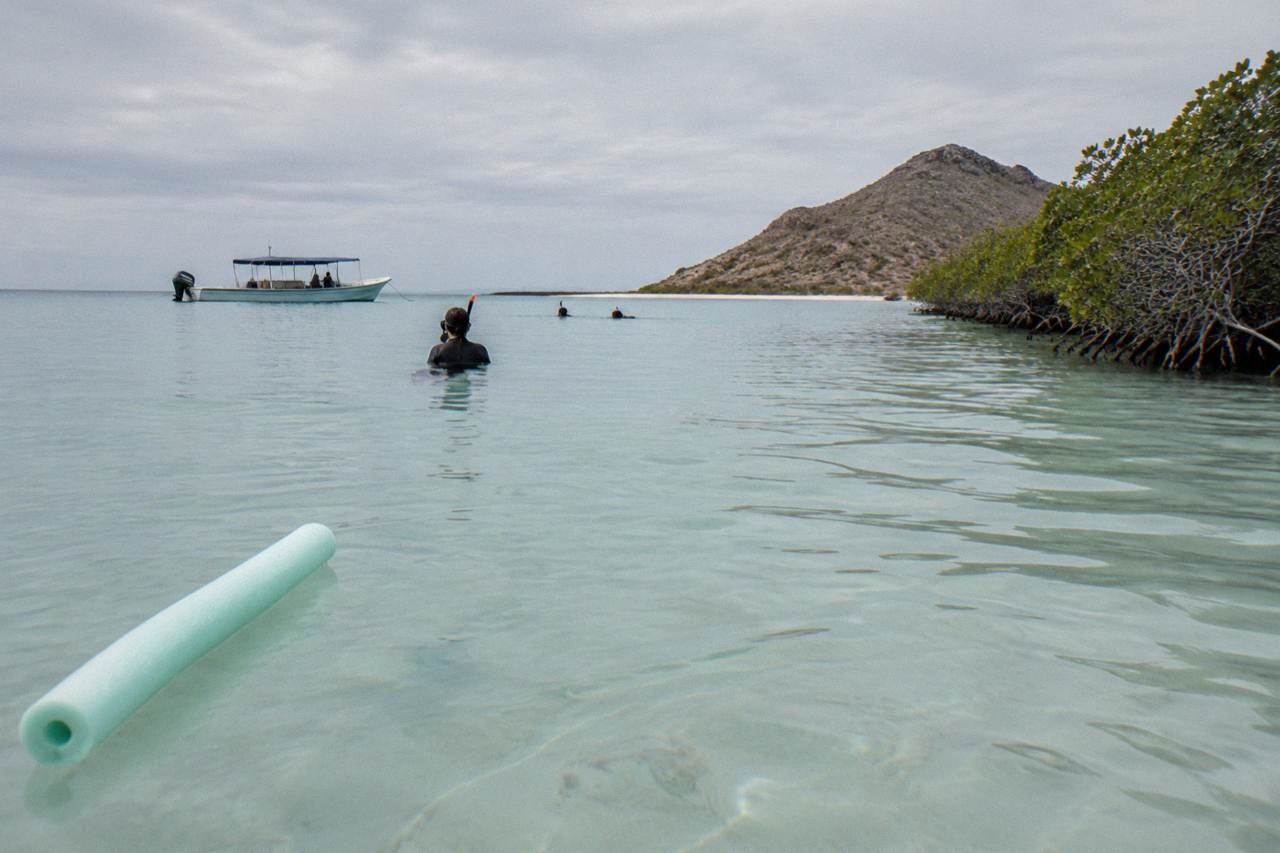
The question is simple: can an average swimmer keep up with a whale shark?, usually phrased with a touch of embarrassment: can I do this if I am not a strong swimmer? It deserves a direct answer, because the fear stops a lot of people from booking one of the most accessible wildlife swims in North America. The short version is that La Paz whale shark swims are designed around floaters, not freestylers, and the rules that make them that way are federal law, not operator courtesy. If you're curious how those same federal rules protect the animals as much as the swimmers, our guide to the ethics of whale shark swims in La Paz covers what the regulations guarantee and where they fall short.
The marine-biologist small group run by MeXplore, the Tuna Tuna Tours small-group swim, and the budget-friendly Alonso Tours snorkel trip all follow the same framework in the water: a guide in the water with you, a vest or wetsuit on you, and a fish that moves at walking pace. That framework is what this article walks through, rule by rule, listing by listing. If that same setup sounds manageable for younger travelers, the guide to kids swimming with whale sharks in La Paz covers what the rules and trip logistics mean for families.
No, you do not need to be a strong swimmer. The NOM-171 rule that governs every licensed swim in the bay requires a life vest or wetsuit for each person in the water, limits each specialised guide to five swimmers kept together as a group, and bans motorised propulsion devices, so the experience is built around floating at the surface beside a slow animal rather than swimming long distances unaided.
That is the regulatory answer, and it is worth dwelling on because it removes the guesswork. The rulebook does not say "competent swimmers only." It says the opposite in effect: everyone floats with buoyancy assistance, everyone stays with a guide whose job is to control the activity of those five users, and nobody is expected to chase anything. Whale sharks are filter feeders that cruise at a pace swimmers can match with relaxed fin kicks, and the norm's own stop-rule exists partly because the animals sometimes outswim the group, not the reverse.
What the rules do not do is make the swim effortless. You enter the sea from a boat, there can be chop, and you will be wearing fins and a mask for the first time in years if you are like many guests. Confidence in deep water helps, but it is comfort, not athletic swimming ability, that the day actually demands. Snorkeling in a vest is closer to floating in a pool with your face in the water than to lap swimming, and the guides who work these shifts are practiced at coaching hesitant guests through the first two minutes.
What The Official Swim Rules Say About Ability
The NOM-171 standard requires each swimmer to wear a life vest or wetsuit, assigns one specialised guide to every five swimmers who must be kept together, requires swimmers to enter the water ahead of the shark from a boat in neutral, and prohibits touching, riding, selfie sticks and motorised propulsion. None of these rules screens for swimming strength; they all compensate for it.
These are the numbers, read directly from the federal norm published in the Official Gazette, which is the document every one of the 112 authorized 2026-27 operators works under.
| Rule | What it means for a nervous swimmer |
|---|---|
| Life vest or wetsuit required | You float whether or not you can swim; buoyancy is not optional, it is the law |
| One specialised guide per 5 swimmers | Someone trained is within arm's reach of your group the whole time |
| Swimmers descend 15 m ahead of the shark | You are placed in the water, not asked to catch up to a moving animal |
| No motorised propulsion devices | The experience is surface snorkeling by design, not a chase |
| 2 m from head and sides, 3 m from tail | Distance rules slow everything down for both species |
| Activity ends if the shark dives or evades | The swim stops when the animal leaves, so nobody is pushed past their limit |
The guide-to-swimmer ratio is the detail that surprises people most. This is not a boat that dumps twelve guests overboard and watches from the rail. The norm's language says the guide "tiene que controlar la actividad de 5 usuarios," has to control the activity of five users, and operators structure the whole swim around that control. On small-group listings like the Eco Migrations adventure, capped at six swimmers per boat, you are effectively in a single guide's group with one other pod of people. The full text of the standard lives on the Official Gazette page for NOM-171-SEMARNAT-2018, and it is short enough that reading the swim-rules section before booking genuinely calms people down.
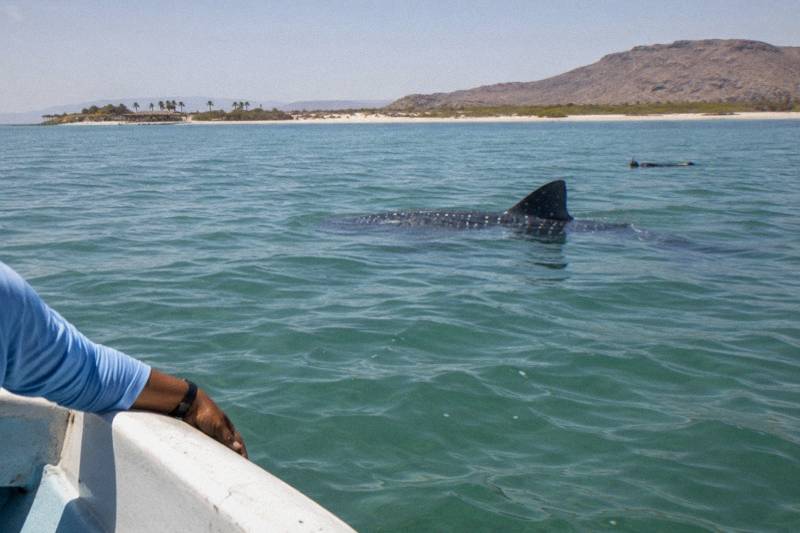
One thing the rules deliberately do not cover is age or health screening. There is no federal minimum age, no health questionnaire and no swim test in the norm; those decisions sit with each operator. If you are booking for a child, a non-swimming partner or someone with a heart or respiratory condition, check the listing for the operator's own age and health rules, though the VIP Tours listing states a minimum age of 5 and Cabo Adventures a minimum of 8.
How The Swim Actually Works, Minute By Minute
A typical La Paz swim runs 2 to 4 hours door to dock, with roughly 20 to 40 minutes of boat time out to the whale shark zone, briefings and gear on the way, and then short rotational turns in the water: your guide calls your group of five, you step in ahead of the shark, float as it passes beside you, and climb back aboard to rest while the next group goes.
The rotational structure is the single most reassuring fact for weak swimmers, and it rarely makes it into tour marketing. You are not in the water for an hour. Boats take turns under a one-boat-per-shark rule with a 30-minute maximum per encounter, and within that window the guide cycles small groups so everyone gets their float without anyone getting cold or exhausted. Between turns you sit on the boat, breathe, watch the animal from the surface, and get ready again if you want a second go.
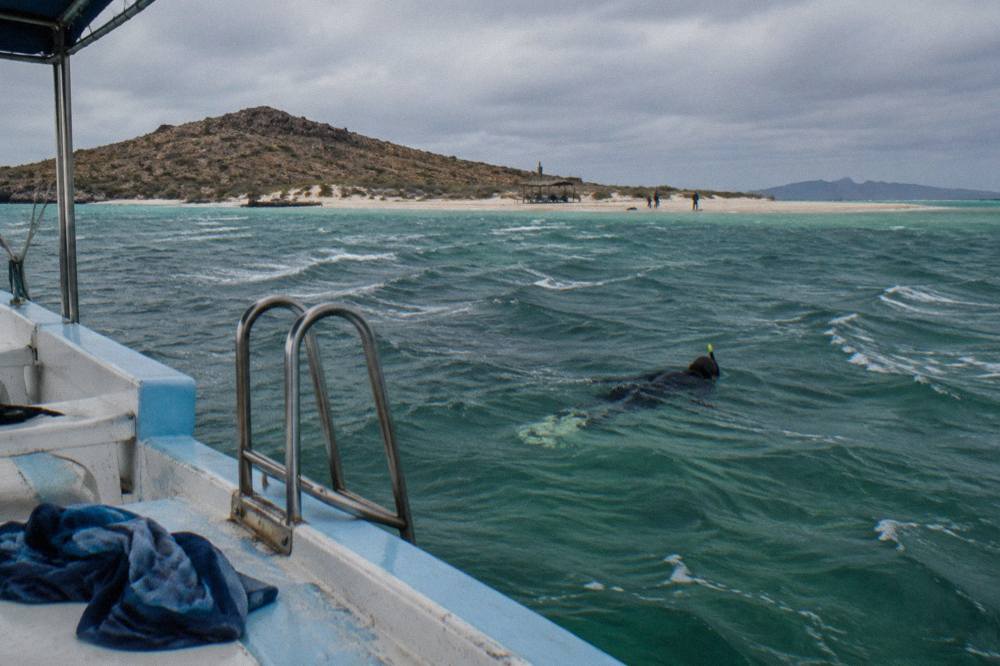
Operators report 3 to 5 hours on the water for the longer listings, and the short shared swims, like the 2-hour Punta Baja Tours trip or the 2.5-hour Sunrider Tours adventure, compress the same structure into a tighter window. The descent procedure matters here too: the boat approaches from behind and parallel to the shark, engine in neutral, and swimmers enter the water about 15 meters ahead of the animal's path. That means the shark comes to you. You do not swim to it. Guests who panic mid-turn can grab the moment to simply float, watch it pass, and be back on the ladder inside a couple of minutes.
If this description raises questions about what else the day involves, the site's walkthrough of what a first whale shark swim feels like covers the full sequence from dock briefing to last turn, and the gear and packing guide lists what you carry versus what the boat provides.
Can You Join A Whale Shark Tour If You Can Not Swim?
Honestly: some operators will take a complete non-swimmer in the water with a guide's direct supervision, but this site's research found no published policy on it, so you must ask the operator before booking, and many non-swimmers choose to stay on the boat and watch, which the rules allow since observation is a licensed activity alongside swimming.
This is where honesty matters more than reassurance. The vest keeps you at the surface and the guide keeps the group together, but the sea is not a pool: there is movement, there is a mask on your face, and there is a wild animal the length of a bus a few meters away.
The pragmatic advice is to be upfront. Message the operator through the listing, say plainly that you or your travel companion cannot swim, and ask what they recommend. Some will suggest the premium reduced-group encounter, La Paz Whale Sharks VIP Tours' intimate eco-friendly swim from $295 per person, precisely because fewer people in the water means more guide attention. Others will tell you honestly that a nervous non-swimmer enjoys the trip more as a watcher, and whale sharks drawn to surface plankton are frequently visible from the deck without anyone getting wet. The three-question trip picker on the homepage was built around exactly this kind of honesty.
What no operator can do is promise conditions. The sea state, the shark's behavior and the count that day all vary, and no listing on this site's roster guarantees a swim or a sighting. The season framework, at least six sharks in the swim zone before any trips operate and four shifts a day, is designed to keep encounters sustainable, not to keep the water flat.
What Gear The La Paz Listings Include
Nearly every shared swim on this site's roster includes snorkel equipment, and most add wetsuits, which do double duty as buoyancy and warmth; the exact split varies by listing, so the table below shows what each operator's own line states, and anything not listed on a roster line is a question for the operator, not an assumption of "no."
Gear is the quiet hero of swim confidence. A wetsuit is buoyant, a vest is more buoyant still, and together with fins and a mask they turn a marginal swimmer into a stable floater. Here is what the listings actually state:
| Listing (operator) | Gear stated on the roster line |
|---|---|
| Small Group with Marine Biologist (MeXplore) | Snorkel equipment and wetsuits, light refreshments, permits and conservation donation |
| Small Group Whale Shark Snorkeling (Tuna Tuna Tours) | Snorkeling equipment, wetsuits, bottled water, snacks, underwater pics and videos |
| Snorkel Tour with Whale Shark (Alonso Tours) | Snorkeling equipment, snacks, fees and taxes; the listing notes purified water in containers rather than bottles |
| Whale Shark Swimming Adventure (Eco Migrations) | Snorkeling equipment and a 2-3 mm full wetsuit |
| Whale Shark Adventure (Baja Wild Adventures) | Snorkeling equipment, wetsuits, snacks and drinks |
| Intimate Eco-Friendly Encounter (La Paz Whale Sharks VIP Tours) | Snorkeling equipment, biodegradable SPF 50 sunscreen, snacks and drinks |
Note the pattern: wetsuits appear on most shared-swim lines, but the roster shows a few exceptions where only snorkel gear is listed, and on those the norm's vest requirement fills the buoyancy gap anyway, and the norm requires every swimmer to wear a life vest if not in a wetsuit. Towels, by contrast, are excluded on nearly every line that mentions them, and biodegradable sunscreen is excluded on some, so bring your own of each.
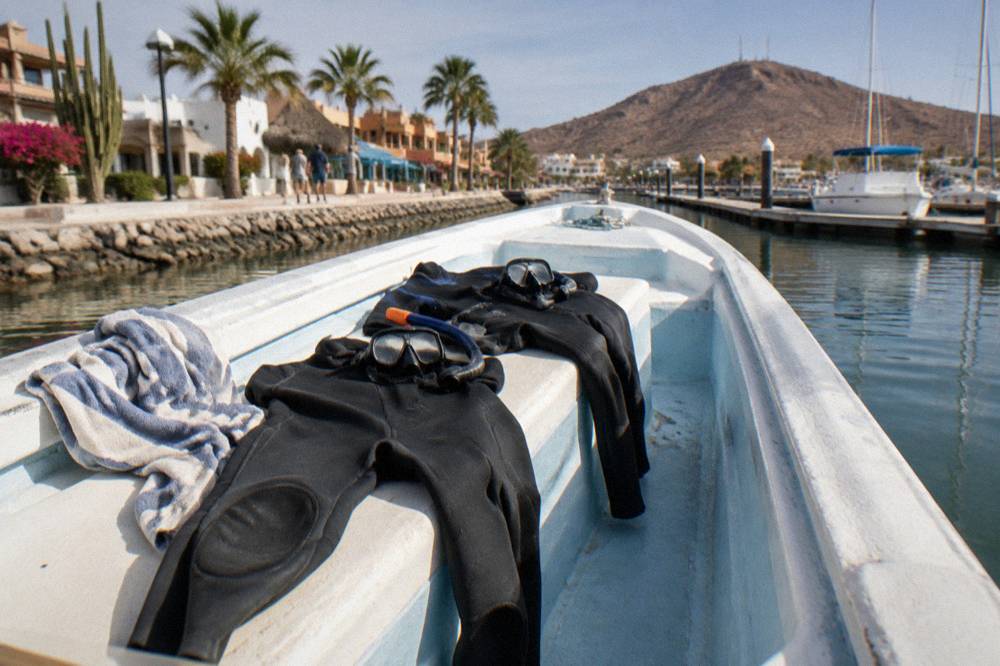
The premium encounter's inclusion of biodegradable sunscreen is not a gimmick: the norm permits only biodegradable sunscreen applied before entering the water, and some guides prefer you wear a rash guard and no sunscreen at all. The site's rules explainer for NOM-171 goes through every requirement in the standard, including the ones that surprise photographers, like the selfie-stick and flash bans.
Sea Temperature, Wetsuits And Why Floating Beats Swimming
Bay water runs about 19 to 22 C from December to April, warmer in October (about 29 C) and November (about 26 C), which is why operators recommend a 3 mm shorty to 5 mm full wetsuit, and a thicker suit floats you higher in the water, so the coldest months are paradoxically the easiest ones for weak swimmers because the required gear does more of the floating for you.
The satellite temperature record for La Paz shows December through March averaging around 19 to 20 degrees, and Cooling from about 29 C in October to about 26 C in November, per seatemperature.org's monthly averages for the bay. That is pool-cold, not polar, but an hour of rotational turns in 20-degree water without a suit would drain anyone. The suit fixes it and, in the same stroke, adds buoyancy.
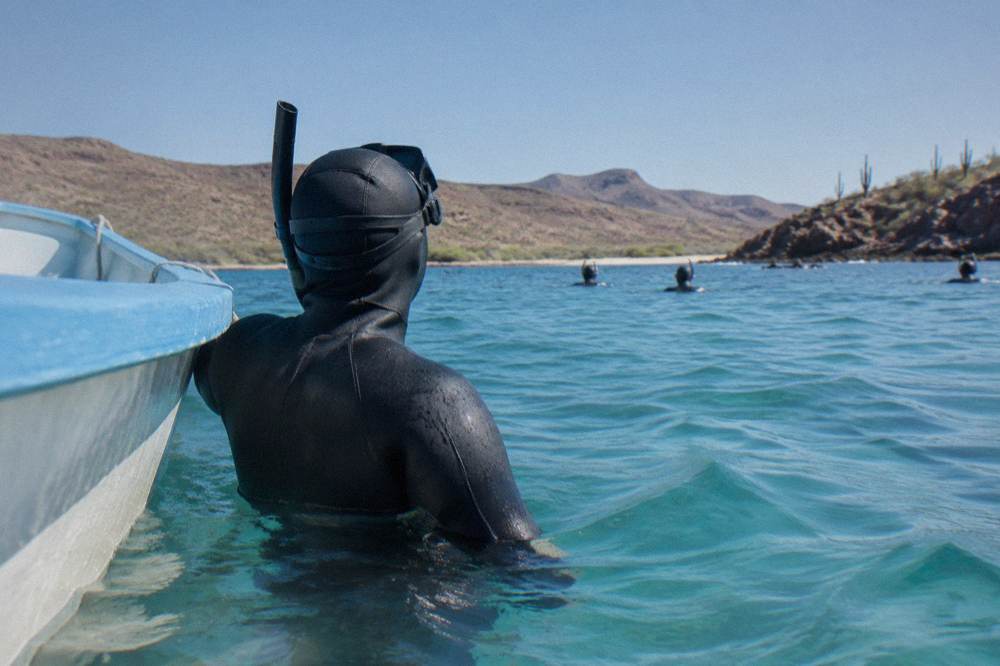
The seasonal angle matters for planning too. The best months are reported to be December, January and February, and the month-by-month season guide breaks down how the official counts, shift caps and water conditions interact across the calendar. Weak swimmers planning around confidence rather than shark abundance might actually prefer those same months for the buoyancy advantage alone.
The Balandra combos, like Tuna Tuna Tours' whale shark, sea lion and Balandra tour from $234 per person with lunch and wetsuits included, add a second dimension: the sea lion colony swim at Los Islotes is a different kind of water day, and the site's sea lion swimming guide covers the separate rules there, including the summer closure that protects the breeding colony.
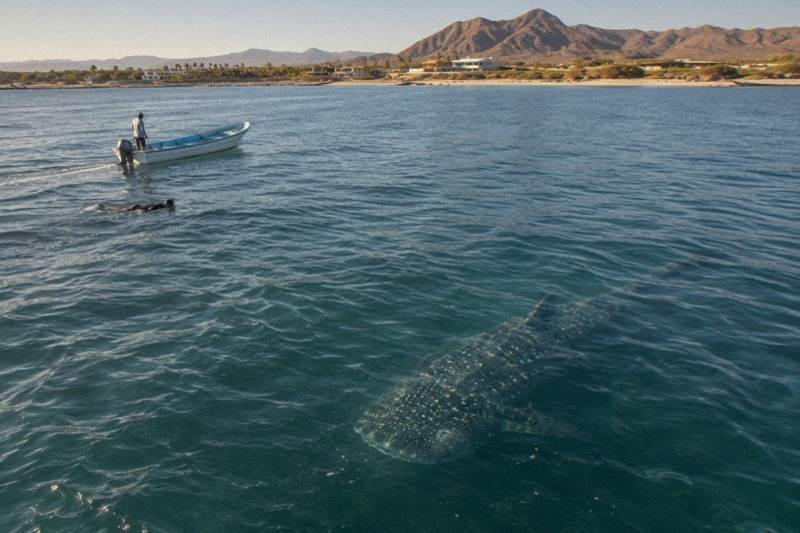
For a first-timer whose main worry is ability, the Alonso Tours listing above is a sensible low-commitment choice: from $122 per person, 2 to 4 hours, fees included (its listing also prices snorkel gear at MX$200 per person as an extra, so confirm), and a rating of 4.9 from 77 reviews.
Do You Need To Be A Strong Swimmer To Snorkel With Whale Sharks?
No. You need to be able to float with a vest or wetsuit on, breathe through a snorkel, and follow a guide who is legally required to stay with your group of five. Comfort in deep water matters more than technique, the boat is always within reach, and the shark's pace does the rest.
If cost is the sticking point rather than confidence, the full cost comparison covers every price band from $110 shared swims to the $1,168 private charter.
A final note on who should think twice. The swim is surface snorkeling, but it is still open water, and the rules themselves end any encounter the moment a shark shows evasive behavior, which protects the animal first and the swimmer second. Guests with severe anxiety in deep water, or who cannot tolerate a mask, may genuinely prefer the Los Cabos day-trip format, like Cabo Adventures' 10-hour excursion from $259 per person, where the boat ride and lunch carry as much of the day as the swim. There is no wrong way to see the largest fish in the sea; there is only the way that fits your body and your nerve, and now you know the rules that hold it all together.
Common Questions About Swim Ability And Whale Sharks
Do You Need To Be A Strong Swimmer To Snorkel With Whale Sharks?
No. Mexican rules require a life vest or wetsuit, one specialised guide per five swimmers kept together, and no motorised propulsion, so the swim is built around floating at the surface while the shark passes beside you rather than swimming any distance under your own power.
Can you swim with whale sharks if you can't swim?
Sometimes, with a guide's direct supervision, but no operator publishes a non-swimmer policy, so ask through the listing before booking. Staying on the boat and watching is also allowed, since observation is a licensed activity alongside swimming.
Do the tours provide life vests and wetsuits?
Most shared-swim listings on this site's roster state wetsuits and snorkel gear as included, and every licensed operator must comply with the vest-or-wetsuit rule. A few listings state snorkel gear only, and on those you wear a life vest, as the rule requires.
Is there an age minimum for the swim?
No federal age limit exists in NOM-171, and the VIP Tours listing sets a minimum age of 5, Cabo Adventures 8, Sunrider Tours 8; no child pricing is on file. Check the listing for each operator's own age and health rules before booking for children.
How long are you actually in the water?
Not long per turn. Boats rotate groups of five under a 30-minute maximum per shark encounter, so individual floats typically last a few minutes each with rest periods on the boat between turns, inside a trip of 2 to 4 hours overall.
What if I get tired or scared mid-swim?
You signal your guide and return to the boat. The guide's legal role is to control the group of five swimmers, the ladder is always close, and the activity with a shark ends immediately if it shows evasive or defensive behavior, so nothing pushes you past your limit.