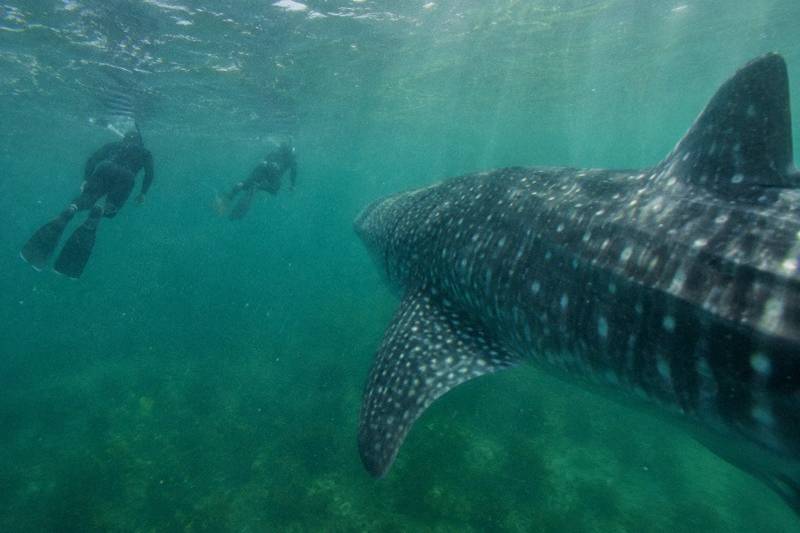
Is Swimming With Whale Sharks Ethical?
A grounded look at the ethics of whale shark swims in La Paz: the refuge rules, the 112 authorized boats, the limits per shark, what the rules cannot guarantee, and how to pick an operator you can book in good conscience.
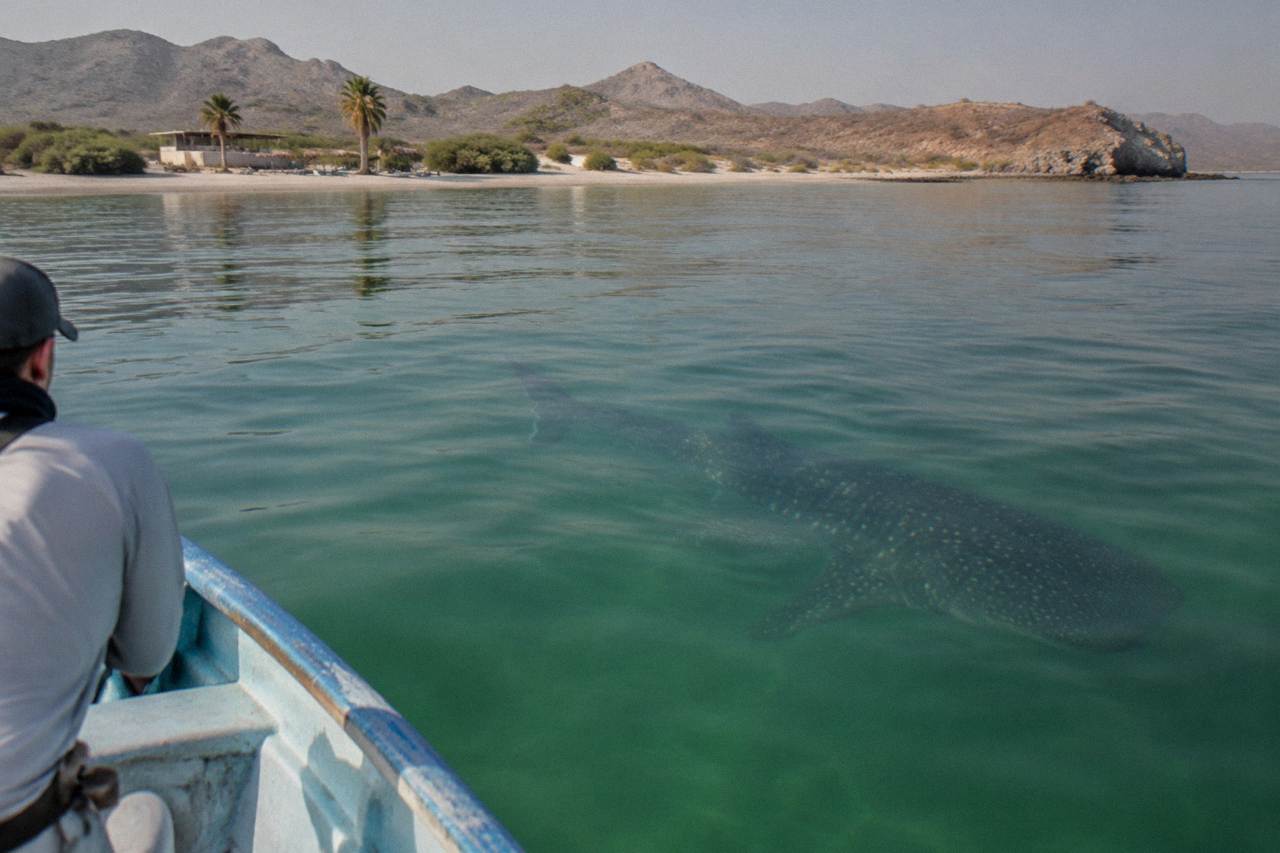
The honest answer sits in the rulebook rather than in anyone's feelings about it. Whale shark swims in La Paz operate inside a federally decreed refuge under a norm called NOM-171-SEMARNAT-2018, which caps swimmers per guide, minutes per shark and boats in the water, and bans touching outright. The ethics of your specific trip depend on whether your operator holds one of the 112 season authorizations and follows those limits, and that is a checkable thing, not a leap of faith. Timing matters as much as operator choice, and if you're weighing an autumn visit, whether October actually delivers whale shark swims in La Paz is the practical question to settle next.
That is the short version. The longer version matters, because the same activity in an unregulated destination can be a genuinely different ethical proposition, and because even the La Paz rules leave real gaps that no regulation closes. This page walks through what the rules limit, what they cannot guarantee, and how to pick an operator, including the marine-biologist small-group swim and the premium reduced-group encounter that dominate the local conversation.
It also touches the question behind the question. Most people asking this are not wondering whether the species should be protected in the abstract; they are wondering whether they can book a specific tour, look a whale shark in the eye and feel fine about it afterward. That is a fair framing and it deserves a direct answer rather than a lecture.
There is a further wrinkle worth naming early. Ethics questions about wildlife tourism often get answered with vibes, either glowing testimonials or blanket condemnations, and neither survives contact with the actual documents. What follows sticks to what the decree, the norm and the season's authorization documents actually say, flags where the record runs out, and lets you weigh the rest yourself. Where a figure appears, it comes from the operator listings or the official record behind this site.
What Makes La Paz Different From Unregulated Swim Sites?
La Paz is one of the few whale shark destinations where the swim runs inside a formal protected area under a federal norm, with a hard cap on boats, a minimum shark count before any trip may operate, and government inspection on the water. The bay was decreed the Area de Refugio Bahia de La Paz on 29 November 2018, covering 22,749 hectares split into three zones.
Only Zone I permits swimming and watching. Zone II is set aside for conservation with no activity at all, and Zone III is transit only, with a 7 knot speed limit. That zoning is the backbone of the whole ethical case: the animals have large parts of their own bay where boats may not work them, and the decree exists specifically to protect Rhincodon typus, which is listed as threatened under NOM-059-SEMARNAT-2010.
Compare that with destinations that have no federal norm, no refuge and no observer program. In those places the pressure on the animals depends entirely on individual operator restraint, and restraint is not a business model. A full treatment of the local rulebook lives in the La Paz whale shark swim rules explained guide on this site, but the headline is simple: rules that are written down, inspected and enforceable beat rules that are voluntary.
None of this makes La Paz perfect. It makes it auditable, and auditable is the foundation any honest ethical judgment needs. You can read the decree, read the norm, count the pennants and check the season's own shutdown history against the published shark counts. The official norm is published by the federal gazette and readable by anyone: the NOM-171 text on the DOF site.
The zone system also changes what a "swim" even is here. Because Zone III carries its own speed limit and Zone II carries a total ban, a legal tour is not simply driving to wherever a shark happens to be. The boat operates inside a mapped, bounded area under a shift system, four shifts a day, with the vessel count per shift scaled to the latest official shark count. That is a structural difference, not a marketing one.
Can You Tell If An Operator Is Authorized?
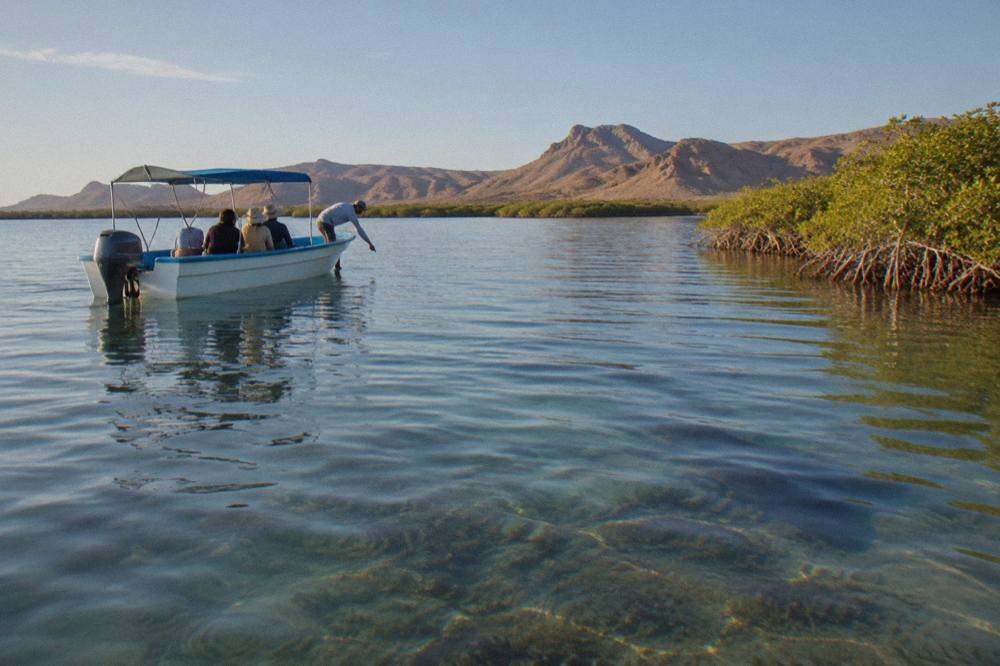
Yes, with three visible checks on the day: the boat is no longer than 11 meters, a SEMARNAT pennant (banderola) is displayed, and a copy of the authorization is carried on board. For the 2026 to 2027 season SEMARNAT issued exactly 112 authorizations under a one holder, one boat, one pennant scheme, and the pennants were physically delivered to operators on 20 October 2026.
The one-boats-per-holder structure is deliberate. It prevents a single company from stacking a dozen boats in the swim zone under one license, which is a common failure mode in less regulated destinations. The 112 pennants were handed over at an event witnessed by the state governor, who stated the permits go exclusively to local service providers, according to local news coverage of the delivery.
What no public resource currently offers is a searchable list of the 112 holders. No official registry was found in the research behind this site, so you cannot look an operator up by name in advance with confidence. What you can do is ask the operator directly which authorization their boat sails under, then look for the pennant and the paperwork when you board. An operator who answers that question readily is telling you something; one who deflects it is telling you something too.
Booking through an established listing rather than a beach hawker is the practical middle path. The marine-biologist small group run by MeXplore departs from Topete 125 in La Paz, and its listed inclusions state that federal permits and a whale shark conservation donation are built into the from $178 per person price. That line item is the paperwork made visible.
The same logic applies across the roster. Operators that itemize permits, bracelets or conservation fees in their inclusion lists, as several La Paz listings do, are surfacing compliance costs they could otherwise bury in the headline price. It is a small signal, but it is a real one, and it costs you nothing to weight it when comparing two similarly priced boats.
How Many Swimmers, Boats And Minutes Are Allowed Per Shark?
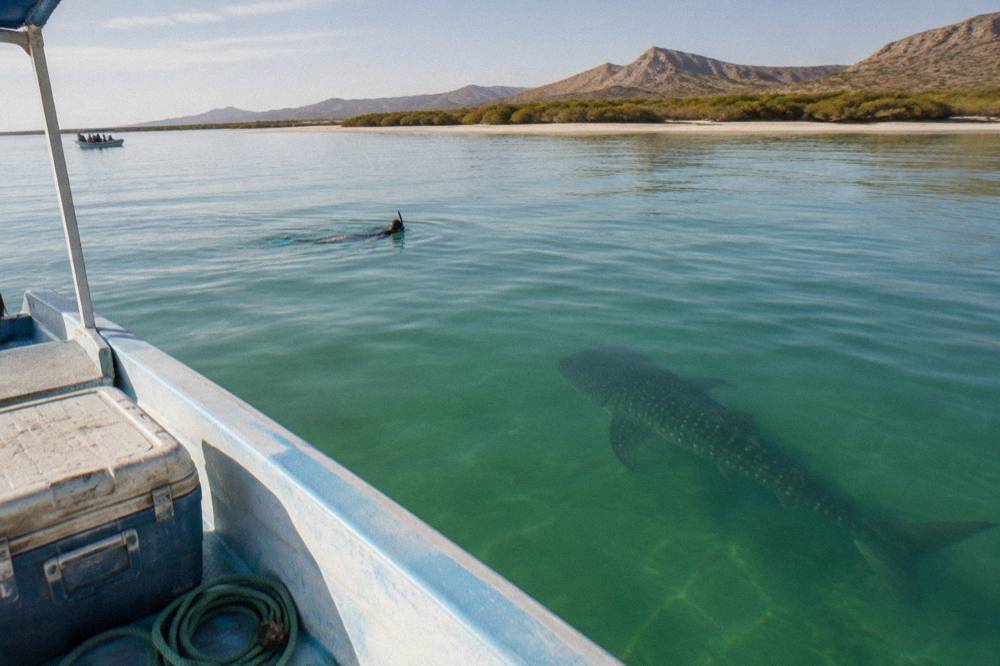
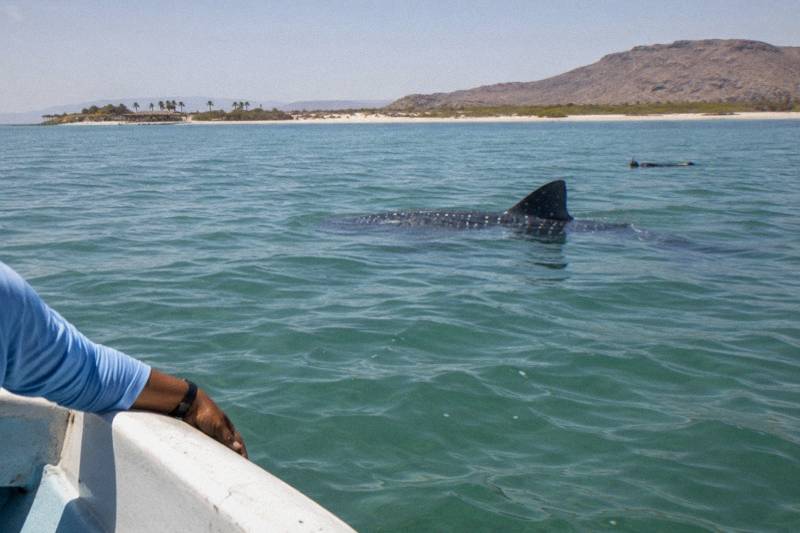
The norm allows 5 swimmers per specialised guide, kept together as one group; one boat per shark at a time for a maximum of 30 minutes, with other boats waiting 50 meters away; and swimmers held 2 meters from the head and sides, 3 meters from the tail. Boats must keep 5 meters off the animal and slow to 3 knots inside aggregation zones.
Those numbers are the teeth of the whole system, and they are worth reading slowly because each one answers a specific harm. The swimmer-to-guide ratio stops a free-for-all of twenty people splashing over one animal. The 30 minute cap stops a shark from being worked all shift. The distance rules stop the tail strike, which is the genuinely dangerous part of a whale shark to a swimmer, and the queueing rule stops a carousel of boats. The rules cover how you swim, but when you swim matters just as much, and the month by month weather breakdown for La Paz shows which part of the season pairs calm seas with the best odds of finding the sharks.
| Limit in NOM-171 | What it says | The harm it answers |
|---|---|---|
| Swimmers per guide | 5, kept together | Crowding and chasing by loose groups |
| Time per shark | 30 minutes, one boat | Exhausting one animal all shift |
| Distance from animal | 2 m head and sides, 3 m tail | Contact and tail injuries |
| Boat approach | From behind and parallel, 5 m minimum | Cutting across the shark's path |
| Speed in aggregation zones | 3 knots | Propeller and hull strikes |
| Waiting boats | 50 m away | Boat pileups on one shark |
Even the descent is choreographed. Swimmers enter the water from a position about 15 meters ahead of the animal with the engine in neutral, so the shark is never surprised from behind by people, and the boat never has to maneuver close to make a drop. Small details like that are where a norm either lives on the water or stays on paper.
There is also a hard environmental brake that most visitors never hear about. Trips may only operate when at least 6 whale sharks are present in Zone I, based on the average of the two most recent official counts; with 5 or fewer, the season's activity is suspended outright, and the boat count per shift scales up from 6 boats at 6 sharks to a ceiling of 14 boats at 14 or more. The rule has real bite: the swim was suspended in late January 2025 after counts fell to 9, then 5, then a single shark on 20, 26 and 27 January. Since a suspended season can scramble your plans at the last minute, our guide to whale shark safety and on-water rules in La Paz explains how to spot authorized boats and check current conditions before you book.
That is the part skeptics usually get wrong and the part boosters usually omit. The system is designed to shut itself down when the animals thin out. It did exactly that, and it had done the same in early 2023 for the same reason.
Do The Rules Stop The Animals Being Disturbed?
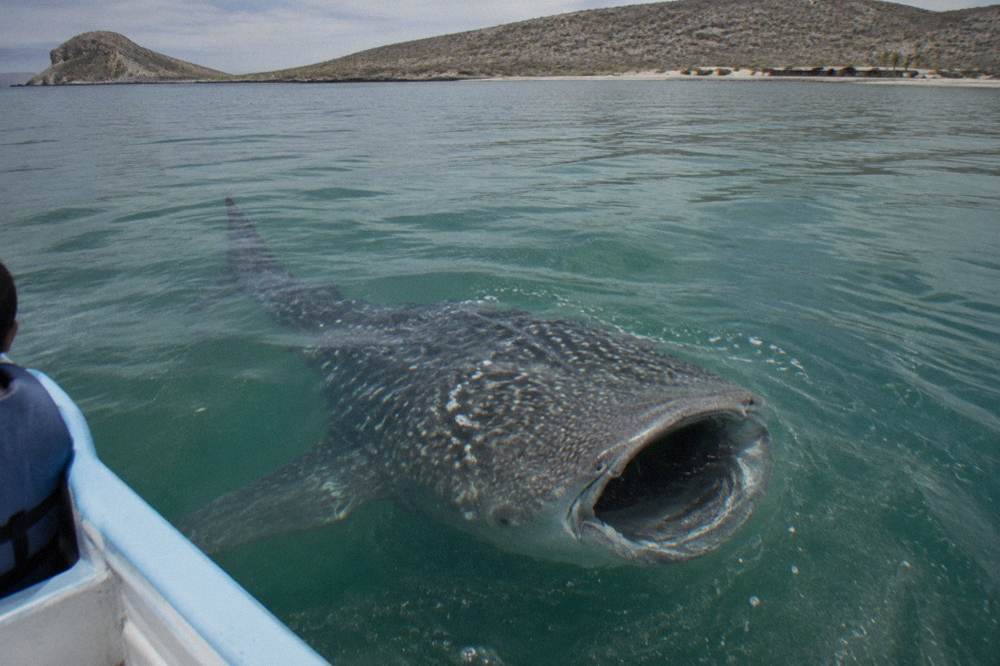
Partly, and honesty requires saying so. The norm contains an explicit stop rule: if a shark shows evasive swimming, defensive tail strikes, sudden direction changes or prolonged dives, the activity with that animal ends immediately. Touching, riding and feeding are prohibited, as are selfie sticks, flash and motorised propulsion devices.
The stop rule is the ethical heart of the regulation, because it is the only clause that lets the animal call the session. A guide who honors it is accepting that a dive means the interaction is over, full stop, regardless of how far the boat drove or how much the guests paid. Nothing in the rulebook forces a guide to honor it quickly, though, and nothing on any booking page tells you whether a particular crew is liberal or strict about cutting a swim short. More of these guides are collected on La Paz Whale Shark Tours.
Enforcement exists and is named. PROFEPA, working with CONANP, runs inspection and surveillance actions to verify compliance with the norm and the conditions of each authorization, per the season's management documents. Named inspectors on the water are rare in the swim-with-wildlife world, and La Paz has them.
What the rules cannot do is guarantee the animals are unaffected in ways no one measures. There is no long-term welfare study on file that this site could verify, no cumulative-stress metric, no data on whether sharks returning season after season, as the 2025 to 2026 counts recorded across 950 sightings, represents habituation, tolerance or pressure. Anyone who tells you the science is settled in either direction is overselling. The refuge decree itself is the primary source for the protection framework: the 2018 DOF decree establishing the refuge.
It is also fair to note what the species listing implies. A threatened classification under NOM-059 means the population warrants legal protection, which is precisely why the activity is confined, counted and inspectable rather than open to anyone with a boat. The listing is the reason the rulebook exists at all, and the rulebook is the reason an ethical case can be made here in a way it cannot everywhere.
What The Rules Cannot Guarantee?
Three things: sightings, operator behavior in the moment, and the wider bay's condition. No rule can promise a shark appears, no inspector rides every boat, and factors like boat traffic outside the zones and coastal development sit outside NOM-171's reach entirely. Booking a legal tour buys you a framework, not a spotless outcome.
Start with sightings, because it is the gap people feel most. The 2026 to 2027 season is announced, 1 October 2026 to 30 April 2027, but no shark counts have been published for it yet and there is no first-sighting date to cite. Operators report boat rides of 20 to 40 minutes to reach the zone, and the water holds the animals when it holds them. A season can open slowly; the previous one opened in November rather than on the official October start date.
Then operator behavior. The norm sets the ratios and distances, but the swim only stays clean if the guide enforces them against a paying group that wants to get closer. This is where small-group formats earn their price difference. The Eco Migrations whale shark adventure caps its shared trips at 6 guests with a marine biologist, from $194 per person for 4 hours, and a group of six is simply easier to keep together than a boat of fifteen. Reduced group size is not altruism; it is compliance made physically easier.
Finally, honesty about the money. Every swim on this site's roster is a paid commercial activity, from $110 per person for the cheapest shared swim to $1,168 per group for a private charter. Conservation funding rides on it: the MeXplore small group and the MeXplore island combo both list federal permits and a whale shark conservation donation among their inclusions. Whether commercialization is itself an ethical cost is a judgment the rulebook cannot make for you.
| What is regulated and checked | What stays outside the rules |
|---|---|
| Swimmer ratios, distances, 30 minute cap | Whether a shark chooses to appear |
| 112 authorizations, pennant, boat length | Guide conduct between inspections |
| 6 shark minimum, boat caps per shift | Bay traffic and development outside zones |
| PROFEPA and CONANP inspections | Long-term effects no one measures |
| Touching and riding bans | Your own behavior in the water |
The last row of that table deserves a moment, because it is the one variable fully under your control. The norm constrains the operator and the boat, but in the water it is you, a guide and an animal the size of a bus. Nothing stops an individual swimmer from kicking hard to close the gap except the guide's voice and the swimmer's own discipline, and the rules only work when both hold.
How Should An Ethical Minded Visitor Choose A Tour?
Pick a listed operator that names its permits, favor small groups, check the pennant on the dock, and treat the premium formats as the lowest-impact option rather than a luxury. The roster's reduced-group offerings, the 6-guest biologist trip from Eco Migrations and the premium encounter from La Paz Whale Sharks VIP Tours, exist specifically to shrink the human footprint per swim.
The premium encounter is worth understanding on its own terms. It runs from $295 per person for 3 hours, carries a 5.0 rating from 422 reviews, and includes all fees and taxes plus biodegradable SPF 50 sunscreen, which matters because non-biodegradable sunscreen is banned in the water under the norm. Fewer guests per shark is the single biggest variable a visitor controls.
Behavior on the day matters as much as the booking. Wear the life vest or wetsuit the rule requires, keep the 2 and 3 meter distances even when the animal closes them itself, and never reach out, even at the tail's 3 meter line where the temptation is worst. The question of contact has its own deep dive in is it legal to touch a whale shark, and the short answer is that the ban is absolute, not advisory.
Only the VIP Tours (minimum age 5) and Cabo Adventures (8) listings state age rules, so check the listing for each operator's own policy before bringing children. And on the ethics of the broader decision, the comparison this site publishes as the trip picker and homepage comparison weighs price, group size and format against the rules each tour states.
One more practical filter: read the exclusion lists, not just the inclusions. Several listings state plainly that towels, biodegradable sunscreen or transport are not provided, which tells you the operator has actually itemized the trip rather than copying a generic promise. Operators that publish what they do not include tend to be the same ones that publish their permits.
So Can You Book A Whale Shark Swim In Good Conscience?
In La Paz, yes, with conditions: book an authorized operator, choose a small group, respect the distances and the stop rule, and accept that no sighting is promised. The regulatory framework here is strict and published, it has demonstrably suspended itself to protect the sharks, and your job is to sail with a crew that treats the rules as the floor rather than the ceiling.
The marine-biologist small group remains the default recommendation on this site for exactly this reader. It pairs the rulebook's structure with a guide trained to read the animal, at 4.9 from 649 reviews and from $178 per person for 3 hours. A biologist on the boat is not a guarantee of anything, but a naturalist who can identify evasive swimming is the stop rule wearing a wetsuit.
The unresolved residue is real and worth carrying with you rather than pretending away. Whale sharks are a threatened species, the activity is commercial, and the long-term effects are unmeasured. The La Paz answer to that residue is a refuge, a norm, a six-shark threshold that has actually triggered, and 112 authorized boats under pennant. It is not a perfect system. It is a serious one, and serious is what an ethical booking looks like in practice.
Common Questions About Whale Shark Swim Ethics
Does touching a whale shark happen on legal tours?
No legal tour permits it. Touching, riding and feeding are prohibited behaviors under NOM-171, and the stop rule ends the activity with any shark showing defensive behavior. Distances are set at 2 meters from head and sides and 3 meters from the tail.
How many people can swim with one whale shark?
Five swimmers per specialised guide, kept together as a group, with one boat per shark at a time for up to 30 minutes. Other authorized boats wait 50 meters away.
Can tours operate when few whale sharks are present?
No. The 2026 to 2027 rules require at least 6 sharks in Zone I before any activity runs, based on the two most recent official counts, and boat numbers per shift scale with the shark count up to a ceiling of 14.
How do I verify an operator is legal?
Look for a boat no longer than 11 meters, a displayed SEMARNAT pennant and the authorization copy carried on board. Ask the operator before booking which authorization they sail under; the 112 pennants for this season were delivered to local operators on 20 October 2026.
Are small group tours more ethical?
They reduce the human load per shark and make the guide's job of keeping swimmers together and at distance physically easier. The roster's smallest formats cap at 6 to 10 guests, and the premium encounter sells itself on a reduced group.