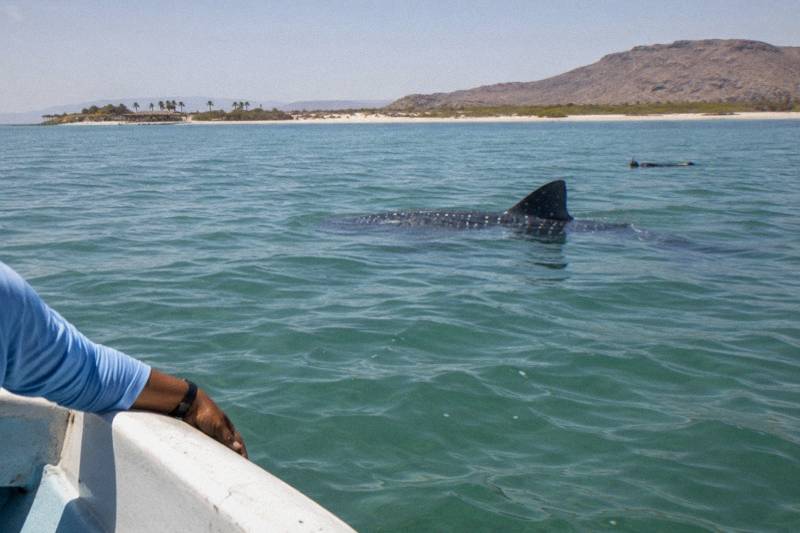
Can You See Whale Sharks In October In La Paz?
The season opens 1 October in La Paz, but October whale shark swims depend on shark counts, permits and weather. Here is an honest look at what October actually delivers.
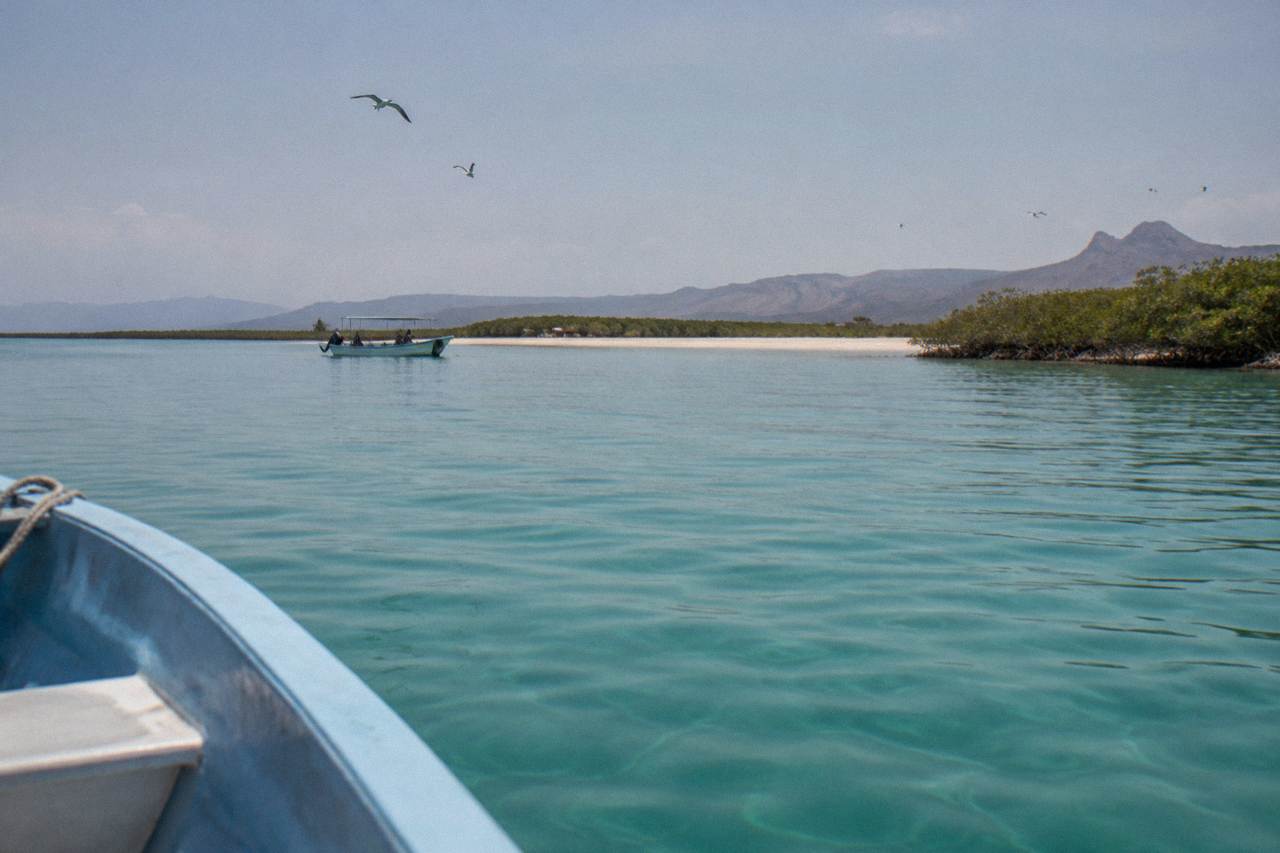
Maybe, and that is the honest answer. The official season opens 1 October, but a swim only operates once at least six whale sharks are counted in the designated zone, and no counts had been published for the first three weeks of the 2026-27 season. In 2022-23 and 2025-26, real swimming started in November, not October. October is a maybe month: book flexibly, and confirm with the operator before you travel.
That "maybe" is not hedging for the sake of it. It is how the system in La Paz is designed to work. The Mexican environmental authority SEMARNAT publishes a season notice, called an aviso, before every season under the national whale shark norm, NOM-171-SEMARNAT-2018. For 2026-27 that notice sets the window at 1 October 2026 to 30 April 2027, with 112 authorizations issued to operators under a one-holder, one-boat, one-pennant scheme. But the same notice contains a threshold that quietly governs every October: the swimming activity in the authorized zone requires a minimum of six whale sharks present, and with five or fewer, no trips operate at all.
So the calendar says October is in season. The sharks, and the official counts, decide whether October actually happens. The last two seasons tell the story: 2025-26 opened in November, and in 2022-23 the season sat idle until 27 November because permits arrived about six weeks late.
For someone deciding whether to book an October trip, this makes the choice a question of flexibility. The featured marine-biologist small group run by MeXplore, the Sunrider Swim Adventure and the Orza small-group tour all run on the same official calendar, and none of them can promise a shark. What a good October booking gets you is a seat with an authorized operator on the days the zone is open, and a fair chance of swimming earlier than the December-to-February crowds arrive. Before you commit, it helps to read up on whether swimming with whale sharks is ethical, since the rules that govern these tours matter as much as the timing of your trip.
When Does The Season Actually Start?
The paperwork starts on 1 October, and the swimming starts whenever the sharks arrive. The 2026-27 aviso declares 1 October 2026 to 30 April 2027, and the 112 pennants were physically handed to operators on 20 October 2026. In 2022-23 the effective opening came on 27 November because permits arrived late; in 2025-26 the season opened in November. Counting on an early-October swim means betting against that history.
The gap between the legal opening and the practical opening is the single most useful thing to understand about October in La Paz. The season notice is an administrative document. It authorizes boats, sets shift counts and defines zones; it cannot summon a whale shark into the bay. Juvenile whale sharks gather in Bahia de La Paz to feed on plankton through the cooler months, and their arrival is monitored by CONANP, the national protected areas commission, whose counts determine whether the zone opens on any given day.
The 112 pennant handover on 20 October 2026 is worth noticing for what it implies. Operators held their authorizations three weeks into the season before the physical pennants were distributed at an event witnessed by the state governor. Local reporting on the handover noted that permits go to local service providers. In other words, even the administrative machinery of an October season tends to land mid-month or later, which is consistent with how recent seasons have actually played out on the water.
| Season | Official window | When swimming effectively began |
|---|---|---|
| 2022-23 | 1 Oct 2022 to 30 Apr 2023 | 27 Nov 2022, permits arrived about six weeks late |
| 2025-26 | 1 Oct 2025 to 30 Apr 2026 | November 2025 |
| 2026-27 | 1 Oct 2026 to 30 Apr 2027 | Announced; no counts published as of 20 Oct 2026 |
None of this means October is a write-off. It means October is a season of confirmation rather than certainty. A reader planning an October visit should hold plans loosely, watch for the first official counts, and treat any booking as contingent on the zone being open that day. The operators themselves work this way: their calendars reflect the four daily shifts the aviso allows, and they reschedule or refund according to their own policies when the zone closes.
The question of whether a specific date in October will work is exactly what an operator can answer and an article cannot. The MeXplore small-group swim with a marine biologist, the most-reviewed whale shark product based in La Paz with 649 reviews at 4.9, is a reasonable first message to send, since its team is on the water daily once the zone opens and will know the current count situation before any traveler does.
What Is The Minimum Six Shark Rule?
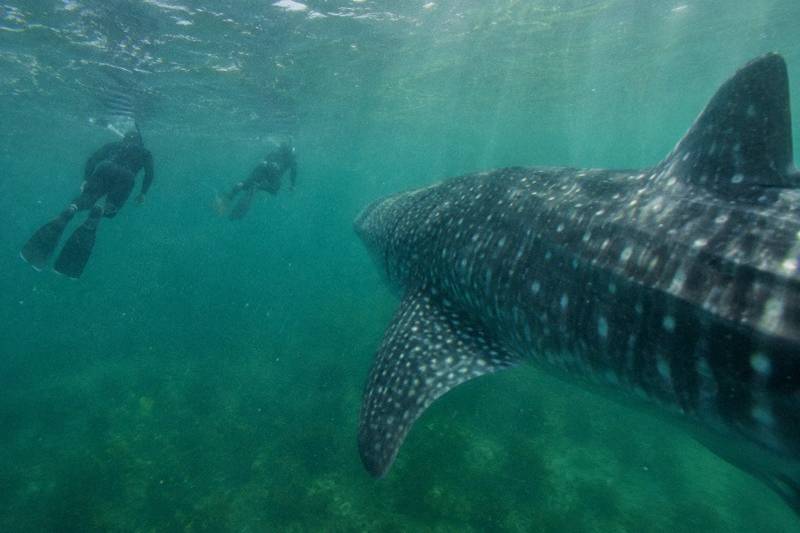
The 2026-27 season notice requires at least six whale sharks present in the authorized zone before any swimming trips operate, and with five or fewer, all trips are suspended. Four shifts run per day, and the number of boats allowed per shift scales with the shark count, from 6 boats at 6 sharks up to a hard cap of 14 at 14 or more sharks.
This rule is the machinery behind every "maybe" in this article, and it is stricter than most visitors expect. The count is not a guess by the boats: it is calculated from the average of the two most recent official counts, rounded up to the next whole number. That number then sets, by formula, how many authorized boats may enter the swim zone on each of the four daily shifts.
| Whale sharks counted | Boats per shift | Boats per day |
|---|---|---|
| 0 to 5 | 0 | 0 |
| 6 | 6 | 24 |
| 7 to 9 | 7 | 28 |
| 10 | 8 | 32 |
| 11 | 9 | 36 |
| 12 | 10 | 40 |
| 13 | 11 | 44 |
| 14 or more | 14 | 56 |
Two things follow from this table for an October traveler. First, early-season trips tend to run with fewer boats on the water, which many swimmers would consider a quieter experience than the December peak. Second, the floor is absolute: at five sharks, everyone stays ashore, no matter what was booked.
The rule has real teeth, and history shows the authorities use them. In the 2024-25 season, SEMARNAT suspended both swimming and watching in late January 2025 after counts fell to 9, then 5, then 1 shark on three consecutive official counts, and the suspension was maintained into March. The same thing happened in early 2023. These were mid-season collapses rather than October slow starts, but they demonstrate that the count, not the calendar and not the bookings, is what governs the water.
The protected status of the whole arrangement rests on the refuge itself. Bahia de La Paz was decreed an Area de Refugio on 29 November 2018, covering 22,749 hectares divided into three zones, per the official decree in the Federal Register. Zone I is the only zone where swimming and watching are allowed; Zone II is closed to the activity entirely, and Zone III is a transit corridor with a 7-knot speed limit. The whale shark is listed as a threatened species under Mexican law, and PROFEPA inspectors work with CONANP to check authorizations on the water.
What Does Early Season Weather Mean For An October Trip?
October sits inside the eastern Pacific hurricane season, which runs 15 May to 30 November with peak risk from August to October, so early-October trips carry genuine weather risk. Average October highs are around 34 degrees Celsius, and sea temperatures around 29 degrees, so cold is never the problem; rough seas and canceled departures are.
The weather angle matters as much as the shark count in October, and it deserves separate weight in the decision. The hurricane season in this basin officially closes on 30 November, and the national weather service identifies August through October as the peak-risk window. A tropical system anywhere in the region can churn up the Gulf of California, and operators will not run small-boat swims in those conditions regardless of how many sharks are counted.
By late October and November the risk is falling, and this aligns neatly with the historical opening pattern: the seasons that began in November were borrowing the safest weather window as well as waiting for the sharks. Sea temperature is a non-issue for comfort at 29 degrees on average in October, dropping toward 26 by November and around 20 to 22 in the December-to-February peak months. Operators generally recommend a 3 mm shorty to 5 mm full wetsuit in season, and the rules require either a wetsuit or a life vest in the water.
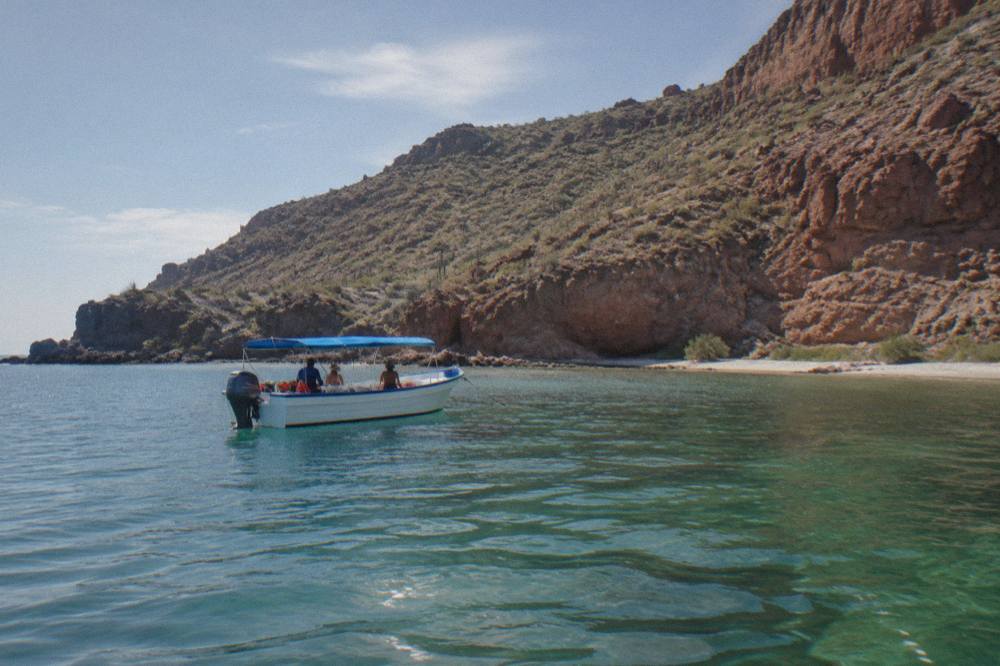
For packing and expectations, October reads as a summer-adjacent month: hot afternoons, warm water, and the possibility that a departure is rescheduled. Anyone whose dates are fixed to a single early-October week should plan an alternative, and the city has plenty. The Malecon boardwalk, Playa Balandra and Playa Tecolote are the standard free fallbacks, and our overview of free things to do in the city covers them in detail. A broader season-by-season view, including why December through February is considered the peak, is in the month-by-month season guide.
Should You Book An October Swim In Advance Or Wait?
Book in advance if your dates are fixed and the listing's cancellation terms are clear, and wait for counts if your dates are flexible. The 2026-27 season had no published shark counts three weeks in, so nobody, including the operators, could confirm what late October would deliver. The risk of waiting is that the 14-boat cap fills on open days; the risk of booking is a closed zone on your date.
This is the genuine decision the question contains. October forces a trade-off between certainty and availability, and both sides have a real cost.
The case for booking ahead: when the zone is open, capacity is capped by formula. A handful of authorized boats per shift, four shifts a day, and the first travelers of the season all competing for those seats. If the first counts come in strong and the zone opens for the last week of October, the seats on the strongest operators go first. The MeXplore marine-biologist small group at 4.9 from 649 reviews, Baja Wild Adventures' Whale Shark Adventure at 4.9 from 109 reviews, and Tuna Tuna Tours' Small Group Whale Shark Snorkeling at 5.0 from 454 reviews are the listings with the review pools to back their reputations. Once your seat is reserved, the guide to visitor safety in La Paz covers the on-water swim rules and the wider picture for the rest of your trip.
The case for waiting: no booking guarantees a shark or an open zone, and October has the least predictable opening, since swims only run once official counts log at least six whale sharks. An operator who cannot run will reschedule or refund per their own policy, which varies listing by listing, so the cancellation terms are the real thing being purchased. Check the listing for each product's specific terms before paying; most of these swims do list free cancellation up to 24 hours before, but a few operators do not, so check the listing first. If the risk of a closed zone has you weighing other dates, our La Paz weather month-by-month guide shows what the air, sea and wind do across the season.
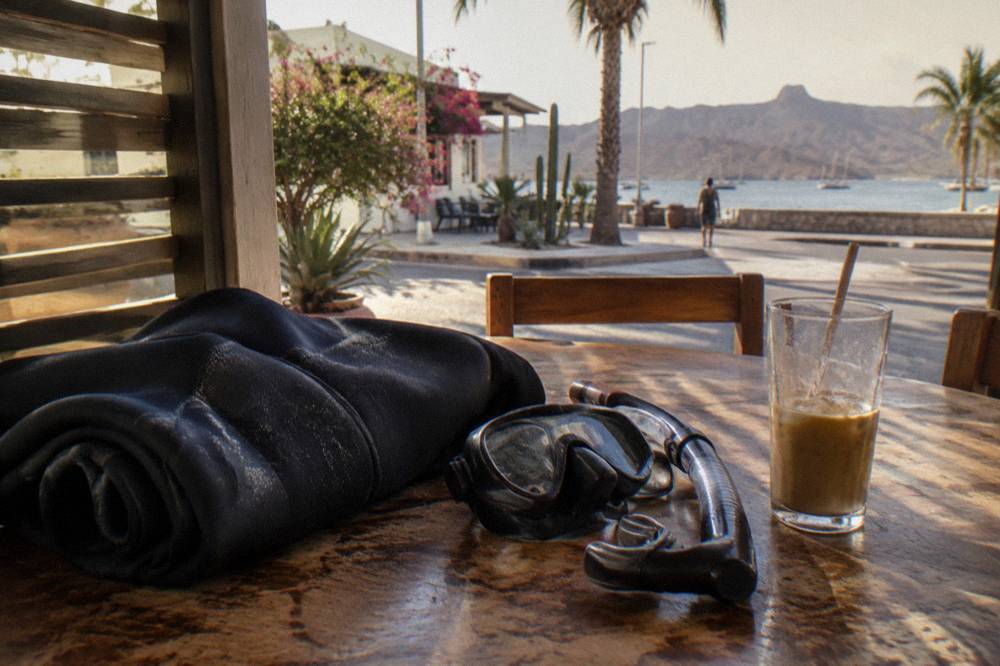
A middle path works well for October: arrive with a shortlist of two or three operators, message them on arrival, and book for the first day the zone is open. Travelers staying on the Malecon are minutes from the Muelle Fiscal pier where several boats meet, which makes a same-day or next-day booking practical in a way it is not in December. The where-to-stay guide for whale shark swimmers covers the pier-adjacent options.
Which Tours Make Sense For An October Trip?
Choose an operator with an in-water biologist or guide, a price that bundles the permits, and a departure point near where you are staying. Shared swims in La Paz run from $110 to $295 per person across this site's roster, with the marine-biologist small group from $178, the budget Sunrider option from $110, and the premium reduced-group encounter from $295.
October rewards picking the listing carefully, because a shorter window means the quality of each water hour matters more. Three tiers cover most October needs.
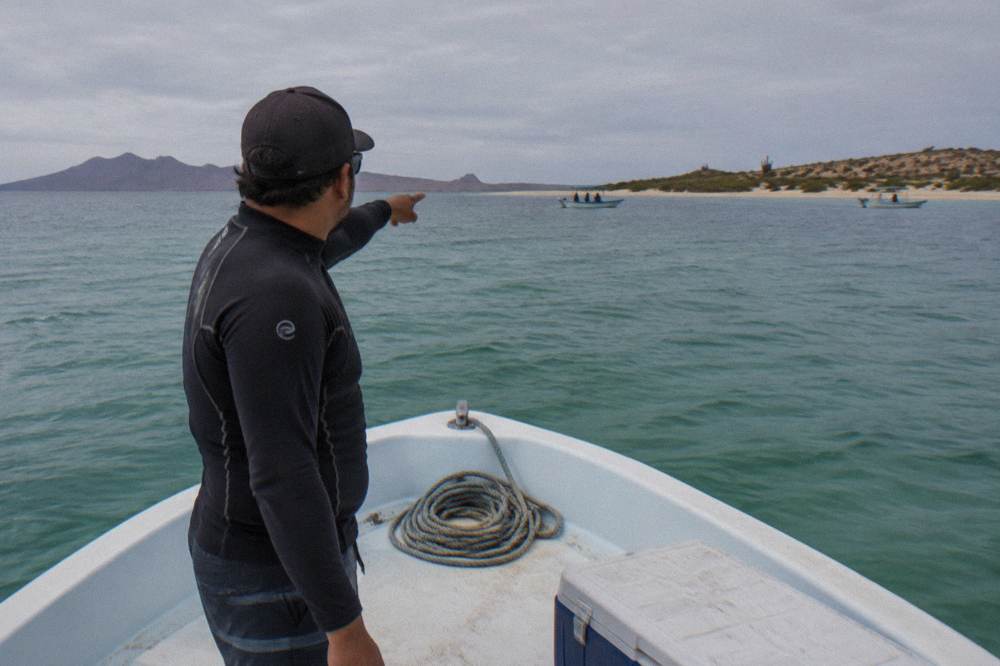
At the value end, the Whale Shark Swim Adventure by Sunrider Tours runs from $110 per person for 2 hours 30 minutes, rated 4.4 from 155 reviews, departing Marina ASIPONA. It is the cheapest firm-priced shared swim on the roster, and its listing notes that a dock fee and conservation fee are excluded, so budget a little beyond the headline price. The Orza small-group tour at from $174 per person bundles equipment, guide, boat transport and the protected-area fee, which is a cleaner all-in structure for a first October booking, though the listing has no reviews yet.
In the middle, the MeXplore small group with a marine biologist is the listing this site features most often, and for October it has a specific advantage: a biologist on the water is the best-placed person to explain what the counts mean and why the zone is open or closed that day. It runs from $178 per person for 3 hours, includes federal permits and a conservation donation, GoPro photos and traveler's insurance, and carries the deepest review pool of any locally-departing swim.
| Tour | Operator | From | Duration | Rating and reviews |
|---|---|---|---|---|
| Whale Shark Swim Adventure | Sunrider Tours | $110 per person | 2 h 30 min | 4.4 from 155 reviews |
| La Paz: Small-Group Whale Shark Snorkeling Tour | Orza Tours | $174 per person | 5 to 5.5 h | No reviews yet |
| Small Group Whale Shark Snorkeling with Marine Biologist | MeXplore | $178 per person | 3 h | 4.9 from 649 reviews |
| Whale Shark Adventure with a Marine Biologist | Baja Wild Adventures | $159 per person | 3 h 30 min | 4.9 from 109 reviews |
| Intimate Eco-Friendly Whale Shark Encounter | La Paz Whale Sharks VIP Tours | $295 per person | 3 h | 5.0 from 422 reviews |
At the premium end, the reduced-group VIP encounter from La Paz Whale Sharks VIP Tours, 5.0 from 422 reviews, pitches itself on a smaller boat load, which matters in October when few sharks may be spread across the zone. And one October planning note for Cabo-based readers: the Los Cabos day trips, such as the Cabo Adventures excursion from $259 per person with hotel pickup, 4.9 from 1141 reviews, are 10-hour days built around a La Paz swim, so an October closure hits them just as hard, with far less flexibility to retry the next morning. The Cabo-to-La-Paz day trip guide unpacks that trade-off.
What Should An October Traveler Do Differently?
Confirm before you commit, build a second activity into each day, and verify the operator is authorized. Message the operator the day before for the current zone status, keep Balandra or the Malecon as a fallback, and check the boat for the SEMARNAT pennant that all 112 authorized operators must display for 2026-27.
The practical October playbook is short. First, treat the operator as your live information source, and they know whether tomorrow's first shift will run. Second, do not build the whole trip around one morning; the honest structure of an October visit is a swim attempt plus a beach, a walk along the Malecon, or a seafood lunch, so that a closed zone costs a morning rather than the trip. Third, do the authorization check: the boats are legally limited to 11 meters, the pennant should be displayed, and the authorization copy should be on board. There is no public list of the 112 holders, so the pennant on the boat is the practical verification a visitor can do.
One planning detail that surprises October visitors: if the swim zone is open and a Balandra combo appeals, those island-combo tours, such as the Tuna Tuna whale shark, sea lion and Balandra day from $234 per person, run 6 hours and fold two protected areas into one day. Playa Balandra itself operates on timed entry, two turns a day, with a per-person fee collected on site, so a combo tour that includes it removes a scheduling problem. The ethics of the whole activity are a fair October reading topic too, and our piece on whether swimming with whale sharks is ethical covers the rules that make it work.
Common Questions About Whale Sharks In October In La Paz
What happens if there are fewer than six whale sharks?
All swimming and watching trips are suspended for the day. The threshold is set in the 2026-27 season notice, and the count is based on the average of the two most recent official counts. Operators reschedule or refund according to their own listing terms.
Is October too early in the season to book?
It is early, but not unreasonably so if your dates are fixed and you accept the closure risk. Late October historically has a better chance than early October, and the quieter boats of the early season suit some travelers better than the December peak.
Does October weather affect whale shark tours?
Yes. The eastern Pacific hurricane season runs 15 May to 30 November with peak risk from August to October, so early-October departures can be affected by rough seas. Water and air temperatures are warm, so comfort is not the issue; sea state and cancellations are.
When did the last few seasons actually open?
The 2022-23 season effectively opened 27 November because permits arrived late. The 2025-26 season opened in November and closed 30 April with 56 individual sharks identified and 950 sightings. The 2026-27 season is announced but had no published counts as of 20 October 2026.
How can I check whether my tour is authorized?
Look for the SEMARNAT pennant displayed on the boat and an authorization copy on board, and note that authorized boats are limited to 11 meters. There is no public list of the 112 authorized holders for 2026-27, so the pennant on the boat is the practical check.