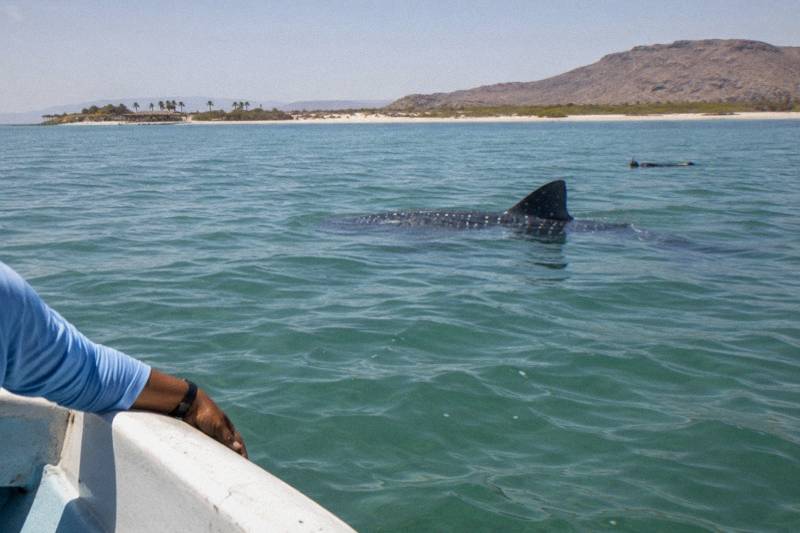
Where Is The Best Place In Mexico To See Whale Sharks?
La Paz has the only fully verified whale shark swim operation on file in Mexico: a protected refuge, federal rules and a season that runs October to April. Here is how the case stacks up.
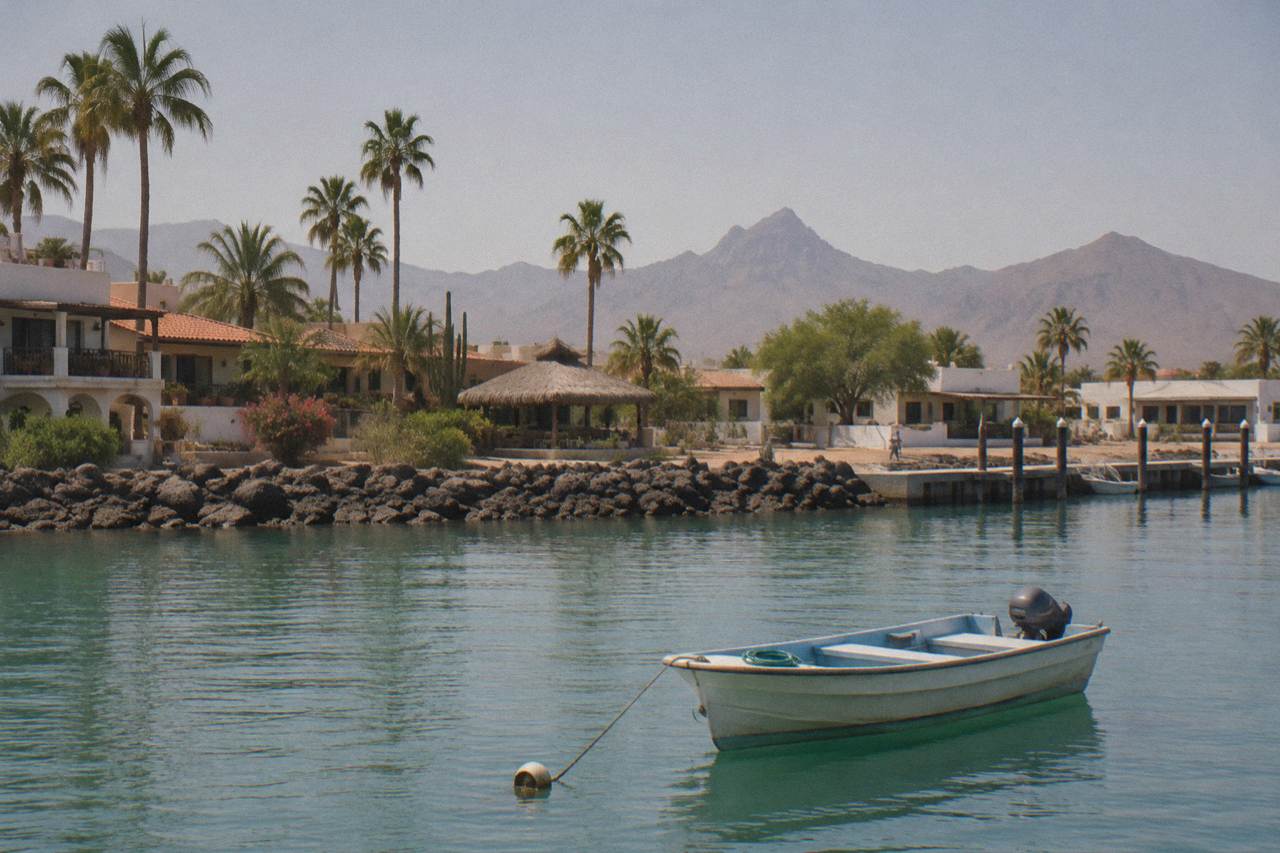
On the evidence this site could verify, La Paz is the best place in Mexico to swim with whale sharks. It is the only Mexican destination with a full file behind it: a 22,749 hectare federal refuge, a national swim rulebook, 112 licensed boats and a 2025-26 season that logged 56 identified sharks and 950 sightings. Caribbean sites exist, but nothing verified compares. If you want to see how the Caribbean options stack up before you commit, the full comparison of Mexico's whale shark swim sites explains what each destination can and cannot verify.
The honest starting point is what can actually be checked. Whale sharks appear in several parts of Mexico, and travelers usually shortlist three names: La Paz on the Baja peninsula, and the Cancun, Holbox and Isla Mujeres area on the Caribbean coast. The two regions work in opposite ways. The Caribbean season is a summer one, roughly when the aggregations gather off Yucatan, while La Paz runs through the northern winter, from October to April. Same animal, opposite calendars, which means the first filter is simply when you can travel.
For this comparison only La Paz carries verified data: season dates, rules, counts, prices and a roster of bookable tours. The Caribbean sites have no equivalent figures on file here, so rather than score places this article scores what La Paz actually offers and lets you weigh it. That restraint matters in a market full of inflated claims, and it is the same standard applied across La Paz Whale Shark Tours in every guide on this site.
One more framing point. "Seeing" whale sharks and "swimming" with them are different products. In La Paz the two happen together from the same small boats: you watch from the deck, then enter the water in guided groups of five. If your goal is the swim rather than a deck view, the Baja refuge is built for exactly that. Once you've dried off, a guide to what else La Paz is known for covers the sea lion colony at Espiritu Santo and the shallow water at Playa Balandra.
There is a third filter worth naming before the detail starts: how the encounter is governed. A whale shark is a threatened species under Mexican law, and an aggregation site with no visible rules, no permits and no capped fleet is a different experience from one with all three. The rest of this article is mostly about that difference, because it is what separates a destination you can book with confidence from one you book on hope.
Why Does La Paz Make The Strongest Case?
La Paz is a Mexican whale shark destination with a legally protected swim area, the national standard applied inside a refuge and a capped fleet of 112 authorized boats. The refuge decree dates to 29 November 2018 and covers 22,749.08 hectares of the bay, split into a swim zone, a conservation zone and a transit zone. That structure exists nowhere else on file. If you're wondering whether the sharks themselves pose any danger, the record of whale shark attacks on people covers what these rules actually protect against and what has never happened.
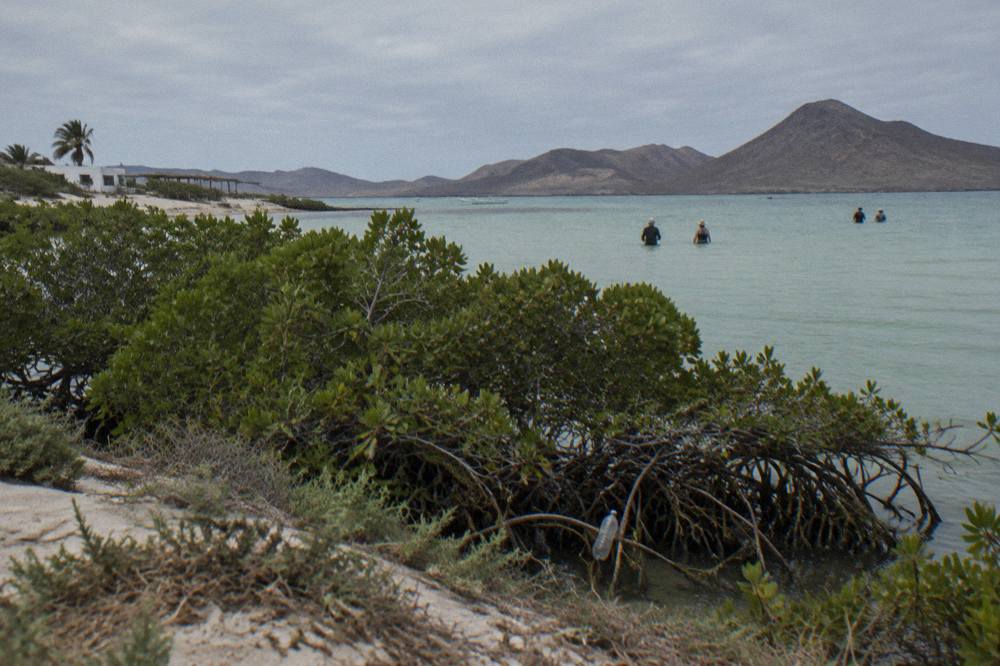
The Area de Refugio Bahia de La Paz was decreed in late 2018 specifically to protect Rhincodon typus, the whale shark, which is listed as threatened under Mexican law. The decree divides the bay into three zones, and only Zone I permits swimming and observation. Zone II is closed to the activity entirely for conservation, and Zone III is a transit corridor with a 7 knot speed limit. The full decree is public on the official federal gazette at the Diario Oficial de la Federacion record.
On top of the refuge sits NOM-171-SEMARNAT-2018, the national standard that governs every swim in the country. It sets the distances, the group sizes, the boat approach angles and the behaviors that end an encounter, and it applies inside the La Paz refuge with local enforcement. PROFEPA, the federal environmental prosecutor, inspects boats alongside CONANP staff. For a swimmer, that translates into a simple reassurance: the boats leaving the Malecon are operating inside one of the most regulated wildlife swims in the Americas.
The 2026-27 season opened with 112 authorizations, each covering exactly one holder, one boat and one pennant, following the scheme the federal wildlife directorate publishes each year. Local reporting on the pennant handover states the permits went to local service providers. No public list of the holders has been found, so the practical check for a visitor is physical: a pennant displayed on the boat, an authorization copy on board, and a vessel not longer than 11 meters.
That is the case in brief: protected area, written rules, capped fleet, enforcement. It is what turns an unpredictable wildlife encounter into something you can plan around.
What Do The Numbers Say About The La Paz Season?
The 2025-26 season recorded 56 individual whale sharks identified, including 20 new juvenile records, and 950 total sightings between the November opening and the 30 April close, with 11 sharks still present at the end. The 2026-27 season runs 1 October 2026 to 30 April 2027 with 112 authorizations and four daily shifts.
Those totals come from CONANP counts relayed by regional press at the season close, and they describe a bay that holds animals steadily through the winter rather than a brief pulse. The seasonal calendar is anchored by a federal notice published under NOM-171: seven months of open season, split into four boat shifts a day, with a hard rule that trips only operate when at least six sharks are present in Zone I. Five or fewer and the activity stops entirely.
The detail most first-time visitors miss is that the shark count also throttles boat numbers. The federal notice scales vessels per shift with the count of animals: six sharks allow six boats per shift, ten allow eight, and fourteen or more cap out at fourteen boats at once, which is the hard ceiling in the swim zone. Counts are averaged from the two most recent official surveys. The result is that crowding on the water has a legal limit tied to the animals themselves, something worth weighing against destinations with no comparable mechanism on file.
| Sharks counted in Zone I | Boats per shift | Boats per day |
|---|---|---|
| 0 to 5 | 0, activity suspended | 0 |
| 6 | 6 | 24 |
| 7 to 9 | 7 | 28 |
| 10 | 8 | 32 |
| 11 | 9 | 36 |
| 12 | 10 | 40 |
| 13 | 11 | 44 |
| 14 or more | 14 | 56 |
The table comes straight from the 2026-27 federal notice, and it rewards a second read. At the six shark minimum, only 24 boats touch the swim zone across the whole day, spread over four shifts. Even at the ceiling, the simultaneous cap stays at fourteen vessels in an area of open bay. For anyone comparing whale shark destinations on crowd density, this is the single most concrete mechanism on file anywhere in Mexico.
Best months reported for the La Paz season are December, January and February, with some years also showing a strong March. October carries weather risk since the eastern Pacific hurricane season runs 15 May to 30 November, peaking between August and October, and the practical start has historically landed in November once counts clear the threshold. The month-by-month detail, including sea temperatures, sits in the whale shark season month-by-month guide.
The seasonal minimum-six rule is not theoretical, either. In January 2025, after official counts of nine, five and one shark on three consecutive surveys, the activity was suspended outright, and the suspension held into March. Similar low-count suspensions happened in 2023. That history cuts two ways for the "best place" argument: it means a La Paz booking can in principle be interrupted by biology, and it also means nobody swims over a skeleton crew of one or two stressed animals. The season's opening and any suspension news are tracked in the guide on whether whale shark swims are suspended.
What Does A La Paz Swim Actually Cost And Look Like?
Shared whale shark swims in La Paz run from $110 to $295 per person, roughly 2 to 4 hours per listing, with the most reviewed option rated 4.9 from 649 reviews at from $178 per person. Island combos that add sea lions and Balandra run $234 to $345, and a private charter is $1,168 per group. Caribbean comparisons are impossible on file.
The roster on this site lists 18 La Paz swim products alone, which is a depth of choice no other Mexican destination on file can match. At the entry end, the Sunrider Tours swim is from $110 per person for 2 hours 30 minutes, rated 4.4 from 155 reviews. The Alonso Tours snorkel is from $122 per person, rated 4.9 from 77 reviews. In the premium tier, the La Paz Whale Sharks VIP Tours encounter is from $295 per person, rated a perfect 5.0 from 422 reviews, with biodegradable sunscreen included, the only kind allowed for the swim.
| Tour | Operator | Price | Duration | Rating |
|---|---|---|---|---|
| Small Group Whale Shark Snorkeling Tour with Marine Biologist | MeXplore | from $178 per person | 3 hours | 4.9 from 649 reviews |
| Intimate Eco-Friendly Whale Shark Encounter, Premium Service | La Paz Whale Sharks VIP Tours | from $295 per person | 3 hours | 5.0 from 422 reviews |
| Whale Shark Swim Adventure in La Paz | Sunrider Tours | from $110 per person | 2 hours 30 minutes | 4.4 from 155 reviews |
| Snorkel Tour with Whale Shark in La Paz | Alonso Tours | from $122 per person | 2 to 4 hours | 4.9 from 77 reviews |
| Whale Shark Swimming Adventure, Small Group | Eco Migrations | from $194 per person | 4 hours, up to 6 guests | 4.8 from 56 reviews |
What the price buys is similar on most listings: permits and conservation fees, though Sunrider excludes them, snorkel gear and usually a wetsuit, a guide and captain, and snacks or water on most boats. Several listings include photos or video. Hotel transport is rarely included on the local swims, since nearly all depart from points on the Malecon, so a Malecon hotel puts you within a short walk of the dock. The featured small-group swim with a marine biologist from MeXplore is the pick for most visitors: a 4.9 rating across 649 reviews, federal permits and the conservation donation in the price, and a biologist on board to read the bay.
Reading the roster as a whole, three tiers emerge. The $110 to $140 band covers solid shared swims of 2 to 4 hours from the central piers, best for travelers who want the experience at the lowest firm price. The $159 to $200 band adds biologist guides, smaller groups and longer water time; the Baja Wild Adventures trip with a marine biologist sits at from $159 per person, rated 4.9 from 109 reviews. At the top end you are paying for intimacy: the Eco Migrations small-group adventure, from $194, caps the boat at eight guests, and the premium VIP encounter builds its whole offer around a reduced crowd. None of these tiers has an equivalent anywhere else in Mexico on file.
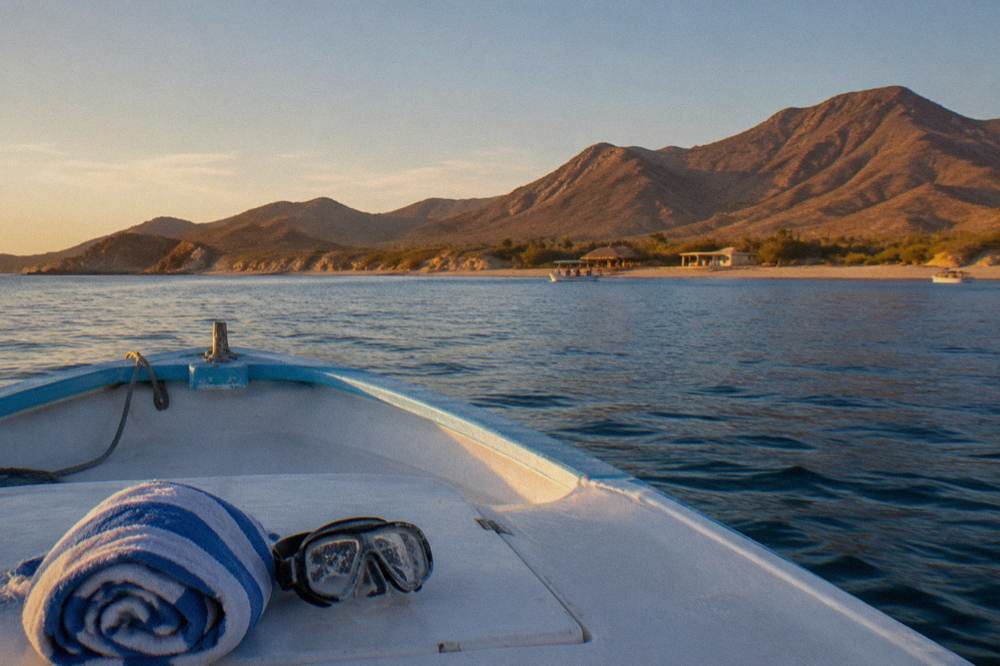
The premium VIP encounter suits travelers who want the smallest crowd and a 5.0-rated listing. Check availability
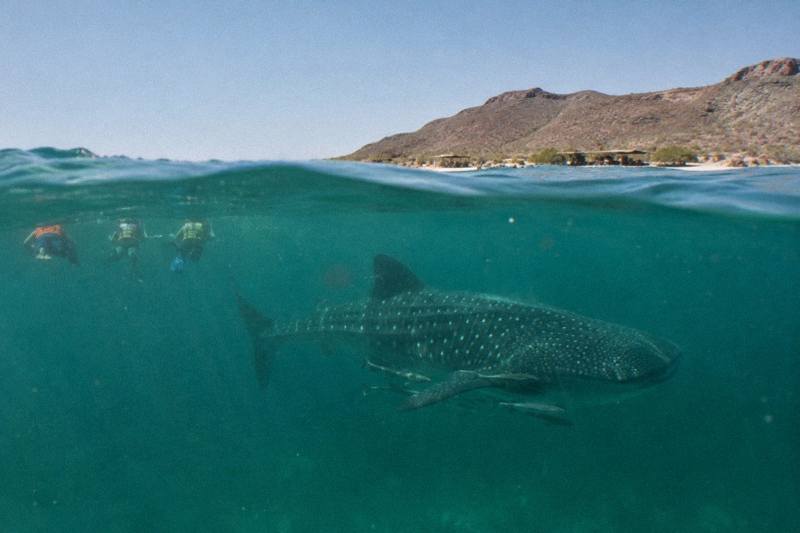
Premium Reduced-Group Encounter
La Paz Whale Shark Swims · 3 hours
★ 5.0 · 422 reviews · From $295
Check availability →How Does The Rules File Change The Experience?
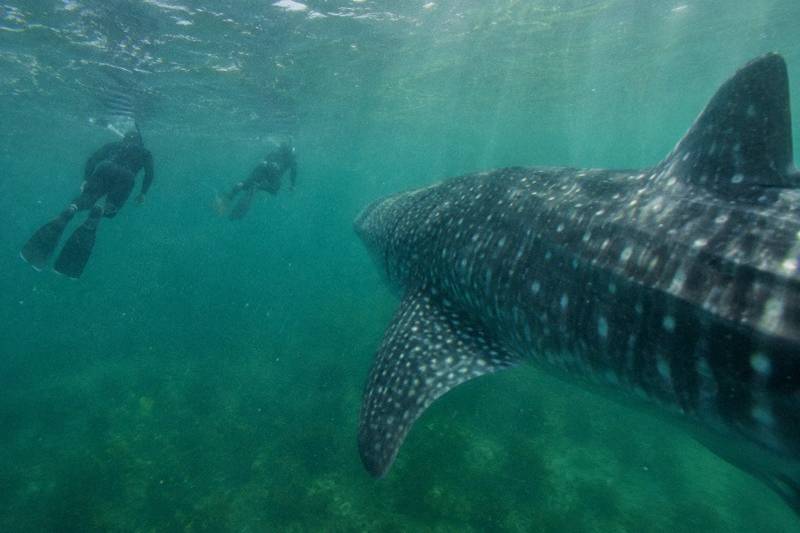
NOM-171 caps each guide at five swimmers, requires 2 meters of space beside the shark's head and sides and 3 meters from the tail, and limits each boat to 30 minutes with one shark. Touching, riding, flash, selfie sticks and motorised devices are banned, and life vests or wetsuits are mandatory. Few swim destinations anywhere publish rules this specific.
For the swimmer these rules shape the hour on the water more than any equipment choice. You enter in a group of five with one specialised guide, kept together, dropped ahead of the animal with the engine in neutral while the boat approaches from behind and parallel. If a shark shows evasive swimming, defensive tail strikes or a sudden dive, the encounter ends, full stop. The norm exists to keep the behavior of the animals, not the schedule of the boats, in charge.
The full national standard is published on the federal gazette, and the NOM-171 rules guide on this site walks through every clause a swimmer will actually feel. The short version: biodegradable sunscreen only, no reaching out even when a shark passes close, and a wetsuit or vest on everyone in the water. Operators supply the suit as standard on many roster listings, which is one quiet argument for booking a licensed tour rather than arranging anything informally.
Boat conduct is regulated with the same granularity. One boat per shark or group, other vessels waiting 50 meters away, a 7 knot ceiling in open transit dropping to 3 knots inside aggregation zones. Speed, approach angle and even the point where swimmers descend are written down. A reader booking blind in an unregulated destination has no way to know any of this; a reader booking La Paz can check the pennant, the boat length and the authorization copy before stepping aboard.
Worth saying plainly: this is why the question "best place" is not only about numbers of sharks. A destination could in theory have more animals and a looser rulebook, and the experience would be worse for both parties. La Paz pairs its winter aggregation with the strictest documented framework of the Mexican sites. The ethics of that tradeoff get a fuller treatment in the article on whether swimming with whale sharks is ethical.
What If You Are Already In Cabo Or The Caribbean?
Travelers based in Los Cabos can reach the La Paz swim as a day trip of 10, 9 or 7 hours, priced from $259 to $399 per person on this roster, with hotel pickup on the Cabo Adventures departure. The Caribbean summer sites remain unverifiable here: no dates, prices or counts are on file for Cancun, Holbox or Isla Mujeres, so check locally before booking anything there.
The Cabo angle matters because it removes the main excuse for skipping La Paz. The drive from Cabo San Lucas is about 160 km, roughly 2 to 2.5 hours on Highway 19, and the three Los Cabos day trips on this roster build the transfer, the swim and lunch into one ticket. The Cabo Adventures version is the most reviewed product on the entire site, 4.9 from 1141 reviews, from $259 per person for a 10 hour day with hotel pickup and drop-off, guide, wetsuit, beverages and lunch included. The Cabo Trek excursion is from $399 per person for 9 hours with a marine biologist guide, and the BallardTours day trip that adds Todos Santos is from $353 per person.
Flying in directly is also realistic. La Paz airport has direct Alaska Airlines service from Los Angeles, plus domestic flights from Mexico City and Tijuana, which makes a two night stay built around one swim an easy itinerary. The getting to La Paz guide covers flights, buses and private transfer costs in detail.
On the Caribbean side, the honest position is that this site has no verified file: no season dates, no operator roster, no counts. The general pattern, a summer aggregation reachable from Cancun, Holbox and Isla Mujeres, is common knowledge, but nothing here can rank those sites against La Paz on evidence. If your travel dates fall in summer, La Paz is out of season anyway, so the Caribbean becomes the default by calendar rather than by verdict. Verify operators and rules there independently.
For everyone whose dates fall between October and April, the choice collapses to one bay. The Cabo to La Paz day trip guide covers the transfer logistics in full, and the broader best time to visit La Paz guide lines the shark season up against weather and crowds.
Common Questions About The Best Place For Whale Sharks In Mexico
When is the La Paz whale shark season?
The official 2026-27 window runs 1 October 2026 to 30 April 2027, with four boat shifts a day and trips only operating when at least six sharks are present in the swim zone. December, January and February are the best reported months.
Can you swim with whale sharks in Cancun or Holbox instead?
Those Caribbean sites host summer aggregations, but this site has no verified dates, prices or counts for them, so no comparison is offered. If you travel in summer, La Paz is out of season; verify Caribbean operators independently.
How much does a La Paz whale shark swim cost?
Shared swims run from $110 to $295 per person on this roster, for roughly 2 to 4 hours each. Island combos with sea lions and Balandra run $234 to $345, and the private charter is from $1,168 per group.
Is swimming with whale sharks in La Paz regulated?
Yes, tightly. NOM-171-SEMARNAT-2018 sets five swimmers per guide, minimum distances of 2 and 3 meters, a 30 minute limit per boat per shark, and bans touching, flash and selfie sticks. PROFEPA and CONANP inspect the fleet.
Can you see whale sharks from Cabo?
No roster swim departs from Cabo as a local trip. The three Los Cabos listings are day trips that drive to La Paz, lasting 10, 9 and 7 hours and priced from $259 to $399 per person.