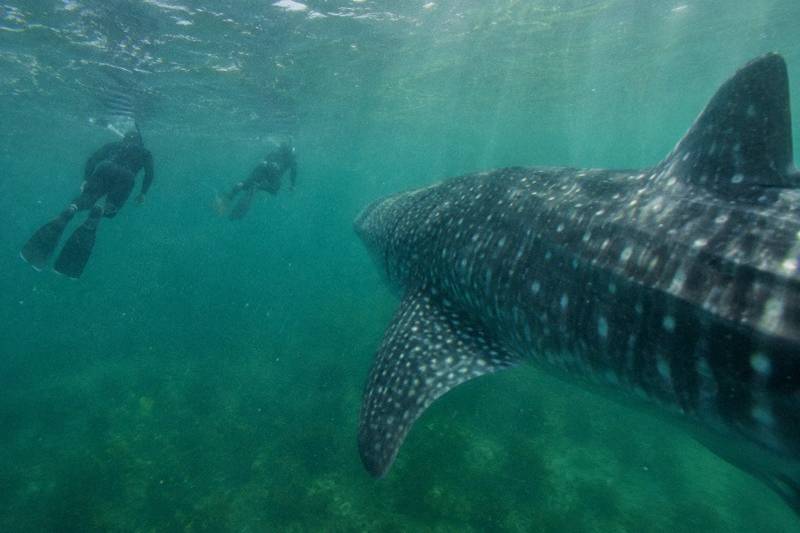
How Rare Is It To See A Whale Shark On A La Paz Swim?
The honest odds on a La Paz whale shark swim: official CONANP counts, the minimum-six rule, why seasons get suspended, and how to pick the month and tour that tilt things your way.
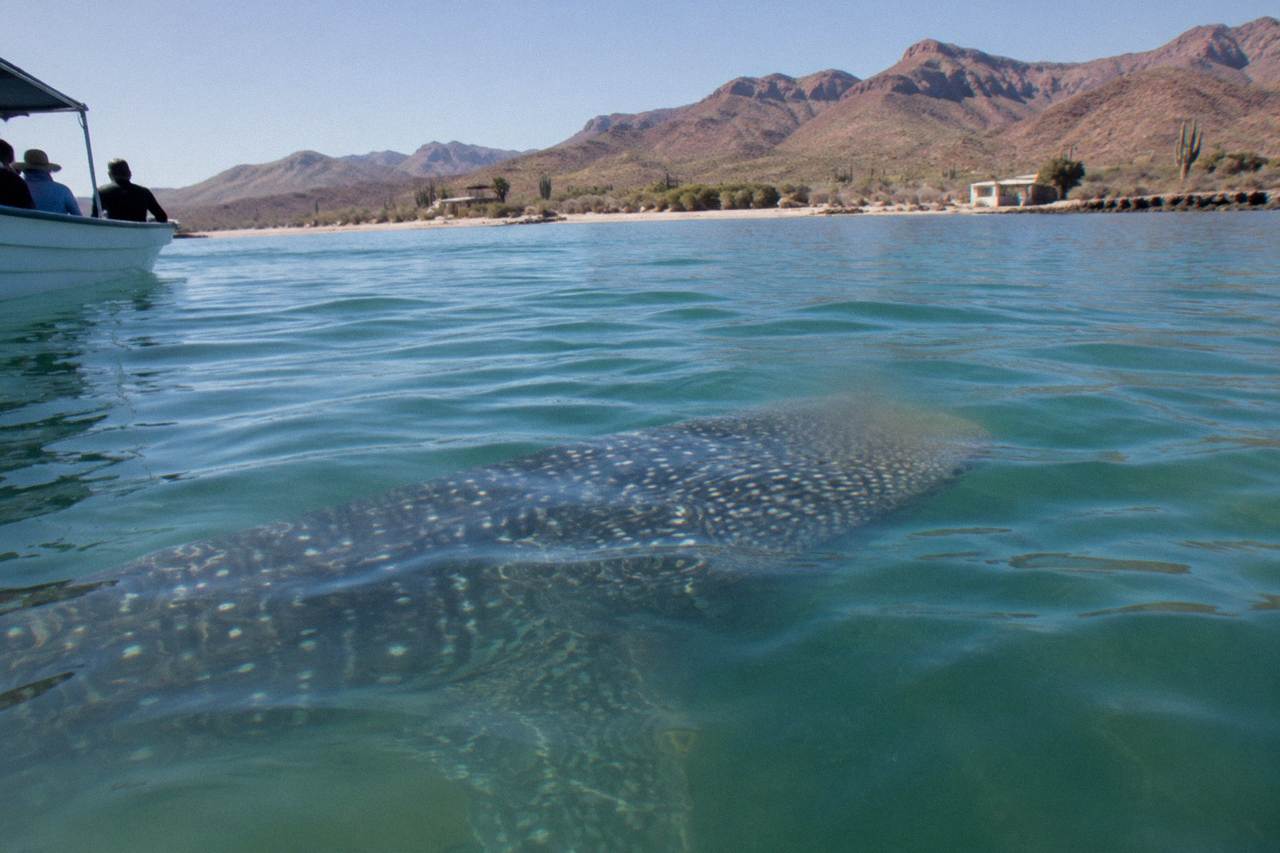
Nobody can promise you a whale shark in La Paz, and the federal rules that govern the activity would not let an honest operator try. What you can do before paying is look at the record: how many sharks the bay held last season, the threshold at which all trips stop, and the pattern of months that historically carried the most animals. Those numbers exist, they are public, and they tell a more useful story than any review-page superlative. Once the season's record gives you confidence, the remaining question is what the trip should cost, and our honest cost breakdown answers that plainly.
The short version is that La Paz is one of the easier places in the world to share water with a whale shark, but only inside a season and only while the official counts stay above the floor. In 2025-26, monitors identified 56 individual sharks in the bay and logged 950 sightings over the season, yet the same bay had seen every trip shut down the previous January when counts collapsed. The difference between those two outcomes is the subject of this article.
In season, on a day when trips are running, seeing a whale shark from the boat is close to the expected outcome rather than the exception, because trips simply do not launch unless official counts show at least six sharks in the swim zone. That is the deal the rules create: five or fewer sharks and nobody swims. So the real rarity is not the shark, it is the day the count drops below the floor. Wind and swell can keep boats ashore even when the shark count is high, so the month-by-month guide to La Paz air, sea and wind is a smart read before you lock in dates.
That framing matters because it inverts how most people think about wildlife odds. In most of the world, a whale shark encounter is a genuine lottery ticket: the animals roam tens of thousands of kilometers of open ocean, and a swim elsewhere in Mexico or in Southeast Asia can end with nothing but blue water. La Paz is different for one structural reason. The whale sharks that gather in the bay each winter are mostly young animals feeding in shallow, plankton-rich water close to the city, and the federal aviso that opens each season ties all commercial swimming to a live census of that gathering. If the sharks are not there in sufficient number, the trips are not there either. For travelers basing themselves in Cabo, our month-by-month guide to whale shark season around Cabo and La Paz explains how the timing works and how the day trips fit in.
So when a visitor asks how rare the sighting is, the honest answer has two halves. The first half is that the aggregation itself is dependable enough that the government built an entire licensed fishery of observation around it: 112 authorizations for the 2026-27 season, each one holder, one boat, one pennant. Nobody issues 112 permits against an animal that almost never shows. The second half is that the system is deliberately conservative. The season runs 1 October to 30 April, but operations in any given week depend on counts, weather and the four daily shifts, and history shows whole months lost to low numbers.
The featured marine-biologist small group swim, the budget Sunrider trip and the premium reduced-group encounter all operate under exactly the same census, the same zone and the same rules. No operator on this roster can buy better odds than another; what differs is boat size, guide expertise and how the time on the water is spent. We compared the listings, and that comparison comes later in this article, because it is the one thing you actually control.
If you want the month-by-month picture in full, the season guide covers whale shark months in La Paz in more depth than this piece. Here the question is narrower and more personal: what are you actually betting on when you pay for a swim?
What The Official Shark Counts Actually Say
The 2025-26 season closed with 56 individual whale sharks identified in the bay, including 20 new juvenile records, and 950 total sightings recorded between the November opening and the 30 April close, with 11 animals still present at the close. Those figures come from CONANP monitoring relayed in news coverage, and they represent the most recent complete season on record.
Reading those numbers correctly takes a little care, because "950 sightings" does not mean 950 sharks. It means 950 logged observations, and one feeding juvenile that stays in the bay for weeks can be counted many times across many shifts. The number that describes the population is 56 identified individuals, and even that is a floor rather than a ceiling, since identification depends on photo matches of the spot patterns behind the gills and a shark that avoids the swim zone avoids the camera too.
The composition of that population is the quiet good news for visitors. The 20 new juvenile records matter because the bay is still drawing new young sharks, season after season that happens to remember the bay. Young sharks that feed well in Bahia de La Paz in one season have a reason to return in the next, which is part of why the aggregation has supported a licensed swim industry year after year.
For the 2026-27 season, the honest position is that no counts have been published yet. The season opened on paper on 1 October 2026, the 112 pennants were handed to operators on 20 October 2026, and at the time of this writing CONANP has released no shark census and no first-sighting figure for the new season. Anyone quoting an opening number for this winter is ahead of the official record, and you should treat such claims accordingly.
The 56-shark season also has to be read against the season before it, which ended in suspension. That history is the reason this article exists, so it deserves its own section and its own table rather than a passing clause.
Why Trips Stop When Fewer Than Six Sharks Are Present
The 2026-27 aviso allows swimming in Zone I only when at least six whale sharks are present, with the count taken from the average of the two most recent official censuses; five or fewer sharks and no trips operate at all. The cap on boats then scales with the count, from six boats per shift at six sharks up to a hard ceiling of fourteen.
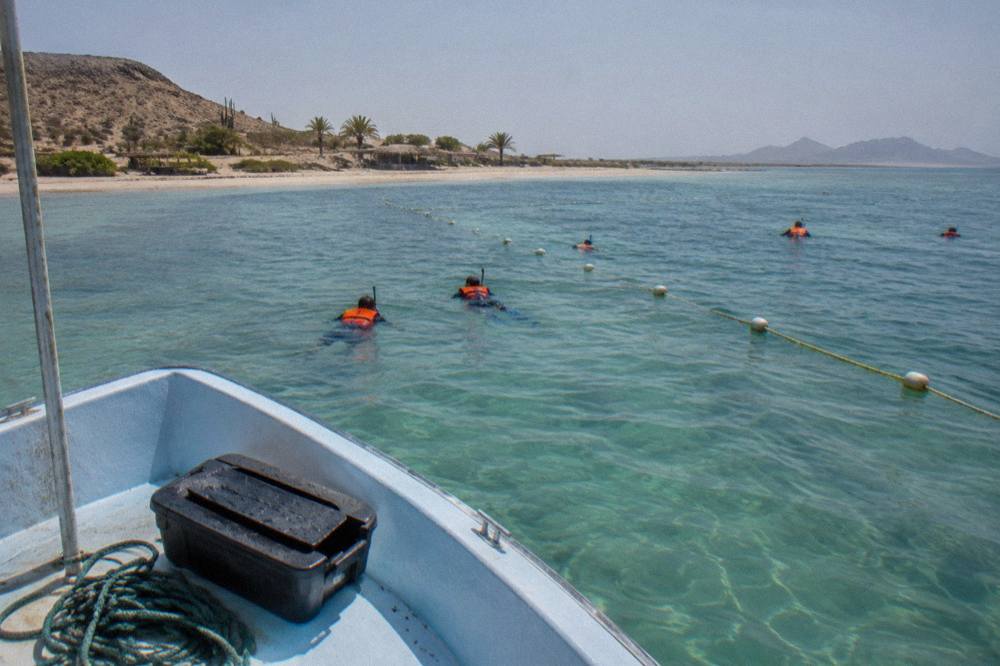
This sliding scale is the single most important piece of information for anyone weighing the odds, and it is worth reading as a table because the aviso writes it as one. The rules themselves come from NOM-171-SEMARNAT-2018, published in the official federal gazette, with the season numbers set each year by the SEMARNAT aviso.
| Sharks counted in Zone I | Boats per shift | Boats per day |
|---|---|---|
| 0 to 5 | 0, no trips | 0, no trips |
| 6 | 6 | 24 |
| 7 to 9 | 7 | 28 |
| 10 | 8 | 32 |
| 11 | 9 | 36 |
| 12 | 10 | 40 |
| 13 | 11 | 44 |
| 14 or more | 14 | 56 |
Two things follow from that table. First, the six-shark floor is not a marketing threshold, it is a legal switch: below it, the marine-biologist small group and the cheapest shared boat on the roster are equally grounded. Second, the caps are tight enough that even in a strong season, only fourteen boats work the zone at once across four daily shifts, which is why popular departures fill and why the premium encounter can justify its higher price by keeping groups intimate inside a strictly rationed allocation.
The floor has real teeth because it has actually been used. In late January 2025, CONANP counts of 9, 5 and 1 sharks on three consecutive surveys led SEMARNAT to suspend all swimming and watching in the refuge, and the suspension was still standing in March. The suspension guide explains what that means for a booked trip in detail.
Here is the part that surprises people who only read the peak-month headlines: the 2024-25 collapse happened in what is normally prime time. January and February are usually described as the strongest months, December through February in most summaries, yet that is exactly when the counts fell to one. Rarity in La Paz is not spread evenly across the calendar like a roulette wheel; it comes in runs, and the official counts are the only early warning that exists.
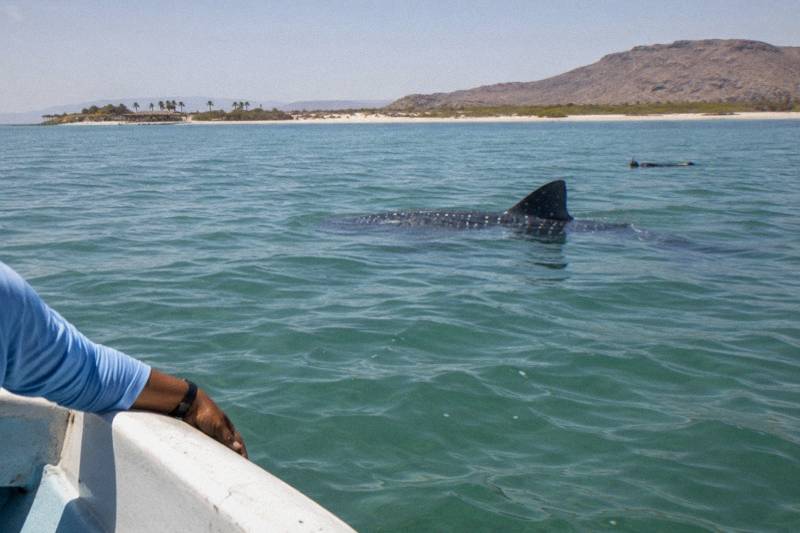
Is there a way to buy insurance against a bad week? Not directly, and any guarantee claim would violate the norms. What you can do is choose dates with the odds in mind, book formats that use the allowed time well, and understand what happens mechanically on a day when the zone is open but the animals are moving.
What Happens If The Zone Is Open But Sharks Are Moving
On a day when trips run, the rules still shape the encounter: one boat per shark or group, thirty minutes maximum, other boats waiting fifty meters away, and five swimmers per guide kept together at two meters from the head and sides and three from the tail. The activity with a given shark ends the moment it shows evasive swimming or sudden dives.
That last clause is the honest answer to a question few people think to ask. Even with six or more sharks in the zone, an individual animal can end its own encounter by behaving like it wants nothing to do with the boats, and the norm requires the crew to respect that immediately. A shark that is actively feeding in a straight line gives swimmers a long, slow pass; a shark that starts diving or swerving gives everyone on board a brief look and a story about the tail disappearing.
The thirty-minute and one-boat rules also mean the experience is a rotation rather than a free-for-all. Your boat takes its turn, you get your time in the water beside the animal under a guide's control, and then the slot closes for everyone aboard. Operators report three to five hours on the water for a local swim with twenty to forty minutes of boat time to the zone, so the thirty minutes with the shark sits inside a longer morning that also holds the ride, the briefing and the waiting between turns.
None of this is hidden. The norms are published, the pennants are visible on authorized boats, and the crews of established operators, MeXplore, Tuna Tuna Tours, Eco Migrations and the rest of the roster, work inside the same frame every day of the season. If a boat offers to bend the distances, chase a diving shark or extend a turn past its slot, that is not extra value, it is the operator risking its authorization, and the wisest response is to pick a different operator next time.
For a fuller walkthrough of the day itself, the what to expect guide covers the swim from briefing to boat. The question here stays on odds, and on the one variable you control completely: the calendar.
Which Months Give You The Best Odds
The months most consistently reported as the strongest are December, January and February, with some years showing a secondary March peak, while October openings are historically slower and the season closes 30 April. Sea temperatures in the bay sit around 19 to 21 degrees in the peak months, in the range that supports the plankton the young sharks feed on.
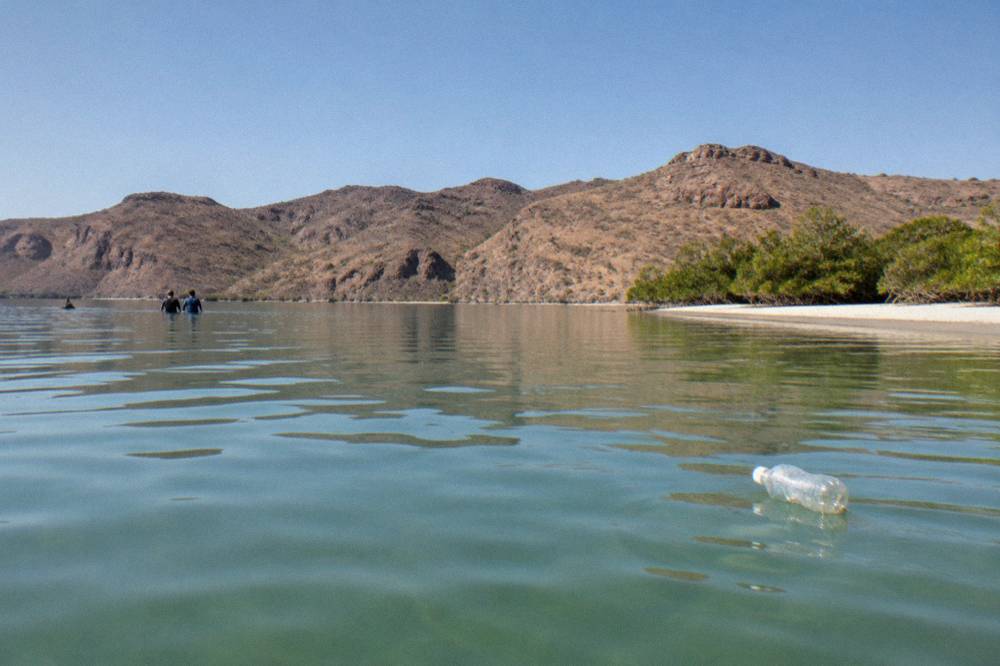
That advice comes with the caveat this article has been building toward: peak months lower the odds of a shutdown, they do not remove them, and the January 2025 suspension landed squarely inside the peak. The pattern that holds across recent seasons is that openings arrive late. The 2025-26 season illustrates the soft opening: the official window began 1 October, but the effective start came in November once animals were actually present in usable numbers.
The table below pulls the recent history into one view, including the seasons that ended early. It is the clearest honest answer to the rarity question, because it shows both the dependable middle and the years the floor bit.
| Season | Official window | What actually happened |
|---|---|---|
| 2022-23 | 1 Oct 2022 to 30 Apr 2023 | Permits arrived late; activity began 27 Nov 2022, then suspended early 2023 over low counts |
| 2024-25 | 1 Oct 2024 to 30 Apr 2025 | Counts of 9, 5 and 1 sharks in late January triggered suspension, still standing in March |
| 2025-26 | 1 Oct 2025 to 30 Apr 2026 | Opened in November, closed 30 April; 56 sharks identified, 950 sightings, 11 present at close |
| 2026-27 | 1 Oct 2026 to 30 Apr 2027 | Announced, 112 authorizations issued; no counts published yet |
Planning around that history is mostly a matter of managing your own downside. If your whole trip to Baja hinges on one specific morning, give yourself two or three possible swim days in the December to February window rather than one, and treat the best time to visit guide's month breakdown as the calendar backbone. Hurricane season officially runs 15 May to 30 November with peak risk August to October, so very early October bookings carry weather risk on top of the usual soft opening.
One more honest note: sea state and visibility vary and no figure for either is promised by anyone honest, and this article will not invent one. What the record supports is the population pattern above, nothing more.
Do Some Tours See More Sharks Than Others?
No. Every authorized boat in La Paz works the same zone under the same census, the same shift allocation and the same thirty-minute rotation, so the shark-facing odds are effectively identical across the roster, from the $110 shared trip to the premium encounter. What differs is group size, guide depth and how the surrounding hours are spent.
That is worth stating plainly because the marketing of wildlife tours everywhere implies otherwise. In La Paz the equalizer is structural. With a hard cap of boats in the zone, one boat per shark and shifts handed out by the authorities, there is no secret spot, no better patch of water, no operator with a pipeline to the animals. A marine biologist guide cannot summon a shark, but a biologist can tell you what it is doing, why it is turning, and what the spot patterns mean, which changes what the encounter is worth rather than whether it happens.
Where the roster genuinely differs is in the shape of the day, and that is where the price spread from $110 to $295 per person on shared swims actually lives. The comparison below uses only the figures verified on each listing.
| Listing | Operator | Price | Duration | Rating and reviews |
|---|---|---|---|---|
| Whale Shark Swim Adventure in La Paz | Sunrider Tours | from $110 per person | 2 hours 30 minutes | 4.4 from 155 reviews |
| Snorkel Tour with Whale Shark in La Paz | Alonso Tours | from $122 per person | 2 to 4 hours | 4.9 from 77 reviews |
| Small Group Whale Shark Snorkeling Tour with Marine Biologist | MeXplore | from $178 per person | 3 hours | 4.9 from 649 reviews |
| Intimate Eco-Friendly Whale Shark Encounter, Premium Service | La Paz Whale Sharks VIP Tours | from $295 per person | 3 hours | 5.0 from 422 reviews |
Read that as three ways to spend the same odds. The Sunrider trip is the shortest and cheapest way into the water, with the caveat that its listed exclusions include dock and conservation fees, so check what the final tally is on the live listing. The MeXplore marine-biologist small group is the most-reviewed local swim on the roster, 649 reviews at 4.9, and its listing states that federal permits and a conservation donation are already inside the price. The premium encounter trades money for intimacy, and its 5.0 from 422 reviews suggests guests think the trade fair.
Beyond the pure swims, longer formats bundle the odds question with more day. The Balandra combo from Tuna Tuna Tours adds sea lions and the beach for six hours from $234, and the Los Cabos day trip from Cabo Adventures folds hotel pickup, lunch and the drive into ten hours from $259, rated 4.9 from 1141 reviews, the most-reviewed product on the roster. None of them sees more sharks per permit, but each converts the same rationed zone into a different kind of day.
The featured marine-biologist small group swim is the one this site keeps returning to across its guides, precisely because it spends the fixed odds on the best explanations. Check availability
Is Seeing A Whale Shark Rare Anywhere Else In Mexico?
Globally, swimming beside a whale shark is genuinely rare, and La Paz is one of a small number of places where it is a routine, licensed, walk-up activity, which is why the bay's numbers look so unusual next to the rest of the country. Reliable, comparable season data for other Mexican regions is thin, and this site prints no dates or counts for them.
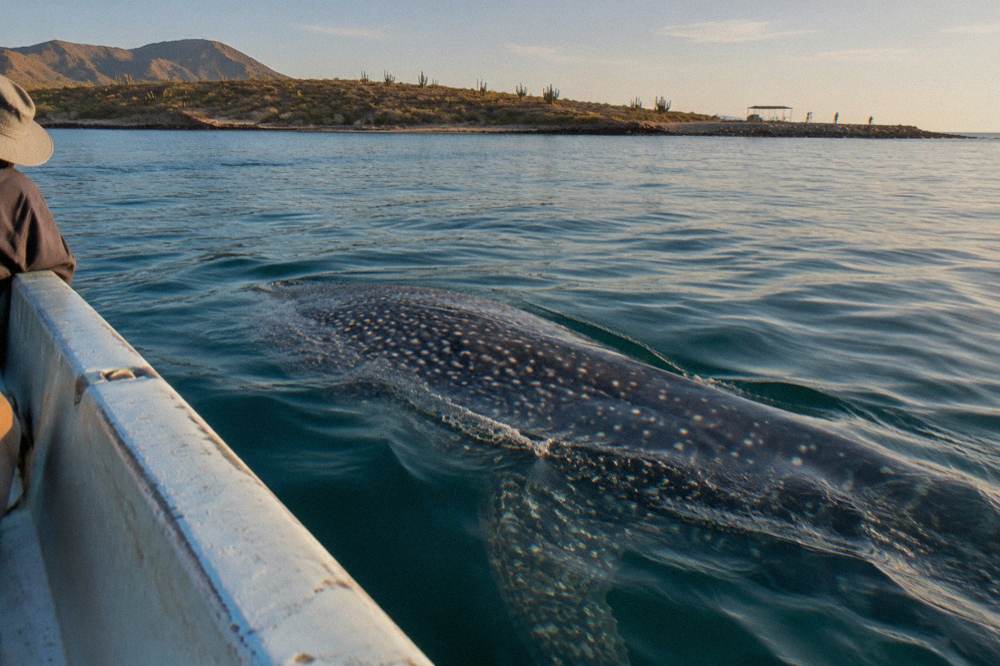
Whale sharks are the largest fish in the sea and one of the most widely traveled, and most humans who ever see one see it once, by accident, from a ferry or a dive boat. The handful of places that turned the encounter into an industry did so because geography concentrated the animals: filter feeders gathering where plankton upwells into shallow, protected water. Bahia de La Paz, decreed a 22,749-hectare refuge in November 2018 with a swim zone, a conservation zone and a transit zone, is one of those places, and the species is listed as threatened under Mexican norms.
The comparison travelers most often ask for is against the Caribbean aggregation islands, and the honest answer is that this site's verified record covers La Paz, so it will not fabricate a head-to-head. What can be said is structural. The La Paz system's census-linked floor is unusual in how much it publishes about its own bad weeks, as the 950-sighting season and the January 2025 suspension sit in the public record side by side. A destination that can tell you the exact count at which its trips stop is a destination being straight with you about the odds.
The where to swim in Mexico guide covers the other regions by name and is candid about where the data runs out. For odds you can actually verify before paying, the refuge decree itself is public in the federal gazette, as are the season notices each year.
How To Tilt The Odds In Your Favor
You cannot raise the number of sharks in the bay, but you can raise your share of good outcomes: book December through February, keep two or three flexible swim days, choose a well-reviewed authorized operator, and read the cancellation terms on the live listing before paying, since most listings offer free cancellation, but terms vary.
That last point deserves emphasis because it is the one place money and odds actually meet. A reader asking how rare the sighting is, is really asking how much risk to accept before paying, and the answer is to price the downside as carefully as the upside: know what happens to your payment if the count falls below six, if the port closes for weather, or if you simply cannot make the date.
Then stack the controllables. Stay within walking range of the departure point, several roster boats meet at Muelle Fiscal on the Malecon or the marina on Calle Topete, so an early shift does not begin with a stressful drive. Choose a format that fits your temperament rather than the cheapest headline number; the private charter from Orza Tours at $1,168 per group and the six-hour combos suit different travelers entirely, and the cost guide breaks down every price on the roster. And when you are on the boat, do the small things the rules already ask of you: biodegradable sunscreen only, wetsuit or vest on, no touching ever, and a calm, together swim group, because a shark that is not harassed is a shark that keeps feeding near the boats.
Finally, keep expectations the size of the record. Some days the animal ends the encounter early; a few weeks each few seasons deliver nothing at all and the government says so out loud. That transparency is exactly what makes the odds here answerable at all, and it is the honest pitch La Paz Whale Shark Tours can stand behind.
Common Questions About Whale Shark Odds
What is the minimum number of sharks needed for tours to run?
Six. The season aviso requires at least six whale sharks present in Zone I, counted as the average of the two most recent official censuses. With five or fewer, no swimming or watching trips operate at all, for any operator.
Has La Paz ever suspended whale shark swimming?
Yes. In late January 2025, CONANP counts of 9, 5 and 1 sharks triggered a full suspension that was still standing in March. A similar low-count suspension happened in early 2023. The floor rule exists precisely so that thin aggregations are not worked.
Do more expensive tours see more sharks?
No. Every authorized boat works the same zone under the same census, shift allocation and thirty-minute rotation. Price buys group size, guide expertise and inclusions, not better shark odds. Shared swims on the roster run from $110 to $295 per person.
Are there whale shark counts for the 2026-27 season yet?
No. The season is announced, running 1 October 2026 to 30 April 2027 with 112 authorizations issued, but no CONANP census or first-sighting figure has been published. Treat any claimed opening number with suspicion.
Which month has the best chance?
December, January and February are the months most consistently reported as strongest, with a secondary March peak in some years. Openings in October and November are historically slower, and April thins toward the close. Even peak months can see shutdowns, as January 2025 proved.